Huber BC et al. (NOV 2013)
STEM CELLS 31 11 2354--2363
Costimulation-adhesion blockade is superior to Cyclosporine A and prednisone immunosuppressive therapy for preventing rejection of differentiated human embryonic stem cells following transplantation
RATIONALE: Human embryonic stem cell (hESC) derivatives are attractive candidates for therapeutic use. The engraftment and survival of hESC derivatives as xenografts or allografts require effective immunosuppression to prevent immune cell infiltration and graft destruction.backslashnbackslashnOBJECTIVE: To test the hypothesis that a short-course,dual-agent regimen of two costimulation-adhesion blockade agents can induce better engraftment of hESC derivatives compared to current immunosuppressive agents.backslashnbackslashnMETHODS AND RESULTS: We transduced hESCs with a double fusion reporter gene construct expressing firefly luciferase (Fluc) and enhanced green fluorescent protein,and differentiated these cells to endothelial cells (hESC-ECs). Reporter gene expression enabled longitudinal assessment of cell engraftment by bioluminescence imaging. Costimulation-adhesion therapy resulted in superior hESC-EC and mouse EC engraftment compared to cyclosporine therapy in a hind limb model. Costimulation-adhesion therapy also promoted robust hESC-EC and hESC-derived cardiomyocyte survival in an ischemic myocardial injury model. Improved hESC-EC engraftment had a cardioprotective effect after myocardial injury,as assessed by magnetic resonance imaging. Mechanistically,costimulation-adhesion therapy is associated with systemic and intragraft upregulation of T-cell immunoglobulin and mucin domain 3 (TIM3) and a reduced proinflammatory cytokine profile.backslashnbackslashnCONCLUSIONS: Costimulation-adhesion therapy is a superior alternative to current clinical immunosuppressive strategies for preventing the post-transplant rejection of hESC derivatives. By extending the window for cellular engraftment,costimulation-adhesion therapy enhances functional preservation following ischemic injury. This regimen may function through a TIM3-dependent mechanism.
View Publication
产品号#:
05850
05857
05870
05875
85850
85857
85870
85875
产品名:
mTeSR™1
mTeSR™1
Ban K et al. (OCT 2013)
Circulation 128 17 1897--1909
Purification of cardiomyocytes from differentiating pluripotent stem cells using molecular beacons that target cardiomyocyte-specific mRNA
BACKGROUND: Although methods for generating cardiomyocytes from pluripotent stem cells have been reported,current methods produce heterogeneous mixtures of cardiomyocytes and noncardiomyocyte cells. Here,we report an entirely novel system in which pluripotent stem cell-derived cardiomyocytes are purified by cardiomyocyte-specific molecular beacons (MBs). MBs are nanoscale probes that emit a fluorescence signal when hybridized to target mRNAs.backslashnbackslashnMETHOD AND RESULTS: Five MBs targeting mRNAs of either cardiac troponin T or myosin heavy chain 6/7 were generated. Among 5 MBs,an MB that targeted myosin heavy chain 6/7 mRNA (MHC1-MB) identified up to 99% of HL-1 cardiomyocytes,a mouse cardiomyocyte cell line,but textless3% of 4 noncardiomyocyte cell types in flow cytometry analysis,which indicates that MHC1-MB is specific for identifying cardiomyocytes. We delivered MHC1-MB into cardiomyogenically differentiated pluripotent stem cells through nucleofection. The detection rate of cardiomyocytes was similar to the percentages of cardiac troponin T- or cardiac troponin I-positive cardiomyocytes,which supports the specificity of MBs. Finally,MHC1-MB-positive cells were sorted by fluorescence-activated cell sorter from mouse and human pluripotent stem cell differentiating cultures,and ≈97% cells expressed cardiac troponin T or cardiac troponin I as determined by flow cytometry. These MB-based sorted cells maintained their cardiomyocyte characteristics,which was verified by spontaneous beating,electrophysiological studies,and expression of cardiac proteins. When transplanted in a myocardial infarction model,MB-based purified cardiomyocytes improved cardiac function and demonstrated significant engraftment for 4 weeks without forming tumors.backslashnbackslashnCONCLUSIONS: We developed a novel cardiomyocyte selection system that allows production of highly purified cardiomyocytes. These purified cardiomyocytes and this system can be valuable for cell therapy and drug discovery.
View Publication


 EasySep™小鼠TIL(CD45)正选试剂盒




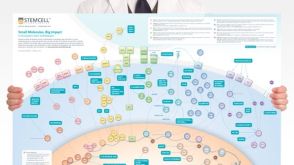 挂图Small Molecules, Big Impact in Pluripotent Stem Cell Research Overview of signaling pathways and small molecules in pluripotent stem cell research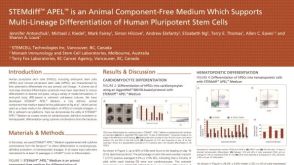
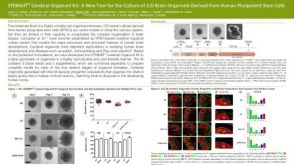 科学海报STEMdiff™ Cerebral Organoid Kit: A New Tool for the Culture of 3D Brain Organoids Derived from hPSCs


 沪公网安备31010102008431号