Castro-Diaz N et al. (JUL 2014)
Genes and Development 28 13 1397--1409
Evolutionally dynamic L1 regulation in embryonic stem cells
Mobile elements are important evolutionary forces that challenge genomic integrity. Long interspersed element-1 (L1,also known as LINE-1) is the only autonomous transposon still active in the human genome. It displays an unusual pattern of evolution,with,at any given time,a single active L1 lineage amplifying to thousands of copies before getting replaced by a new lineage,likely under pressure of host restriction factors,which act notably by silencing L1 expression during early embryogenesis. Here,we demonstrate that in human embryonic stem (hES) cells,KAP1 (KRAB [Kruppel-associated box domain]-associated protein 1),the master cofactor of KRAB-containing zinc finger proteins (KRAB-ZFPs) previously implicated in the restriction of endogenous retroviruses,represses a discrete subset of L1 lineages predicted to have entered the ancestral genome between 26.8 million and 7.6 million years ago. In mice,we documented a similar chronologically conditioned pattern,albeit with a much contracted time scale. We could further identify an L1-binding KRAB-ZFP,suggesting that this rapidly evolving protein family is more globally responsible for L1 recognition. KAP1 knockdown in hES cells induced the expression of KAP1-bound L1 elements,but their younger,human-specific counterparts (L1Hs) were unaffected. Instead,they were stimulated by depleting DNA methyltransferases,consistent with recent evidence demonstrating that the PIWI-piRNA (PIWI-interacting RNA) pathway regulates L1Hs in hES cells. Altogether,these data indicate that the early embryonic control of L1 is an evolutionarily dynamic process and support a model in which newly emerged lineages are first suppressed by DNA methylation-inducing small RNA-based mechanisms before KAP1-recruiting protein repressors are selected.
View Publication
Chemically defined generation of human cardiomyocytes.
Existing methods for human induced pluripotent stem cell (hiPSC) cardiac differentiation are efficient but require complex,undefined medium constituents that hinder further elucidation of the molecular mechanisms of cardiomyogenesis. Using hiPSCs derived under chemically defined conditions on synthetic matrices,we systematically developed an optimized cardiac differentiation strategy,using a chemically defined medium consisting of just three components: the basal medium RPMI 1640,L-ascorbic acid 2-phosphate and rice-derived recombinant human albumin. Along with small molecule-based induction of differentiation,this protocol produced contractile sheets of up to 95% TNNT2(+) cardiomyocytes at a yield of up to 100 cardiomyocytes for every input pluripotent cell and was effective in 11 hiPSC lines tested. This chemically defined platform for cardiac specification of hiPSCs will allow the elucidation of cardiomyocyte macromolecular and metabolic requirements and will provide a minimal system for the study of maturation and subtype specification.
View Publication
产品号#:
05850
05857
05870
05875
85850
85857
85870
85875
产品名:
mTeSR™1
mTeSR™1
Yang C-TT et al. (AUG 2014)
British Journal of Haematology 166 3 435--448
Human induced pluripotent stem cell derived erythroblasts can undergo definitive erythropoiesis and co-express gamma and beta globins.
Human induced pluripotent stem cells (hiPSCs),like embryonic stem cells,are under intense investigation for novel approaches to model disease and for regenerative therapies. Here,we describe the derivation and characterization of hiPSCs from a variety of sources and show that,irrespective of origin or method of reprogramming,hiPSCs can be differentiated on OP9 stroma towards a multi-lineage haemo-endothelial progenitor that can contribute to CD144(+) endothelium,CD235a(+) erythrocytes (myeloid lineage) and CD19(+) B lymphocytes (lymphoid lineage). Within the erythroblast lineage,we were able to demonstrate by single cell analysis (flow cytometry),that hiPSC-derived erythroblasts express alpha globin as previously described,and that a sub-population of these erythroblasts also express haemoglobin F (HbF),indicative of fetal definitive erythropoiesis. More notably however,we were able to demonstrate that a small sub-fraction of HbF positive erythroblasts co-expressed HbA in a highly heterogeneous manner,but analogous to cord blood-derived erythroblasts when cultured using similar methods. Moreover,the HbA expressing erythroblast population could be greatly enhanced (44textperiodcentered0 ± 6textperiodcentered04%) when a defined serum-free approach was employed to isolate a CD31(+) CD45(+) erythro-myeloid progenitor. These findings demonstrate that hiPSCs may represent a useful alternative to standard sources of erythrocytes (RBCs) for future applications in transfusion medicine.
View Publication
产品号#:
05850
05857
05870
05875
85850
85857
85870
85875
产品名:
mTeSR™1
mTeSR™1
Kawase E ( 2016)
1307 61--69
Efficient Expansion of Dissociated Human Pluripotent Stem Cells Using a Synthetic Substrate.
Human pluripotent stem cells (hPSCs),including human embryonic stem cells and human-induced pluripotent stem cells,are a renewable cell source for a wide range of applications in regenerative medicine and useful tools for human disease modeling and drug discovery. For these purposes,large numbers of high-quality cells are essential. Recently,we showed that a biological substrate,recombinant E8 fragments of laminin isoforms,sustains long-term self-renewal of hPSCs in defined,xeno-free medium with dissociated single-cell passaging. Here,we describe a modified culture system with similar performance to efficiently expand hPSCs under defined,xeno-free conditions using a non-biological synthetic substrate.
View Publication
产品号#:
05860
05880
05850
05857
05870
05875
85850
85857
85870
85875
产品名:
mTeSR™1
mTeSR™1
Liu Y et al. (MAR 2015)
Journal of Biomedical Materials Research - Part A 103 3 1053--1059
Native nucleus pulposus tissue matrix promotes notochordal differentiation of human induced pluripotent stem cells with potential for treating intervertebral disc degeneration
Native porcine nucleus pulposus (NP) tissue harbors a number of notochordal cells (NCs). Whether the native NP matrix supports the homeostasis of notochordal cells is poorly understood. We hypothesized the NP matrix alone may contain sufficient regulatory factors and can serve as stimuli to generate notochordal cells (NCs) from human pluripotent stem cells. NCs are a promising cell sources for cell-based therapy to treat some types of intervertebral disc (IVD) degeneration. One major limitation of this emerging technique is the lack of available NCs as a potential therapeutic cell source. Human pluripotent stem cells derived from reprogramming or somatic cell nuclear transfer technique may yield stable and unlimited source for therapeutic use. We devised a new method to use porcine NP matrix to direct notochordal differentiation of human induced pluripotent stem cells (hiPSCs). The results showed that hiPSCs successfully differentiated into NC-like cells under the influence of devitalized porcine NP matrix. The NC-like cells expressed typical notochordal marker genes including brachyury (T),cytokeratin-8 (CK-8) and cytokeratin-18 (CK-18),and they displayed the ability to generate NP-like tissue in vitro,which was rich in aggrecan and collagen type II. These findings demonstrated the proof of concept for using native NP matrix to direct notochordal differentiation of hiPSCs. It provides a foundation for further understanding the biology of NCs,and eventually towards regenerative therapies for disc degeneration.
View Publication
产品号#:
05850
05857
05870
05875
85850
85857
85870
85875
产品名:
mTeSR™1
mTeSR™1
Mormone E et al. (NOV 2014)
Stem cells and development 23 21 2626--36
Footprint-free" human induced pluripotent stem cell-derived astrocytes for in vivo cell-based therapy."
The generation of human induced pluripotent stem cells (hiPSC) from somatic cells has enabled the possibility to provide patient-specific hiPSC for cell-based therapy,drug discovery,and other translational applications. Two major obstacles in using hiPSC for clinical application reside in the risk of genomic modification when they are derived with viral transgenes and risk of teratoma formation if undifferentiated cells are engrafted. In this study,we report the generation of footprint-free" hiPSC-derived astrocytes. These are efficiently generated�
View Publication
产品号#:
05850
05857
05870
05875
85850
85857
85870
85875
产品名:
mTeSR™1
mTeSR™1
Grunseich C et al. (OCT 2014)
Neurobiology of Disease 70 12--20
Stem cell-derived motor neurons from spinal and bulbar muscular atrophy patients.
Spinal and bulbar muscular atrophy (SBMA,Kennedy's disease) is a motor neuron disease caused by polyglutamine repeat expansion in the androgen receptor. Although degeneration occurs in the spinal cord and muscle,the exact mechanism is not clear. Induced pluripotent stem cells from spinal and bulbar muscular atrophy patients provide a useful model for understanding the disease mechanism and designing effective therapy. Stem cells were generated from six patients and compared to control lines from three healthy individuals. Motor neurons from four patients were differentiated from stem cells and characterized to understand disease-relevant phenotypes. Stem cells created from patient fibroblasts express less androgen receptor than control cells,but show androgen-dependent stabilization and nuclear translocation. The expanded repeat in several stem cell clones was unstable,with either expansion or contraction. Patient stem cell clones produced a similar number of motor neurons compared to controls,with or without androgen treatment. The stem cell-derived motor neurons had immunoreactivity for HB9,Isl1,ChAT,and SMI-32,and those with the largest repeat expansions were found to have increased acetylated ??-tubulin and reduced HDAC6. Reduced HDAC6 was also found in motor neuron cultures from two other patients with shorter repeats. Evaluation of stably transfected mouse cells and SBMA spinal cord showed similar changes in acetylated ??-tubulin and HDAC6. Perinuclear lysosomal enrichment,an HDAC6 dependent process,was disrupted in motor neurons from two patients with the longest repeats. SBMA stem cells present new insights into the disease,and the observations of reduced androgen receptor levels,repeat instability,and reduced HDAC6 provide avenues for further investigation of the disease mechanism and development of effective therapy. ?? 2014.
View Publication
Krivega M et al. (NOV 2014)
Reproduction 148 5 531--544
Car expression in human embryos and hesc illustrates its role in pluripotency and tight junctions
Coxsackie virus and adenovirus receptor,CXADR (CAR),is present during embryogenesis and is involved in tissue regeneration,cancer and intercellular adhesion. We investigated the expression of CAR in human preimplantation embryos and embryonic stem cells (hESC) to identify its role in early embryogenesis and differentiation. CAR protein was ubiquitously present during preimplantation development. It was localised in the nucleus of uncommitted cells,from the cleavage stage up to the precursor epiblast,and corresponded with the presence of soluble CXADR3/7 splice variant. CAR was displayed on the membrane,involving in the formation of tight junction at compaction and blastocyst stages in both outer and inner cells,and CAR corresponded with the full-length CAR-containing transmembrane domain. In trophectodermal cells of hatched blastocysts,CAR was reduced in the membrane and concentrated in the nucleus,which correlated with the switch in RNA expression to the CXADR4/7 and CXADR2/7 splice variants. The cells in the outer layer of hESC colonies contained CAR on the membrane and all the cells of the colony had CAR in the nucleus,corresponding with the transmembrane CXADR and CXADR4/7. Upon differentiation of hESC into cells representing the three germ layers and trophoblast lineage,the expression of CXADR was downregulated. We concluded that CXADR is differentially expressed during human preimplantation development. We described various CAR expressions: i) soluble CXADR marking undifferentiated blastomeres; ii) transmembrane CAR related with epithelial-like cell types,such as the trophectoderm (TE) and the outer layer of hESC colonies; and iii) soluble CAR present in TE nuclei after hatching. The functions of these distinct forms remain to be elucidated.
View Publication


 EasySep™小鼠TIL(CD45)正选试剂盒




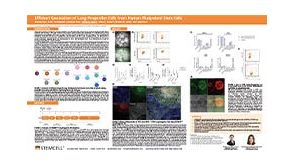 科学海报Efficient Generation of Lung Progenitor Cells From Human Pluripotent Stem Cells

 沪公网安备31010102008431号