Cao N et al. (SEP 2013)
Cell Research 23 9 1119--1132
Highly efficient induction and long-term maintenance of multipotent cardiovascular progenitors from human pluripotent stem cells under defined conditions
Cardiovascular progenitor cells (CVPCs) derived from human pluripotent stem cells (hPSCs),including human embryonic stem cells (hESCs) and human induced pluripotent stem cells (hiPSCs),hold great promise for the study of cardiovascular development and cell-based therapy of heart diseases,but their applications are challenged by the difficulties in their efficient generation and stable maintenance. This study aims to develop chemically defined systems for robust generation and stable propagation of hPSC-derived CVPCs by modulating the key early developmental pathways involved in human cardiovascular specification and CVPC self-renewal. Herein we report that a combination of bone morphogenetic protein 4 (BMP4),glycogen synthase kinase 3 (GSK3) inhibitor CHIR99021 and ascorbic acid is sufficient to rapidly convert monolayer-cultured hPSCs,including hESCs and hiPSCs,into homogeneous CVPCs in a chemically defined medium under feeder- and serum-free culture conditions. These CVPCs stably self-renewed under feeder- and serum-free conditions and expanded over 10(7)-fold when the differentiation-inducing signals from BMP,GSK3 and Activin/Nodal pathways were simultaneously eliminated. Furthermore,these CVPCs exhibited expected genome-wide molecular features of CVPCs,retained potentials to generate major cardiovascular lineages including cardiomyocytes,smooth muscle cells and endothelial cells in vitro,and were non-tumorigenic in vivo. Altogether,the established systems reported here permit efficient generation and stable maintenance of hPSC-derived CVPCs,which represent a powerful tool to study early embryonic cardiovascular development and provide a potentially safe source of cells for myocardial regenerative medicine.
View Publication
产品号#:
05850
05857
05870
05875
07920
85850
85857
85870
85875
07922
产品名:
ACCUTASE™
mTeSR™1
mTeSR™1
ACCUTASE™
Rezania A et al. (NOV 2013)
STEM CELLS 31 11 2432--2442
Enrichment of human embryonic stem cell-derived NKX6.1-expressing pancreatic progenitor cells accelerates the maturation of insulin-secreting cells in vivo
Human embryonic stem cells (hESCs) are considered a potential alternative to cadaveric islets as a source of transplantable cells for treating patients with diabetes. We previously described a differentiation protocol to generate pancreatic progenitor cells from hESCs,composed of mainly pancreatic endoderm (PDX1/NKX6.1-positive),endocrine precursors (NKX2.2/synaptophysin-positive,hormone/NKX6.1-negative),and polyhormonal cells (insulin/glucagon-positive,NKX6.1-negative). However,the relative contributions of NKX6.1-negative versus NKX6.1-positive cell fractions to the maturation of functional β-cells remained unclear. To address this question,we generated two distinct pancreatic progenitor cell populations using modified differentiation protocols. Prior to transplant,both populations contained a high proportion of PDX1-expressing cells (˜85%-90%) but were distinguished by their relatively high (˜80%) or low (˜25%) expression of NKX6.1. NKX6.1-high and NKX6.1-low progenitor populations were transplanted subcutaneously within macroencapsulation devices into diabetic mice. Mice transplanted with NKX6.1-low cells remained hyperglycemic throughout the 5-month post-transplant period whereas diabetes was reversed in NKX6.1-high recipients within 3 months. Fasting human C-peptide levels were similar between groups throughout the study,but only NKX6.1-high grafts displayed robust meal-,glucose- and arginine-responsive insulin secretion as early as 3 months post-transplant. NKX6.1-low recipients displayed elevated fasting glucagon levels. Theracyte devices from both groups contained almost exclusively pancreatic endocrine tissue,but NKX6.1-high grafts contained a greater proportion of insulin-positive and somatostatin-positive cells,whereas NKX6.1-low grafts contained mainly glucagon-expressing cells. Insulin-positive cells in NKX6.1-high,but not NKX6.1-low grafts expressed nuclear MAFA. Collectively,this study demonstrates that a pancreatic endoderm-enriched population can mature into highly functional β-cells with only a minor contribution from the endocrine subpopulation.
View Publication
产品号#:
05850
05857
05870
05875
85850
85857
85870
85875
产品名:
mTeSR™1
mTeSR™1
Liu P et al. (JUL 2013)
PLoS ONE 8 7 e69617
Low Immunogenicity of Neural Progenitor Cells Differentiated from Induced Pluripotent Stem Cells Derived from Less Immunogenic Somatic Cells
The groundbreaking discovery of induced pluripotent stem cells (iPS cells) provides a new source for cell therapy. However,whether the iPS derived functional lineages from different cell origins have different immunogenicity remains unknown. It had been known that the cells isolated from extra-embryonic tissues,such as umbilical cord mesenchymal cells (UMCs),are less immunogenic than other adult lineages such as skin fibroblasts (SFs). In this report,we differentiated iPS cells from human UMCs and SFs into neural progenitor cells (NPCs) and analyzed their immunogenicity. Through co-culture with allologous peripheral blood mononuclear cells (PBMCs),we showed that UMCs were indeed less immunogenic than skin cells to simulate proliferation of PBMCs. Surprisingly,we found that the NPCs differentiated from UMC-iPS cells retained low immunogenicity as the parental UMCs based on the PBMC proliferation assay. In cytotoxic expression assay,reactions in most kinds of immune effector cells showed more perforin and granzyme B expression with SF-NPCs stimulation than that with UMC-NPCs stimulation in PBMC co-culture system,in T cell co-culture system as well. Furthermore,through whole genome expression microarray analysis,we showed that over 70 immune genes,including all members of HLA-I,were expressed at lower levels in NPCs derived from UMC-iPS cells than that from SF-iPS cells. Our results demonstrated a phenomenon that the low immunogenicity of the less immunogenic cells could be retained after cell reprogramming and further differentiation,thus provide a new concept to generate functional lineages with lower immunogenicity for regenerative medicine.
View Publication
产品号#:
05850
05857
05870
05875
85850
85857
85870
85875
产品名:
mTeSR™1
mTeSR™1
Tadeu AMB and Horsley V (SEP 2013)
Development (Cambridge,England) 140 18 3777--86
Notch signaling represses p63 expression in the developing surface ectoderm.
The development of the mature epidermis requires a coordinated sequence of signaling events and transcriptional changes to specify surface ectodermal progenitor cells to the keratinocyte lineage. The initial events that specify epidermal keratinocytes from ectodermal progenitor cells are not well understood. Here,we use both developing mouse embryos and human embryonic stem cells (hESCs) to explore the mechanisms that direct keratinocyte fate from ectodermal progenitor cells. We show that both hESCs and murine embryos express p63 before keratin 14. Furthermore,we find that Notch signaling is activated before p63 expression in ectodermal progenitor cells. Inhibition of Notch signaling pharmacologically or genetically reveals a negative regulatory role for Notch signaling in p63 expression during ectodermal specification in hESCs or mouse embryos,respectively. Taken together,these data reveal a role for Notch signaling in the molecular control of ectodermal progenitor cell specification to the epidermal keratinocyte lineage.
View Publication
产品号#:
05850
05857
05870
05875
85850
85857
85870
85875
产品名:
mTeSR™1
mTeSR™1
Lund RJ et al. (NOV 2013)
Stem Cell Research 11 3 1024--1036
Karyotypically abnormal human ESCs are sensitive to HDAC inhibitors and show altered regulation of genes linked to cancers and neurological diseases
Genomic abnormalities may accumulate in human embryonic stem cells (hESCs) during in vitro maintenance. Characterization of the mechanisms enabling survival and expansion of abnormal hESCs is important due to consequences of genetic changes for the therapeutic utilization of stem cells. Furthermore,these cells provide an excellent model to study transformation in vitro. We report here that the histone deacetylase proteins,HDAC1 and HDAC2,are increased in karyotypically abnormal hESCs when compared to their normal counterparts. Importantly,similar to many cancer cell lines,we found that HDAC inhibitors repress proliferation of the karyotypically abnormal hESCs,whereas normal cells are more resistant to the treatment. The decreased proliferation correlates with downregulation of HDAC1 and HDAC2 proteins,induction of the proliferation inhibitor,cyclin-dependent kinase inhibitor 1A (CDKN1A),and altered regulation of tumor suppressor protein Retinoblastoma 1 (RB1). Through genome-wide transcriptome analysis we have identified genes with altered expression and responsiveness to HDAC inhibition in abnormal cells. Most of these genes are linked to severe developmental and neurological diseases and cancers. Our results highlight the importance of epigenetic mechanisms in the regulation of genomic stability of hESCs,and provide valuable candidates for targeted and selective growth inhibition of karyotypically abnormal cells. textcopyright 2013 Elsevier B.V.
View Publication
产品号#:
05850
05857
05870
05875
85850
85857
85870
85875
产品名:
mTeSR™1
mTeSR™1
Wang J et al. (NOV 2013)
Biomaterials 34 35 8878--8886
Effect of engineered anisotropy on the susceptibility of human pluripotent stem cell-derived ventricular cardiomyocytes to arrhythmias
Human (h) pluripotent stem cells (PSC) such as embryonic stem cells (ESC) can be directed into cardiomyocytes (CMs),representing a potential unlimited cell source for disease modeling,cardiotoxicity screening and myocardial repair. Although the electrophysiology of single hESC-CMs is now better defined,their multi-cellular arrhythmogenicity has not been thoroughly assessed due to the lack of a suitable experimental platform. Indeed,the generation of ventricular (V) fibrillation requires single-cell triggers as well as sustained multi-cellular reentrant events. Although native VCMs are aligned in a highly organized fashion such that electrical conduction is anisotropic for coordinated contractions,hESC-derived CM (hESC-CM) clusters are heterogenous and randomly organized,and therefore not representative of native conditions. Here,we reported that engineered alignment of hESC-VCMs on biomimetic grooves uniquely led to physiologically relevant responses. Aligned but not isotropic control preparations showed distinct longitudinal (L) and transverse (T) conduction velocities (CV),resembling the native human V anisotropic ratio (AR=LCV/TCV=1.8-2.0). Importantly,the total incidence of spontaneous and inducible arrhythmias significantly reduced from 57% in controls to 17-23% of aligned preparations,thereby providing a physiological baseline for assessing arrhythmogenicity. As such,promotion of pro-arrhythmic effect (e.g.,spatial dispersion by ?? adrenergic stimulation) could be better predicted. Mechanistically,such anisotropy-induced electrical stability was not due to maturation of the cellular properties of hESC-VCMs but their physical arrangement. In conclusion,not only do functional anisotropic hESC-VCMs engineered by multi-scale topography represent a more accurate model for efficacious drug discovery and development as well as arrhythmogenicity screening (of pharmacological and genetic factors),but our approach may also lead to future transplantable prototypes with improved efficacy and safety against arrhythmias. ?? 2013.
View Publication


 EasySep™小鼠TIL(CD45)正选试剂盒




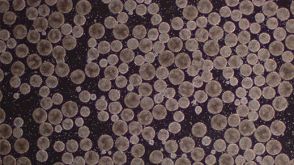
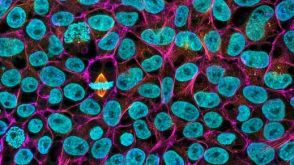 实验方案Large-Scale Expansion of hPSCs in 2D Monolayer Culture using mTeSR™ Plus
 挂图Reporting Practices for Publishing Results with hPSCs Learn how to plan and conduct your human pluripotent stem cell (hPSC)-based research following the ISSCR’s Standards for Human Stem Cell Use in Research

 沪公网安备31010102008431号