Zhang S et al. (MAR 2017)
Stem cell research 19 43--45
Derivation of human induced pluripotent stem cell (iPSC) line from a 79year old sporadic male Parkinson's disease patient.
Peripheral blood was collected from a clinically diagnosed 79-year old male sporadic Parkinson's disease patient. Peripheral blood mononuclear cells (PBMCs) were reprogrammed with the Yamanaka KMOS reprogramming factors using the Sendai-virus reprogramming system. The transgene-free iPSC line showed pluripotency verified by immunofluorescent staining for pluripotency markers,and the iPSC line was able to differentiate into the 3 germ layers in vivo. The iPSC line also showed normal karyotype. This in vitro cellular model can be used to study the mechanism of sporadic Parkinson's disease and to test new drugs. Resource Table.
View Publication
产品号#:
05850
05857
05870
05875
85850
85857
85870
85875
产品名:
mTeSR™1
mTeSR™1
Low K et al. (APR 2017)
Stem cell reports
Physico-electrochemical Characterization of Pluripotent Stem Cells during Self-Renewal or Differentiation by a Multi-modal Monitoring System.
Monitoring pluripotent stem cell behaviors (self-renewal and differentiation to specific lineages/phenotypes) is critical for a fundamental understanding of stem cell biology and their translational applications. In this study,a multi-modal stem cell monitoring system was developed to quantitatively characterize physico-electrochemical changes of the cells in real time,in relation to cellular activities during self-renewal or lineage-specific differentiation,in a non-destructive,label-free manner. The system was validated by measuring physical (mass) and electrochemical (impedance) changes in human induced pluripotent stem cells undergoing self-renewal,or subjected to mesendodermal or ectodermal differentiation,and correlating them to morphological (size,shape) and biochemical changes (gene/protein expression). An equivalent circuit model was used to further dissect the electrochemical (resistive and capacitive) contributions of distinctive cellular features. Overall,the combination of the physico-electrochemical measurements and electrical circuit modeling collectively offers a means to longitudinally quantify the states of stem cell self-renewal and differentiation.
View Publication
产品号#:
05850
05857
05870
05875
85850
85857
85870
85875
产品名:
mTeSR™1
mTeSR™1
Bao X et al. ( 2016)
Nature biomedical engineering 1
Long-term self-renewing human epicardial cells generated from pluripotent stem cells under defined xeno-free conditions.
The epicardium contributes both multi-lineage descendants and paracrine factors to the heart during cardiogenesis and cardiac repair,underscoring its potential for cardiac regenerative medicine. Yet little is known about the cellular and molecular mechanisms that regulate human epicardial development and regeneration. Here,we show that the temporal modulation of canonical Wnt signaling is sufficient for epicardial induction from 6 different human pluripotent stem cell (hPSC) lines,including a WT1-2A-eGFP knock-in reporter line,under chemically-defined,xeno-free conditions. We also show that treatment with transforming growth factor beta (TGF-β)-signalling inhibitors permitted long-term expansion of the hPSC-derived epicardial cells,resulting in a more than 25 population doublings of WT1+ cells in homogenous monolayers. The hPSC-derived epicardial cells were similar to primary epicardial cells both in vitro and in vivo,as determined by morphological and functional assays,including RNA-seq. Our findings have implications for the understanding of self-renewal mechanisms of the epicardium and for epicardial regeneration using cellular or small-molecule therapies.
View Publication
产品号#:
05850
05857
05870
05875
05940
85850
85857
85870
85875
产品名:
mTeSR™1
mTeSR™1
Sugimura R et al. (MAY 2017)
Nature 545 7655 432--438
Haematopoietic stem and progenitor cells from human pluripotent stem cells.
A variety of tissue lineages can be differentiated from pluripotent stem cells by mimicking embryonic development through stepwise exposure to morphogens,or by conversion of one differentiated cell type into another by enforced expression of master transcription factors. Here,to yield functional human haematopoietic stem cells,we perform morphogen-directed differentiation of human pluripotent stem cells into haemogenic endothelium followed by screening of 26 candidate haematopoietic stem-cell-specifying transcription factors for their capacity to promote multi-lineage haematopoietic engraftment in mouse hosts. We recover seven transcription factors (ERG,HOXA5,HOXA9,HOXA10,LCOR,RUNX1 and SPI1) that are sufficient to convert haemogenic endothelium into haematopoietic stem and progenitor cells that engraft myeloid,B and T cells in primary and secondary mouse recipients. Our combined approach of morphogen-driven differentiation and transcription-factor-mediated cell fate conversion produces haematopoietic stem and progenitor cells from pluripotent stem cells and holds promise for modelling haematopoietic disease in humanized mice and for therapeutic strategies in genetic blood disorders.
View Publication
产品号#:
04434
04444
05850
05857
05870
05875
85850
85857
85870
85875
产品名:
MethoCult™ H4434 Classic
MethoCult™ H4434 Classic
mTeSR™1
mTeSR™1
Douvaras P et al. (MAY 2017)
Stem cell reports
Directed Differentiation of Human Pluripotent Stem Cells to Microglia.
Microglia,the immune cells of the brain,are crucial to proper development and maintenance of the CNS,and their involvement in numerous neurological disorders is increasingly being recognized. To improve our understanding of human microglial biology,we devised a chemically defined protocol to generate human microglia from pluripotent stem cells. Myeloid progenitors expressing CD14/CX3CR1 were generated within 30 days of differentiation from both embryonic and induced pluripotent stem cells (iPSCs). Further differentiation of the progenitors resulted in ramified microglia with highly motile processes,expressing typical microglial markers. Analyses of gene expression and cytokine release showed close similarities between iPSC-derived (iPSC-MG) and human primary microglia as well as clear distinctions from macrophages. iPSC-MG were able to phagocytose and responded to ADP by producing intracellular Ca(2+) transients,whereas macrophages lacked such response. The differentiation protocol was highly reproducible across several pluripotent stem cell lines.
View Publication
产品号#:
05850
05857
05870
05875
85850
85857
85870
85875
产品名:
mTeSR™1
mTeSR™1
Gu Q et al. (MAY 2017)
Advanced healthcare materials
3D Bioprinting Human Induced Pluripotent Stem Cell Constructs for In Situ Cell Proliferation and Successive Multilineage Differentiation.
The ability to create 3D tissues from induced pluripotent stem cells (iPSCs) is poised to revolutionize stem cell research and regenerative medicine,including individualized,patient-specific stem cell-based treatments. There are,however,few examples of tissue engineering using iPSCs. Their culture and differentiation is predominantly planar for monolayer cell support or induction of self-organizing embryoids (EBs) and organoids. Bioprinting iPSCs with advanced biomaterials promises to augment efforts to develop 3D tissues,ideally comprising direct-write printing of cells for encapsulation,proliferation,and differentiation. Here,such a method,employing a clinically amenable polysaccharide-based bioink,is described as the first example of bioprinting human iPSCs for in situ expansion and sequential differentiation. Specifically,There are extrusion printed the bioink including iPSCs,alginate (Al; 5% weight/volume [w/v]),carboxymethyl-chitosan (5% w/v),and agarose (Ag; 1.5% w/v),crosslinked the bioink in calcium chloride for a stable and porous construct,proliferated the iPSCs within the construct and differentiated the same iPSCs into either EBs comprising cells of three germ lineages-endoderm,ectoderm,and mesoderm,or more homogeneous neural tissues containing functional migrating neurons and neuroglia. This defined,scalable,and versatile platform is envisaged being useful in iPSC research and translation for pharmaceuticals development and regenerative medicine.
View Publication
产品号#:
05850
05857
05870
05875
85850
85857
85870
85875
产品名:
mTeSR™1
mTeSR™1
Artyukhov AS et al. (MAY 2017)
Gene
New genes for accurate normalization of qRT-PCR results in study of iPS and iPS-derived cells.
iPSC-derived cells (from induced pluripotent stem cells) are a useful source that provide a powerful and widely accepted tool for the study of various types of human cells in vitro. Indeed,iPSC-derived cells from patients with hereditary diseases have been shown to reproduce the hallmarks of these diseases in vitro,phenotypes that can then also be manipulated in vitro. Quantitative reverse transcription PCR (qRT-PCR) is often used to characterize the progress of iPSC differentiation,validate mature cell types and to determine levels of pathological markers. Quantitative reverse transcription PCR (qRT-PCR) is used to quantify mRNA levels. This method requires some way of normalizing the data,typically by relating the obtained levels of gene expression to the levels of expression of a house keeping gene"�
View Publication
产品号#:
05850
05857
05870
05875
85850
85857
85870
85875
产品名:
mTeSR™1
mTeSR™1
Nakano T et al. (AUG 1994)
Science (New York,N.Y.) 265 5175 1098--101
Generation of lymphohematopoietic cells from embryonic stem cells in culture.
An efficient system was developed that induced the differentiation of embryonic stem (ES) cells into blood cells of erythroid,myeloid,and B cell lineages by coculture with the stromal cell line OP9. This cell line does not express functional macrophage colony-stimulating factor (M-CSF). The presence of M-CSF had inhibitory effects on the differentiation of ES cells to blood cells other than macrophages. Embryoid body formation or addition of exogenous growth factors was not required,and differentiation was highly reproducible even after the selection of ES cells with the antibiotic G418. Combined with the ability to genetically manipulate ES cells,this system will facilitate the study of molecular mechanisms involved in development and differentiation of hematopoietic cells.
View Publication
Rapid Generation of Human Genetic Loss-of-Function iPSC Lines by Simultaneous Reprogramming and Gene Editing.
Specifically ablating genes in human induced pluripotent stem cells (iPSCs) allows for studies of gene function as well as disease mechanisms in disorders caused by loss-of-function (LOF) mutations. While techniques exist for engineering such lines,we have developed and rigorously validated a method of simultaneous iPSC reprogramming while generating CRISPR/Cas9-dependent insertions/deletions (indels). This approach allows for the efficient and rapid formation of genetic LOF human disease cell models with isogenic controls. The rate of mutagenized lines was strikingly consistent across experiments targeting four different human epileptic encephalopathy genes and a metabolic enzyme-encoding gene,and was more efficient and consistent than using CRISPR gene editing of established iPSC lines. The ability of our streamlined method to reproducibly generate heterozygous and homozygous LOF iPSC lines with passage-matched isogenic controls in a single step provides for the rapid development of LOF disease models with ideal control lines,even in the absence of patient tissue.
View Publication


 EasySep™小鼠TIL(CD45)正选试剂盒




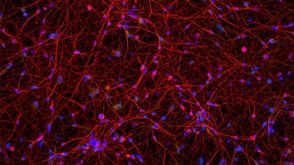 实验方案How to Culture Human Pluripotent Stem Cell (hPSC)-Derived Forebrain Neurons for MEA Analysis Using the Maestro MEA™ System
 沪公网安备31010102008431号