Lai AY et al. (OCT 2005)
Journal of immunology (Baltimore,Md. : 1950) 175 8 5016--23
Heterogeneity of Flt3-expressing multipotent progenitors in mouse bone marrow.
Mechanisms of lymphoid and myeloid lineage choice by hemopoietic stem cells remain unclear. In this study we show that the multipotent progenitor (MPP) population,which is immediately downstream of hemopoietic stem cells,is heterogeneous and can be subdivided in terms of VCAM-1 expression. VCAM-1(+) MPPs were fully capable of differentiating into both lymphoid and myeloid lineages. In contrast,VCAM-1(-) MPPs gave rise to lymphocytes predominately in vivo. T and B cell development from VCAM-1(-) MPPs was 1 wk faster than that from VCAM-1(+) MPPs. Furthermore,VCAM-1(+) MPPs gave rise to common myeloid progenitors and VCAM-1(-) MPPs in vivo,indicating that VCAM-1(-) MPPs are progenies of VCAM-1(+) MPPs. VCAM-1(-) MPPs,in turn,developed into lymphoid lineage-restricted common lymphoid progenitors. These results establish a hierarchy of developmental relationship between MPP subsets and lymphoid and myeloid progenitors. In addition,VCAM-1(+) MPPs may represent the branching point between the lymphoid and myeloid lineages.
View Publication
产品号#:
03534
03434
03444
产品名:
MethoCult™ GF M3534
MethoCult™ GF M3434
MethoCult™ GF M3434
Li Q et al. (AUG 2005)
Proceedings of the National Academy of Sciences of the United States of America 102 35 12425--30
Enhanced NF-kappaB activation and cellular function in macrophages lacking IkappaB kinase 1 (IKK1).
IkappaB kinase (IKK) complex plays a key regulatory role in macrophages for NF-kappaB activation during both innate and adaptive immune responses. Because IKK1-/- mice died at birth,we differentiated functional macrophages from embryonic day 15.5 IKK1 mutant embryonic liver. The embryonic liver-derived macrophage (ELDM) showed enhanced phagocytotic clearance of bacteria,more efficient antigen-presenting capacity,elevated secretion of several key proinflammatory cytokines and chemokines,and known NFkappaB target genes. Increased NFkappaB activity in IKK1 mutant ELDM was the result of prolonged degradation of IkappaBalpha in response to infectious pathogens. The delayed restoration of IkappaBalpha in pathogen-activated IKK1-/- ELDM was a direct consequence of uncontrolled IKK2 kinase activity. We hypothesize that IKK1 plays a checkpoint role in the proper control of IkappaBalpha kinase activity in innate and adaptive immunity.
View Publication
产品号#:
02532
02832
09600
09650
产品名:
StemSpan™ SFEM
StemSpan™ SFEM
Carotta S et al. (SEP 2004)
Blood 104 6 1873--80
Directed differentiation and mass cultivation of pure erythroid progenitors from mouse embryonic stem cells.
Differentiating embryonic stem (ES) cells are an increasingly important source of hematopoietic progenitors,useful for both basic research and clinical applications. Besides their characterization in colony assays,protocols exist for the cultivation of lymphoid,myeloid,and erythroid cells. With the possible exception of mast cells,however,long-term expansion of pure hematopoietic progenitors from ES cells has not been possible without immortalization caused by overexpression of exogenous genes. Here,we describe for the first time an efficient yet easy strategy to generate mass cultures of pure,immature erythroid progenitors from mouse ES cells (ES-EPs),using serum-free medium plus recombinant cytokines and hormones. ES-EPs represent long-lived,adult,definitive erythroid progenitors that resemble immature erythroid cells expanding in vivo during stress erythropoiesis. When exposed to terminal differentiation conditions,ES-EPs differentiated into mature,enucleated erythrocytes. Importantly,ES-EPs injected into mice did not exhibit tumorigenic potential but differentiated into normal erythrocytes. Both the virtually unlimited supply of cells and the defined culture conditions render our system a valuable tool for the analysis of factors influencing proliferation and maturation of erythroid progenitors. In addition,the system allows detailed characterization of processes during erythroid proliferation and differentiation using wild-type (wt) and genetically modified ES cells.
View Publication
Recurrent gain of chromosomes 17q and 12 in cultured human embryonic stem cells.
We have observed karyotypic changes involving the gain of chromosome 17q in three independent human embryonic stem (hES) cell lines on five independent occasions. A gain of chromosome 12 was seen occasionally. This implies that increased dosage of chromosome 17q and 12 gene(s) provides a selective advantage for the propagation of undifferentiated hES cells. These observations are instructive for the future application of hES cells in transplantation therapies in which the use of aneuploid cells could be detrimental.
View Publication
产品号#:
05859
05850
05857
05870
05875
85850
85857
85870
85875
77003
77004
200-0117
产品名:
FreSR™- S
mTeSR™1
mTeSR™1
CellAdhere™ Laminin-521
CellAdhere™ Laminin-521
Wang Z et al. (JAN 2004)
Blood 103 1 100--9
Ephrin receptor, EphB4, regulates ES cell differentiation of primitive mammalian hemangioblasts, blood, cardiomyocytes, and blood vessels.
Differentiation of pluripotent embryonic stem (ES) cells is associated with expression of fate-specifying gene products. Coordinated development,however,must involve modifying factors that enable differentiation and growth to adjust in response to local microenvironmental determinants. We report here that the ephrin receptor,EphB4,known to be spatially restricted in expression and critical for organized vessel formation,modifies the rate and magnitude of ES cells acquiring genotypic and phenotypic characteristics of mesodermal tissues. Hemangioblast,blood cell,cardiomyocyte,and vascular differentiation was impaired in EphB4-/- ES cells in conjunction with decreased expression of mesoderm-associated,but not neuroectoderm-associated,genes. Therefore,EphB4 modulates the response to mesoderm induction signals. These data add differentiation kinetics to the known effects of ephrin receptors on mammalian cell migration and adhesion. We propose that modifying sensitivity to differentiation cues is a further means for ephrin receptors to contribute to tissue patterning and organization.
View Publication
Trevisan M et al. (JAN 2017)
International journal of molecular sciences 18 1
Reprogramming Methods Do Not Affect Gene Expression Profile of Human Induced Pluripotent Stem Cells.
Induced pluripotent stem cells (iPSCs) are pluripotent cells derived from adult somatic cells. After the pioneering work by Yamanaka,who first generated iPSCs by retroviral transduction of four reprogramming factors,several alternative methods to obtain iPSCs have been developed in order to increase the yield and safety of the process. However,the question remains open on whether the different reprogramming methods can influence the pluripotency features of the derived lines. In this study,three different strategies,based on retroviral vectors,episomal vectors,and Sendai virus vectors,were applied to derive iPSCs from human fibroblasts. The reprogramming efficiency of the methods based on episomal and Sendai virus vectors was higher than that of the retroviral vector-based approach. All human iPSC clones derived with the different methods showed the typical features of pluripotent stem cells,including the expression of alkaline phosphatase and stemness maker genes,and could give rise to the three germ layer derivatives upon embryoid bodies assay. Microarray analysis confirmed the presence of typical stem cell gene expression profiles in all iPSC clones and did not identify any significant difference among reprogramming methods. In conclusion,the use of different reprogramming methods is equivalent and does not affect gene expression profile of the derived human iPSCs.
View Publication


 EasySep™小鼠TIL(CD45)正选试剂盒




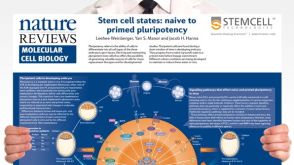 挂图Stem Cell States: Naive to Primed Pluripotency Properties of naive (ground) and primed pluripotent stem cells
 挂图Small Molecules, Big Impact in Pluripotent Stem Cell Research Overview of signaling pathways and small molecules in pluripotent stem cell research


 沪公网安备31010102008431号