Staphylococcus aureus-derived factors induce IL-10, IFN-γ and IL-17A-expressing FOXP3(+)CD161(+) T-helper cells in a partly monocyte-dependent manner.
Staphylococcus aureus (S. aureus) is a human pathogen as well as a frequent colonizer of skin and mucosa. This bacterium potently activates conventional T-cells through superantigens and it is suggested to induce T-cell cytokine-production as well as to promote a regulatory phenotype in T-cells in order to avoid clearance. This study aimed to investigate how S. aureus impacts the production of regulatory and pro-inflammatory cytokines and the expression of CD161 and HELIOS by peripheral CD4(+)FOXP3(+) T-cells. Stimulation of PBMC with S. aureus 161:2-cell free supernatant (CFS) induced expression of IL-10,IFN-γ and IL-17A in FOXP3(+) cells. Further,CD161 and HELIOS separated the FOXP3(+) cells into four distinct populations regarding cytokine-expression. Monocyte-depletion decreased S. aureus 161:2-induced activation of FOXP3(+) cells while pre-stimulation of purified monocytes with S. aureus 161:2-CFS and subsequent co-culture with autologous monocyte-depleted PBMC was sufficient to mediate activation of FOXP3(+) cells. Together,these data show that S. aureus potently induces FOXP3(+) cells and promotes a diverse phenotype with expression of regulatory and pro-inflammatory cytokines connected to increased CD161-expression. This could indicate potent regulation or a contribution of FOXP3(+) cells to inflammation and repression of immune-suppression upon encounter with S. aureus.
View Publication
A major role of TGF-beta1 in the homing capacities of murine hematopoietic stem cell/progenitors.
Transforming growth factor-beta1 (TGF-beta1) is a pleiotropic cytokine with major in vitro effects on hematopoietic stem cells (HSCs) and lymphocyte development. Little is known about hematopoiesis from mice with constitutive TGF-beta1 inactivation largely because of important embryonic lethality and development of a lethal inflammatory disorder in TGF-beta1(-/-) pups,making these studies difficult. Here,we show that no sign of the inflammatory disorder was detectable in 8- to 10-day-old TGF-beta1(-/-) neonates as judged by both the number of T-activated and T-regulator cells in secondary lymphoid organs and the level of inflammatory cytokines in sera. After T-cell depletion,the inflammatory disease was not transplantable in recipient mice. Bone marrow cells from 8- to 10-day-old TGF-beta1(-/-) neonates showed strikingly impaired short- and long-term reconstitutive activity associated with a parallel decreased in vivo homing capacity of lineage negative (Lin(-)) cells. In addition an in vitro-reduced survival of immature progenitors (Lin(-) Kit(+) Sca(+)) was observed. Similar defects were found in liver cells from TGF-beta1(-/-) embryos on day 14 after vaginal plug. These data indicate that TGF-beta1 is a critical regulator for in vivo homeostasis of the HSCs,especially for their homing potential.
View Publication


 EasySep™小鼠TIL(CD45)正选试剂盒




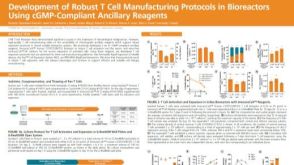 科学海报Development of Robust T Cell Manufacturing Protocols in Bioreactors Using cGMP-Compliant Ancillary Reagents
 沪公网安备31010102008431号