The Macrophage Galactose-Type C-Type Lectin (MGL) Modulates Regulatory T Cell Functions
Regulatory T cells (Tregs) are physiologically designed to prevent autoimmune disease and maintain self-tolerance. In tumour microenvironments,their presence is related to a poor prognosis,and they influence the therapeutic outcome due to their capacity to suppress the immune response by cell-cell contact and to release immunosuppressive cytokines. In this study,we demonstrate that Treg immunosuppressive activity can be modulated by the cross-linking between the CD45RA expressed by Tregs and the C-type lectin MGL. This specific interaction strongly decreases the immunosuppressive activity of Tregs,restoring the proliferative capacity of co-cultured T lymphocytes. This effect can be attributed to changes in CD45RA and TCR signalling through the inhibition of Lck and inactivation of Zap-70,an increase in the Foxp3 methylation status and,ultimately,the reduced production of suppressive cytokines. These results indicate a role of MGL as an immunomodulator within the tumour microenvironment interfering with Treg functions,suggesting its possible use in the design of anticancer vaccines.
View Publication
A major role of TGF-beta1 in the homing capacities of murine hematopoietic stem cell/progenitors.
Transforming growth factor-beta1 (TGF-beta1) is a pleiotropic cytokine with major in vitro effects on hematopoietic stem cells (HSCs) and lymphocyte development. Little is known about hematopoiesis from mice with constitutive TGF-beta1 inactivation largely because of important embryonic lethality and development of a lethal inflammatory disorder in TGF-beta1(-/-) pups,making these studies difficult. Here,we show that no sign of the inflammatory disorder was detectable in 8- to 10-day-old TGF-beta1(-/-) neonates as judged by both the number of T-activated and T-regulator cells in secondary lymphoid organs and the level of inflammatory cytokines in sera. After T-cell depletion,the inflammatory disease was not transplantable in recipient mice. Bone marrow cells from 8- to 10-day-old TGF-beta1(-/-) neonates showed strikingly impaired short- and long-term reconstitutive activity associated with a parallel decreased in vivo homing capacity of lineage negative (Lin(-)) cells. In addition an in vitro-reduced survival of immature progenitors (Lin(-) Kit(+) Sca(+)) was observed. Similar defects were found in liver cells from TGF-beta1(-/-) embryos on day 14 after vaginal plug. These data indicate that TGF-beta1 is a critical regulator for in vivo homeostasis of the HSCs,especially for their homing potential.
View Publication


 EasySep™小鼠TIL(CD45)正选试剂盒




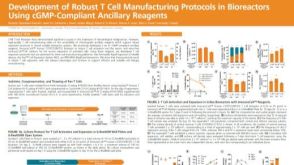 科学海报Development of Robust T Cell Manufacturing Protocols in Bioreactors Using cGMP-Compliant Ancillary Reagents
 沪公网安备31010102008431号