Nettenstrom L et al. (JAN 2013)
Journal of immunological methods 387 2-Jan 81--8
An optimized multi-parameter flow cytometry protocol for human T regulatory cell analysis on fresh and viably frozen cells, correlation with epigenetic analysis, and comparison of cord and adult blood.
Multi-parameter flow cytometry analysis of T regulatory (Treg) cells is a widely used approach in basic and translational research studies. This approach has been complicated by a lack of specific markers for Treg cells and lack of uniformity in the quantification of Treg cells. Given the central role of Treg cells in the inception and perpetuation of diverse immune responses as well as its target as a therapeutic,it is imperative to have established methodologies for Treg cell analysis that are robust and usable for studies with multiple subjects as well as multicenter studies. In this study,we describe an optimized multi-parameter flow cytometry protocol for the quantification of human Treg cells from freshly obtained and viably frozen samples and correlations with epigenetic Treg cell analysis (TSDR demethylation). We apply these two methodologies to characterize Treg cell differences between cord blood and adult peripheral blood. In summary,the optimized protocol appears to be robust for Treg cell quantification from freshly isolated or viably frozen cells and the multi-parameter flow cytometry findings are strongly positively correlated with TSDR demethylation thus providing several options for the characterization of Treg cell frequency and function in large translational or clinical studies.
View Publication
产品号#:
07930
07931
07940
07955
07956
07959
07954
100-1061
07952
产品名:
CryoStor® CS10
CryoStor® CS10
CryoStor® CS10
CryoStor® CS10
CryoStor® CS10
CryoStor® CS10
CryoStor® CS10
C. Imbratta et al. (apr 2019)
Scientific reports 9 1 6135
Maf deficiency in T cells dysregulates Treg - TH17 balance leading to spontaneous colitis.
The maintenance of homeostasis in the gut is a major challenge for the immune system. Here we demonstrate that the transcription factor MAF plays a central role in T cells for the prevention of gastro-intestinal inflammation. Conditional knock out mice lacking Maf in all T cells developed spontaneous late-onset colitis,correlating with a decrease of FOXP3+RORgammat+ T cells proportion,dampened IL-10 production in the colon and an increase of inflammatory TH17 cells. Strikingly,FOXP3+ specific conditional knock out mice for MAF did not develop colitis and demonstrated normal levels of IL-10 in their colon,despite the incapacity of regulatory T cells lacking MAF to suppress colon inflammation in Rag1-/- mice transferred with na{\{i}}ve CD4+ T cells. We showed that one of the cellular sources of IL-10 in the colon of these mice are TH17 cells. Thus MAF is critically involved in the maintenance of the gut homeostasis by regulating the balance between Treg and TH17 cells either at the level of their differentiation or through the modulation of their functions."
View Publication
Regulatory T Cells
Overview of the development, phenotype and functions of regulatory T cells
S. Bhatia et al. (may 2019)
Cancer research 79 10 2722--2735
Inhibition of EphB4-Ephrin-B2 Signaling Reprograms the Tumor Immune Microenvironment in Head and Neck Cancers.
Identifying targets present in the tumor microenvironment that contribute to immune evasion has become an important area of research. In this study,we identified EphB4-ephrin-B2 signaling as a regulator of both innate and adaptive components of the immune system. EphB4 belongs to receptor tyrosine kinase family that interacts with ephrin-B2 ligand at sites of cell-cell contact,resulting in bidirectional signaling. We found that EphB4-ephrin-B2 inhibition alone or in combination with radiation (RT) reduced intratumoral regulatory T cells (Tregs) and increased activation of both CD8+ and CD4+Foxp3- T cells compared with the control group in an orthotopic head and neck squamous cell carcinoma (HNSCC) model. We also compared the effect of EphB4-ephrin-B2 inhibition combined with RT with combined anti-PDL1 and RT and observed similar tumor growth suppression,particularly at early time-points. A patient-derived xenograft model showed reduction of tumor-associated M2 macrophages and favored polarization towards an antitumoral M1 phenotype following EphB4-ephrin-B2 inhibition with RT. In vitro,EphB4 signaling inhibition decreased Ki67-expressing Tregs and Treg activation compared with the control group. Overall,our study is the first to implicate the role of EphB4-ephrin-B2 in tumor immune response. Moreover,our findings suggest that EphB4-ephrin-B2 inhibition combined with RT represents a potential alternative for patients with HNSCC and could be particularly beneficial for patients who are ineligible to receive or cannot tolerate anti-PDL1 therapy. SIGNIFICANCE: These findings present EphB4-ephrin-B2 inhibition as an alternative to anti-PDL1 therapeutics that can be used in combination with radiation to induce an effective antitumor immune response in patients with HNSCC.
View Publication
产品号#:
17952
17952RF
100-0696
产品名:
EasySep™人CD4+ T细胞分选试剂盒
RoboSep™ 人CD4+ T细胞分选试剂盒
EasySep™人CD4+ T细胞分离试剂盒
B. L. Jamison et al. (jul 2019)
Journal of immunology (Baltimore,Md. : 1950) 203 1 48--57
Nanoparticles Containing an Insulin-ChgA Hybrid Peptide Protect from Transfer of Autoimmune Diabetes by Shifting the Balance between Effector T Cells and Regulatory T Cells.
CD4 T cells play a critical role in promoting the development of autoimmunity in type 1 diabetes. The diabetogenic CD4 T cell clone BDC-2.5,originally isolated from a NOD mouse,has been widely used to study the contribution of autoreactive CD4 T cells and relevant Ags to autoimmune diabetes. Recent work from our laboratory has shown that the Ag for BDC-2.5 T cells is a hybrid insulin peptide (2.5HIP) consisting of an insulin C-peptide fragment fused to a peptide from chromogranin A (ChgA) and that endogenous 2.5HIP-reactive T cells are major contributors to autoimmune pathology in NOD mice. The objective of this study was to determine if poly(lactide-co-glycolide) (PLG) nanoparticles (NPs) loaded with the 2.5HIP Ag (2.5HIP-coupled PLG NPs) can tolerize BDC-2.5 T cells. Infusion of 2.5HIP-coupled PLG NPs was found to prevent diabetes in an adoptive transfer model by impairing the ability of BDC-2.5 T cells to produce proinflammatory cytokines through induction of anergy,leading to an increase in the ratio of Foxp3+ regulatory T cells to IFN-gamma+ effector T cells. To our knowledge,this work is the first to use a hybrid insulin peptide,or any neoepitope,to re-educate diabetogenic T cells and may have significant implications for the development of an Ag-specific therapy for type 1 diabetes patients.
View Publication
产品号#:
19852
19852RF
18783
18783RF
18765
18765RF
产品名:
EasySep™小鼠CD4+ T细胞分选试剂盒
RoboSep™ 小鼠CD4+ T细胞分选试剂盒
EasySep™小鼠CD4+CD25+调节性T细胞分选试剂盒II
RoboSep™ 小鼠CD4+CD25+调节性T细胞分选试剂盒II
EasySep™小鼠CD4+ CD62L+ T细胞分选试剂盒
RoboSep™ 小鼠CD4+ CD62L+ T细胞分选试剂盒
Safinia N et al. (FEB 2016)
Oncotarget 7 7 7563--77
Successful expansion of functional and stable regulatory T cells for immunotherapy in liver transplantation.
Strategies to prevent organ transplant rejection whilst minimizing long-term immunosuppression are currently under intense investigation with regulatory T cells (Tregs) nearing clinical application. The clinical trial,ThRIL,recently commenced at King's College London,proposes to use Treg cell therapy to induce tolerance in liver transplant recipients,the success of which has the potential to revolutionize the management of these patients and enable a future of drug-free transplants. This is the first report of the manufacture of clinical grade Tregs from prospective liver transplant recipients via a CliniMACS-based GMP isolation technique and expanded using anti-CD3/CD28 beads,IL-2 and rapamycin. We report the enrichment of a pure,stable population of Tregs (textgreater95% CD4(+)CD25(+)FOXP3(+)),reaching adequate numbers for their clinical application. Our protocol proved successful in,influencing the expansion of superior functional Tregs,as compared to freshly isolated cells,whilst also preventing their conversion to Th17 cells under pro-inflammatory conditions. We conclude with the manufacture of the final Treg product in the clinical research facility (CRF),a prerequisite for the clinical application of these cells. The data presented in this manuscript together with the much-anticipated clinical results from ThRIL,will undoubtedly inform the improved management of the liver transplant recipient.
View Publication
Specificity for the tumor-associated self-antigen WT1 drives the development of fully functional memory T cells in the absence of vaccination.
Recently,vaccines against the Wilms Tumor antigen 1 (WT1) have been tested in cancer patients. However,it is currently not known whether physiologic levels of WT1 expression in stem and progenitor cells of normal tissue result in the deletion or tolerance induction of WT1-specific T cells. Here,we used an human leukocyte antigen-transgenic murine model to study the fate of human leukocyte antigen class-I restricted,WT1-specific T cells in the thymus and in the periphery. Thymocytes expressing a WT1-specific T-cell receptor derived from high avidity human CD8 T cells were positively selected into the single-positive CD8 population. In the periphery,T cells specific for the WT1 antigen differentiated into CD44-high memory phenotype cells,whereas T cells specific for a non-self-viral antigen retained a CD44(low) naive phenotype. Only the WT1-specific T cells,but not the virus-specific T cells,displayed rapid antigen-specific effector function without prior vaccination. Despite long-term persistence of WT1-specific memory T cells,the animals did not develop autoimmunity,and the function of hematopoietic stem and progenitor cells was unimpaired. This is the first demonstration that specificity for a tumor-associated self-antigen may drive differentiation of functionally competent memory T cells.
View Publication
产品号#:
09600
09650
19756
19756RF
产品名:
StemSpan™ SFEM
StemSpan™ SFEM
Engelhardt BG et al. (MAR 2011)
Bone marrow transplantation 46 3 436--42
Regulatory T cell expression of CLA or α(4)β(7) and skin or gut acute GVHD outcomes.
Regulatory T cells (Tregs) are a suppressive subset of CD4(+) T lymphocytes implicated in the prevention of acute GVHD (aGVHD) after allo-SCT (ASCT). To determine whether increased frequency of Tregs with a skin-homing (cutaneous lymphocyte Ag,CLA(+)) or a gut-homing (α(4)β(7)(+)) phenotype is associated with reduced risk of skin or gut aGVHD,respectively,we quantified circulating CLA(+) or α(4)β(7)(+) on Tregs at the time of neutrophil engraftment in 43 patients undergoing ASCT. Increased CLA(+) Tregs at engraftment was associated with the prevention of skin aGVHD (2.6 vs 1.7%; P=0.038 (no skin aGVHD vs skin aGVHD)),and increased frequencies of CLA(+) and α(4)β(7)(+) Tregs were negatively correlated with severity of skin aGVHD (odds ratio (OR),0.67; 95% confidence interval (CI),0.46-0.98; P=0.041) or gut aGVHD (OR,0.93; 95% CI,0.88-0.99; P=0.031),respectively. This initial report suggests that Treg tissue-homing subsets help to regulate organ-specific risk and severity of aGVHD after human ASCT. These results need to be validated in a larger,multicenter cohort.
View Publication
产品号#:
07930
07931
07940
07955
07956
07959
07954
100-1061
07952
产品名:
CryoStor® CS10
CryoStor® CS10
CryoStor® CS10
CryoStor® CS10
CryoStor® CS10
CryoStor® CS10
CryoStor® CS10
挂图
血液相关来源中人细胞类型的比例
List of the frequencies of over 35 cell types in normal human blood-related sources.


 EasySep™小鼠TIL(CD45)正选试剂盒




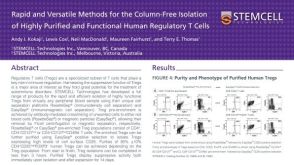 科学海报Column-Free Isolation of Highly Purified and Functional Human Regulatory T Cells
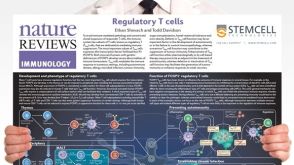 挂图Regulatory T Cells Overview of the development, phenotype and functions of regulatory T cells
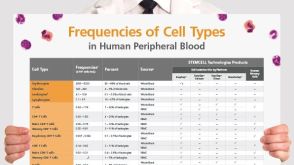 挂图血液相关来源中人细胞类型的比例 List of the frequencies of over 35 cell types in normal human blood-related sources.

 沪公网安备31010102008431号