Kaabinejadian S et al. (MAY 2016)
The Journal of Immunology 196 10 4263--73
Immunodominant West Nile virus T cell epitopes are fewer in number and fashionably late
Class I HLA molecules mark infected cells for immune targeting by presenting pathogen-encoded peptides on the cell surface. Characterization of viral peptides unique to infected cells is important for understanding CD8(+) T cell responses and for the development of T cell-based immunotherapies. Having previously reported a series of West Nile virus (WNV) epitopes that are naturally presented by HLA-A*02:01,in this study we generated TCR mimic (TCRm) mAbs to three of these peptide/HLA complexes-the immunodominant SVG9 (E protein),the subdominant SLF9 (NS4B protein),and the immunorecessive YTM9 (NS3 protein)-and used these TCRm mAbs to stain WNV-infected cell lines and primary APCs. TCRm staining of WNV-infected cells demonstrated that the immunorecessive YTM9 appeared several hours earlier and at 5- to 10-fold greater density than the more immunogenic SLF9 and SVG9 ligands,respectively. Moreover,staining following inhibition of the TAP demonstrated that all three viral ligands were presented in a TAP-dependent manner despite originating from different cellular compartments. To our knowledge,this study represents the first use of TCRm mAbs to define the kinetics and magnitude of HLA presentation for a series of epitopes encoded by one virus,and the results depict a pattern whereby individual epitopes differ considerably in abundance and availability. The observations that immunodominant ligands can be found at lower levels and at later time points after infection suggest that a reevaluation of the factors that combine to shape T cell reactivity may be warranted.
View Publication
产品号#:
03800
03801
03802
03803
03804
03805
03806
产品名:
ClonaCell™-HY杂交瘤试剂盒
ClonaCell™-HY培养基A
ClonaCell™-HY 培养基 B
ClonaCell™-HY 培养基 C
ClonaCell™-HY 培养基 D
ClonaCell™-HY 培养基 E
ClonaCell™-HY PEG
Loo CP et al. (NOV 2016)
Journal of immunology (Baltimore,Md. : 1950)
Blocking Virus Replication during Acute Murine Cytomegalovirus Infection Paradoxically Prolongs Antigen Presentation and Increases the CD8+ T Cell Response by Preventing Type I IFN-Dependent Depletion of Dendritic Cells.
Increasing amounts of pathogen replication usually lead to a proportionate increase in size and effector differentiation of the CD8(+) T cell response,which is attributed to increased Ag and inflammation. Using a murine CMV that is highly sensitive to the antiviral drug famciclovir to modulate virus replication,we found that increased virus replication drove increased effector CD8(+) T cell differentiation,as expected. Paradoxically,however,increased virus replication dramatically decreased the size of the CD8(+) T cell response to two immunodominant epitopes. The decreased response was due to type I IFN-dependent depletion of conventional dendritic cells and could be reproduced by specific depletion of dendritic cells from day 2 postinfection or by sterile induction of type I IFN. Increased virus replication and type I IFN specifically inhibited the response to two immunodominant epitopes that are known to be dependent on Ag cross-presented by DCs,but they did not inhibit the response to inflationary" epitopes whose responses can be sustained by infected nonhematopoietic cells. Our results show that type I IFN can suppress CD8(+) T cell responses to cross-presented Ag by depleting cross-presenting conventional dendritic cells."
View Publication
Self-reactive IgE exacerbates interferon responses associated with autoimmunity.
Canonically,immunoglobulin E (IgE) mediates allergic immune responses by triggering mast cells and basophils to release histamine and type 2 helper cytokines. Here we found that in human systemic lupus erythematosus (SLE),IgE antibodies specific for double-stranded DNA (dsDNA) activated plasmacytoid dendritic cells (pDCs),a type of cell of the immune system linked to viral defense,which led to the secretion of substantial amounts of interferon-α (IFN-α). The concentration of dsDNA-specific IgE found in patient serum correlated with disease severity and greatly potentiated pDC function by triggering phagocytosis via the high-affinity FcɛRI receptor for IgE,followed by Toll-like receptor 9 (TLR9)-mediated sensing of DNA in phagosomes. Our findings expand the known pathogenic mechanisms of IgE-mediated inflammation beyond those found in allergy and demonstrate that IgE can trigger interferon responses capable of exacerbating self-destructive autoimmune responses.
View Publication
产品号#:
17953
17953RF
100-0710
产品名:
EasySep™人CD8+ T细胞分选试剂盒
RoboSep™ 人CD8+ T细胞分选试剂盒
EasySep™人CD8+ T细胞分选试剂盒
Yang W et al. (MAR 2016)
Nature 531 7596 651--5
Potentiating the antitumour response of CD8(+) T cells by modulating cholesterol metabolism.
CD8(+) T cells have a central role in antitumour immunity,but their activity is suppressed in the tumour microenvironment. Reactivating the cytotoxicity of CD8(+) T cells is of great clinical interest in cancer immunotherapy. Here we report a new mechanism by which the antitumour response of mouse CD8(+) T cells can be potentiated by modulating cholesterol metabolism. Inhibiting cholesterol esterification in T cells by genetic ablation or pharmacological inhibition of ACAT1,a key cholesterol esterification enzyme,led to potentiated effector function and enhanced proliferation of CD8(+) but not CD4(+) T cells. This is due to the increase in the plasma membrane cholesterol level of CD8(+) T cells,which causes enhanced T-cell receptor clustering and signalling as well as more efficient formation of the immunological synapse. ACAT1-deficient CD8(+) T cells were better than wild-type CD8(+) T cells at controlling melanoma growth and metastasis in mice. We used the ACAT inhibitor avasimibe,which was previously tested in clinical trials for treating atherosclerosis and showed a good human safety profile,to treat melanoma in mice and observed a good antitumour effect. A combined therapy of avasimibe plus an anti-PD-1 antibody showed better efficacy than monotherapies in controlling tumour progression. ACAT1,an established target for atherosclerosis,is therefore also a potential target for cancer immunotherapy.
View Publication
产品号#:
19852
19852RF
19853
19853RF
产品名:
EasySep™小鼠CD4+ T细胞分选试剂盒
RoboSep™ 小鼠CD4+ T细胞分选试剂盒
EasySep™小鼠CD8+ T细胞分选试剂盒
RoboSep™ 小鼠CD8+ T细胞分选试剂盒
Lee-Chang C et al. (APR 2016)
Journal of Immunology 196 8 3385--97
Aging Converts Innate B1a Cells into Potent CD8+ T Cell Inducers.
B cell dysregulation in aging is thought to mostly occur in conventional B2 cells without affecting innate B1 cells. Elderly humans and mice also accumulate 4-1BBL(+)MHC class-I(Hi)CD86(Hi)B cells of unknown origin. In this article,we report that these cells,termed 4BL cells,are activated murine and possibly human B1a cells. The activation is mediated by aging human monocytes and murine peritoneal macrophages. They induce expression and activation of 4-1BBL and IFN-γR1 on B1a cells to subsequently upregulate membrane TNF-α and CD86. As a result,activated B1a/4BL cells induce expression of granzyme B in CD8(+)T cells by targeting TNFR2 via membrane TNF-α and providing costimulation with CD86. Thus,for the first time,to our knowledge,these results indicate that aging affects the function of B1a cells. Upon aging,these cells lose their tumor-supporting activity and become inducers of potentially antitumor and autoimmune CD8(+)T cells.
View Publication
产品号#:
19853
19853RF
19854
19854RF
产品名:
EasySep™小鼠CD8+ T细胞分选试剂盒
RoboSep™ 小鼠CD8+ T细胞分选试剂盒
EasySep™小鼠B细胞分选试剂盒
RoboSep™ 小鼠B细胞分选试剂盒
Sá et al. (JUL 2011)
Blood 118 4 955--64
Restriction of HIV-1 replication in macrophages and CD4+ T cells from HIV controllers.
How HIV controllers (HICs) maintain undetectable viremia without therapy is unknown. The strong CD8(+) T-cell HIV suppressive capacity found in many,but not all,HICs may contribute to long-lasting viral control. However,other earlier defense mechanisms may be involved. Here,we examined intrinsic HIC cell resistance to HIV-1 infection. After in vitro challenge,monocyte-derived macrophages and anti-CD3-activated CD4(+) T cells from HICs showed low HIV-1 susceptibility. CD4 T-cell resistance was independent of HIV-1 coreceptors and affected also SIVmac infection. CD4(+) T cells from HICs expressed ex vivo higher levels of p21(Waf1/Cip1),which has been involved in the control of HIV-1 replication,than cells from control subjects. However,HIV restriction in anti-CD3-activated CD4(+) T cells and macrophages was not associated with p21 expression. Restriction inhibited accumulation of reverse transcripts,leading to reduction of HIV-1 integrated proviruses. The block could be overcome by high viral inocula,suggesting the action of a saturable mechanism. Importantly,cell-associated HIV-1 DNA load was extremely low in HICs and correlated with CD4(+) T-cell permissiveness to infection. These results point to a contribution of intrinsic cell resistance to the control of infection and the containment of viral reservoir in HICs.
View Publication
产品号#:
21000
20119
20155
产品名:
RoboSep™- S
RoboSep™ 吸头组件抛光剂
RoboSep™分选管套装(9个塑料管)
Snyder CM et al. (OCT 2008)
Immunity 29 4 650--9
Memory inflation during chronic viral infection is maintained by continuous production of short-lived, functional T cells.
During persistent murine cytomegalovirus (MCMV) infection,the T cell response is maintained at extremely high intensity for the life of the host. These cells closely resemble human CMV-specific cells,which compose a major component of the peripheral T cell compartment in most people. Despite a phenotype that suggests extensive antigen-driven differentiation,MCMV-specific T cells remain functional and respond vigorously to viral challenge. We hypothesized that a low rate of antigen-driven proliferation would account for the maintenance of this population. Instead,we found that most of these cells divided only sporadically in chronically infected hosts and had a short half-life in circulation. The overall population was supported,at least in part,by memory T cells primed early in infection,as well as by recruitment of naive T cells at late times. Thus,these data show that memory inflation is maintained by a continuous replacement of short-lived,functional cells during chronic MCMV infection.
View Publication
产品号#:
15023
15063
19753
19753RF
产品名:
RosetteSep™人CD8+ T细胞富集抗体混合物
RosetteSep™人CD8+ T细胞富集抗体混合物
Poulin LF et al. (JUN 2010)
The Journal of experimental medicine 207 6 1261--71
Characterization of human DNGR-1+ BDCA3+ leukocytes as putative equivalents of mouse CD8alpha+ dendritic cells.
In mouse,a subset of dendritic cells (DCs) known as CD8alpha+ DCs has emerged as an important player in the regulation of T cell responses and a promising target in vaccination strategies. However,translation into clinical protocols has been hampered by the failure to identify CD8alpha+ DCs in humans. Here,we characterize a population of human DCs that expresses DNGR-1 (CLEC9A) and high levels of BDCA3 and resembles mouse CD8alpha+ DCs in phenotype and function. We describe the presence of such cells in the spleens of humans and humanized mice and report on a protocol to generate them in vitro. Like mouse CD8alpha+ DCs,human DNGR-1+ BDCA3hi DCs express Necl2,CD207,BATF3,IRF8,and TLR3,but not CD11b,IRF4,TLR7,or (unlike CD8alpha+ DCs) TLR9. DNGR-1+ BDCA3hi DCs respond to poly I:C and agonists of TLR8,but not of TLR7,and produce interleukin (IL)-12 when given innate and T cell-derived signals. Notably,DNGR-1+ BDCA3+ DCs from in vitro cultures efficiently internalize material from dead cells and can cross-present exogenous antigens to CD8+ T cells upon treatment with poly I:C. The characterization of human DNGR-1+ BDCA3hi DCs and the ability to grow them in vitro opens the door for exploiting this subset in immunotherapy.
View Publication


 EasySep™小鼠TIL(CD45)正选试剂盒




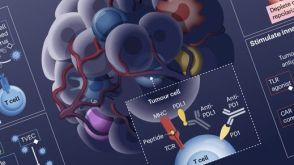 挂图Rational Combination of Cancer Therapies with PD1 Axis Blockade Lists the ways to combine new immunotherapeutic targets and modalities for your translational research.



 沪公网安备31010102008431号