Dendritic Cells but Not Macrophages Sense Tumor Mitochondrial DNA for Cross-priming through Signal Regulatory Protein α Signaling.
Inhibition of cytosolic DNA sensing represents a strategy that tumor cells use for immune evasion,but the underlying mechanisms are unclear. Here we have shown that CD47-signal regulatory protein α (SIRPα) axis dictates the fate of ingested DNA in DCs for immune evasion. Although macrophages were more potent in uptaking tumor DNA,increase of DNA sensing by blocking the interaction of SIRPα with CD47 preferentially occurred in dendritic cells (DCs) but not in macrophages. Mechanistically,CD47 blockade enabled the activation of NADPH oxidase NOX2 in DCs,which in turn inhibited phagosomal acidification and reduced the degradation of tumor mitochondrial DNA (mtDNA) in DCs. mtDNA was recognized by cyclic-GMP-AMP synthase (cGAS) in the DC cytosol,contributing to type I interferon (IFN) production and antitumor adaptive immunity. Thus,our findings have demonstrated how tumor cells inhibit innate sensing in DCs and suggested that the CD47-SIRPα axis is critical for DC-driven antitumor immunity.
View Publication
产品号#:
18780
18780RF
18781
18781RF
19853
19853RF
70025
70025.1
70025.2
70025.3
产品名:
EasySep™小鼠CD11c正选试剂盒II
RoboSep™ 小鼠CD11c正选试剂盒II
EasySep™小鼠CD11c正选试剂盒II及脾脏解离液
RoboSep™ 小鼠CD11c正选试剂盒II及脾脏解离液
EasySep™小鼠CD8+ T细胞分选试剂盒
RoboSep™ 小鼠CD8+ T细胞分选试剂盒
冻存的人外周血单个核细胞
冻存的人外周血单个核细胞
冻存的人外周血单个核细胞
冻存的人外周血单个核细胞
Sá et al. (JUN 2010)
Nature protocols 5 6 1033--41
Ex vivo T cell-based HIV suppression assay to evaluate HIV-specific CD8+ T-cell responses.
To advance T cell-based HIV vaccine development,it is necessary to evaluate the immune correlates of a protective CD8(+) T-cell response. We have developed an assay that assesses the capacity ex vivo of HIV-specific CD8(+) T cells to suppress HIV-1 infection of autologous CD4(+) T cells. This assay directly reflects the ultimate effector function of CD8(+) T cells,the elimination of infected cells,and accurately differentiates the effective CD8(+) T-cell response in spontaneous HIV controllers from ineffective responses in other patients. In this article,we describe all the steps from cell purification to assessment of viral replication by HIV-p24 ELISA and analysis,along with conditions for cell culturing,and how to choose the viral infectious dose that gives the most reliable results. We also depict the conditions of a rapid assay on the basis of flow cytometry analysis of intracellular HIV-Gag products. These procedures take 14-17 d when the p24 ELISA assay is used,or 6 d with the intracellular Gag assay.
View Publication
产品号#:
21000
20119
20155
19053
19053RF
20104
20124
产品名:
RoboSep™- S
RoboSep™ 吸头组件抛光剂
RoboSep™分选管套装(9个塑料管)
EasySep™人CD8+ T细胞富集试剂盒
RoboSep™ 人CD8+ T细胞富集试剂盒含滤芯吸头
RoboSep™ 缓冲液
RoboSep™ 缓冲液 (5X浓缩液)
Balkow S et al. (SEP 2010)
Blood 116 11 1885--94
LFA-1 activity state on dendritic cells regulates contact duration with T cells and promotes T-cell priming.
A key event in the successful induction of adaptive immune responses is the antigen-specific activation of T cells by dendritic cells (DCs). Although LFA-1 (lymphocyte function-associated antigen 1) on T cells is considered to be important for antigen-specific T-cell activation,the role for LFA-1 on DCs remains elusive. Using 2 different approaches to activate LFA-1 on DCs,either by deletion of the αL-integrin cytoplasmic GFFKR sequence or by silencing cytohesin-1-interacting protein,we now provide evidence that DCs are able to make use of active LFA-1 and can thereby control the contact duration with naive T cells. Enhanced duration of DC/T-cell interaction correlates inversely with antigen-specific T-cell proliferation,generation of T-helper 1 cells,and immune responses leading to delayed-type hypersensitivity. We could revert normal interaction time and T-cell proliferation to wild-type levels by inhibition of active LFA-1 on DCs. Our data further suggest that cytohesin-1-interacting protein might be responsible for controlling LFA-1 deactivation on mature DCs. In summary,our findings indicate that LFA-1 on DCs needs to be in an inactive state to ensure optimal T-cell activation and suggest that regulation of LFA-1 activity allows DCs to actively control antigen-driven T-cell proliferation and effective immune responses.
View Publication


 EasySep™小鼠TIL(CD45)正选试剂盒




 专家访谈Payel Sil, PhD Understanding the Role of Autophagy in Inflammation and Autoimmunity
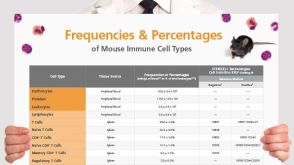 挂图Frequencies and Percentages of Mouse Immune Cell Types List of the frequencies of over 25 immune cell types in C57BL/6 mice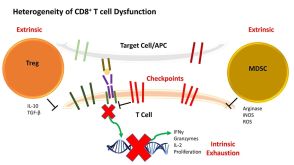


 沪公网安备31010102008431号