Ohoka Y et al. (JAN 2011)
Journal of immunology (Baltimore,Md. : 1950) 186 2 733--44
Retinoic acid-induced CCR9 expression requires transient TCR stimulation and cooperativity between NFATc2 and the retinoic acid receptor/retinoid X receptor complex.
Retinoic acid (RA) imprints gut-homing specificity on T cells upon activation by inducing the expression of chemokine receptor CCR9 and integrin α4β7. CCR9 expression seemed to be more highly dependent on RA than was the α4β7 expression,but its molecular mechanism remained unclear. In this article,we show that NFAT isoforms NFATc1 and NFATc2 directly interact with RA receptor (RAR) and retinoid X receptor (RXR) but play differential roles in RA-induced CCR9 expression on murine naive CD4(+) T cells. TCR stimulation for 6-24 h was required for the acquisition of responsiveness to RA and induced activation of NFATc1 and NFATc2. However,RA failed to induce CCR9 expression as long as TCR stimulation continued. After terminating TCR stimulation or adding cyclosporin A to the culture,Ccr9 gene transcription was induced,accompanied by inactivation of NFATc1 and sustained activation of NFATc2. Reporter and DNA-affinity precipitation assays demonstrated that the binding of NFATc2 to two NFAT-binding sites and that of the RAR/RXR complex to an RA response element half-site in the 5'-flanking region of the mouse Ccr9 gene were critical for RA-induced promoter activity. NFATc2 directly bound to RARα and RXRα,and it enhanced the binding of RARα to the RA response element half-site. NFATc1 also bound to the NFAT-binding sites and directly to RARα and RXRα,but it inhibited the NFATc2-dependent promoter activity. These results suggest that the cooperativity between NFATc2 and the RAR/RXR complex is essential for CCR9 expression on T cells and that NFATc1 interferes with the action of NFATc2.
View Publication
产品号#:
19752
19752RF
产品名:
Shi X et al. (MAY 2011)
Infection and immunity 79 5 2031--42
Thymopoietic and bone marrow response to murine Pneumocystis pneumonia.
CD4(+) T cells play a key role in host defense against Pneumocystis infection. To define the role of naïve CD4(+) T cell production through the thymopoietic response in host defense against Pneumocystis infection,Pneumocystis murina infection in the lung was induced in adult male C57BL/6 mice with and without prior thymectomy. Pneumocystis infection caused a significant increase in the number of CCR9(+) multipotent progenitor (MPP) cells in the bone marrow and peripheral circulation,an increase in populations of earliest thymic progenitors (ETPs) and double negative (DN) thymocytes in the thymus,and recruitment of naïve and total CD4(+) T cells into the alveolar space. The level of murine signal joint T cell receptor excision circles (msjTRECs) in spleen CD4(+) cells was increased at 5 weeks post-Pneumocystis infection. In thymectomized mice,the numbers of naïve,central memory,and total CD4(+) T cells in all tissues examined were markedly reduced following Pneumocystis infection. This deficiency of naïve and central memory CD4(+) T cells was associated with delayed pulmonary clearance of Pneumocystis. Extracts of Pneumocystis resulted in an increase in the number of CCR9(+) MPPs in the cultured bone marrow cells. Stimulation of cultured bone marrow cells with ligands to Toll-like receptor 2 ([TLR-2] zymosan) and TLR-9 (ODN M362) each caused a similar increase in CCR9(+) MPP cells via activation of the Jun N-terminal protein kinase (JNK) pathway. These results demonstrate that enhanced production of naïve CD4(+) T lymphocytes through the thymopoietic response and enhanced delivery of lymphopoietic precursors from the bone marrow play an important role in host defense against Pneumocystis infection.
View Publication
产品号#:
09600
09650
产品名:
StemSpan™ SFEM
StemSpan™ SFEM
Machmach K et al. (APR 2012)
Journal of virology 86 8 4245--52
Plasmacytoid dendritic cells reduce HIV production in elite controllers.
HIV elite controllers (EC) are a rare group of HIV-infected patients who are able to maintain undetectable viral loads during a long period of time in the absence of antiretroviral treatment. Adaptive immunity and host genetic factors,although implicated,do not entirely explain this phenomenon. On the other hand,plasmacytoid dendritic cells (pDCs) are the principal type I interferon (IFN) producers in response to viral infection,and it is unknown whether pDCs are involved in the control of HIV infection in EC. In our study,we analyzed peripheral pDC levels and IFN-α production by peripheral blood mononuclear cells (PBMCs) in EC compared to other groups of HIV-infected patients,the ability of pDCs to reduce HIV production in vitro,and the mechanisms potentially involved. We showed preserved pDC counts and IFN-α production in EC. We also observed a higher capacity of pDCs from EC to reduce HIV production and to induce T cell apoptosis,whereas pDCs from viremic patients barely responded without previous Toll-like receptor 9 (TLR-9) stimulus. The preserved functionality of pDCs from EC to reduce viral production may be one of the mechanisms involved in the control of HIV viremia in these subjects. These results demonstrate the importance of innate immunity in HIV pathogenesis,and an understanding of pDC mechanisms would be helpful for the design of new therapies.
View Publication
产品号#:
15022
15062
19062
19062RF
17977
17977RF
产品名:
RosetteSep™人CD4+ T细胞富集抗体混合物
RosetteSep™人CD4+ T细胞富集抗体混合物
EasySep™人浆细胞样DC富集试剂盒
RoboSep™ 人浆细胞样DC富集试剂盒含滤芯吸头
EasySep™人浆细胞样DC分选试剂盒
RoboSep™ 人浆细胞样DC分选试剂盒
Hansen AS et al. (OCT 2016)
Scientific reports 6 35406
Non-random pairing of CD46 isoforms with skewing towards BC2 and C2 in activated and memory/effector T cells.
CD46 is a glycoprotein with important functions in innate and adaptive immune responses. Functionally different isoforms are generated by alternative splicing at exons 7-9 (BC and C isoforms) and exon 13 (CYT-1 and CYT-2 isoforms) giving rise to BC1,BC2,C1 and C2. We developed a novel real-time PCR assay that allows quantitative comparisons between these isoforms. Their relative frequency in CD4(+) T cells from 100 donors revealed a distribution with high interpersonally variability. Importantly,the distribution between the isoforms was not random and although splicing favoured inclusion of exon 8 (BC isoforms),exclusion of exon 8 (C isoforms) was significantly linked to exclusion of exon 13 (CYT-2 isoforms). Despite inter-individual differences,CD4(+) and CD8(+) T cells,B cells,NK cells and monocytes expressed similar isoform profiles intra-individually. However,memory/effector CD4(+) T cells had a significantly higher frequency of CYT-2 when compared with naïve CD4(+) T cells. Likewise,in vitro activation of naïve and total CD4(+) T cells increased the expression of CYT-2. This indicates that although splicing factors determine a certain expression profile in an individual,the profile can be modulated by external stimuli. This suggests a mechanism by which alterations in CD46 isoforms may temporarily regulate the immune response.
View Publication


 EasySep™小鼠TIL(CD45)正选试剂盒




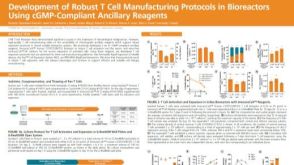 科学海报Development of Robust T Cell Manufacturing Protocols in Bioreactors Using cGMP-Compliant Ancillary Reagents
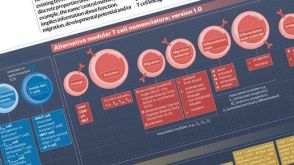 挂图T Cell Nomenclature: From Subsets to Modules A modular framework for classifying T cells by lineage, function, migration, differentiation, and antigen context.
 实验方案Optimizing Delivery Efficiency with Fluorescent Dextran Using the CellPore™ Transfection System



 沪公网安备31010102008431号