Blockade of XBP1 splicing by inhibition of IRE1? is a promising therapeutic option in multiple myeloma
Multiple myeloma (MM) cells are characterized by high protein synthesis resulting in chronic endoplasmic reticulum (ER) stress,which is adaptively managed by the unfolded protein response. Inositol-requiring enzyme 1? (IRE1?) is activated to splice X-box binding protein 1 (XBP1) mRNA,thereby increasing XBP1s protein,which in turn regulates genes responsible for protein folding and degradation during the unfolded protein response. In this study,we examined whether IRE1?-XBP1 pathway is a potential therapeutic target in MM using a small-molecule IRE1? endoribonuclease domain inhibitor MKC-3946. MKC-3946 triggered modest growth inhibition in MM cell lines,without toxicity in normal mononuclear cells. Importantly,it significantly enhanced cytotoxicity induced by bortezomib or 17-AAG,even in the presence of bone marrow stromal cells or exogenous IL-6. Both bortezomib and 17-AAG induced ER stress,evidenced by induction of XBP1s,which was blocked by MKC-3946. Apoptosis induced by these agents was enhanced by MKC-3946,associated with increased CHOP. Finally,MKC-3946 inhibited XBP1 splicing in a model of ER stress in vivo,associated with significant growth inhibition of MM cells. Taken together,our results demonstrate that blockade of XBP1 splicing by inhibition of IRE1? endoribonuclease domain is a potential therapeutic opt
View Publication
产品号#:
15129
15169
产品名:
RosetteSep™人多发性骨髓瘤细胞富集抗体混合物
RosetteSep™人多发性骨髓瘤细胞富集抗体混合物
M. Carrino et al. ( 2019)
Cell death discovery 5 98
Prosurvival autophagy is regulated by protein kinase CK1 alpha in multiple myeloma.
Multiple myeloma (MM) is a tumor of plasma cells (PCs). Due to the intense immunoglobulin secretion,PCs are prone to endoplasmic reticulum stress and activate several stress-managing pathways,including autophagy. Indeed,autophagy deregulation is maladaptive for MM cells,resulting in cell death. CK1alpha,a pro-survival kinase in MM,has recently been involved as a regulator of the autophagic flux and of the transcriptional competence of the autophagy-related transcription factor FOXO3a in several cancers. In this study,we investigated the role of CK1alpha in autophagy in MM. To study the autophagic flux we generated clones of MM cell lines expressing the mCherry-eGFP-LC3B fusion protein. We observed that CK1 inhibition with the chemical ATP-competitive CK1 alpha/delta inhibitor D4476 resulted in an impaired autophagic flux,likely due to an alteration of lysosomes acidification. However,D4476 caused the accumulation of the transcription factor FOXO3a in the nucleus,and this was paralleled by the upregulation of mRNA coding for autophagic genes. Surprisingly,silencing of CK1alpha by RNA interference triggered the autophagic flux. However,FOXO3a did not shuttle into the nucleus and the transcription of autophagy-related FOXO3a-dependent genes was not observed. Thus,while the chemical inhibition with the dual CK1alpha/delta inhibitor D4476 induced cell death as a consequence of an accumulation of ineffective autophagic vesicles,on the opposite,CK1alpha silencing,although it also determined apoptosis,triggered a full activation of the early autophagic flux,which was then not supported by the upregulation of autophagic genes. Taken together,our results indicate that the family of CK1 kinases may profoundly influence MM cells survival also through the modulation of the autophagic pathway.
View Publication


 EasySep™小鼠TIL(CD45)正选试剂盒




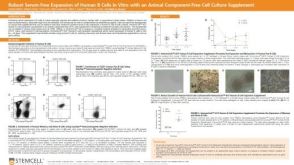 科学海报Robust Serum-Free Expansion of Human B Cells In Vitro with an Animal Component-Free Cell Culture Supplement

 沪公网安备31010102008431号