Perez-Campo FM et al. (JUN 2014)
STEM CELLS 32 6 1591--1601
MOZ-Mediated Repression of p16 INK 4 a Is Critical for the Self-Renewal of Neural and Hematopoietic Stem Cells
Although inhibition of p16(INK4a) expression is critical to preserve the proliferative capacity of stem cells,the molecular mechanisms responsible for silencing p16(INK4a) expression remain poorly characterized. Here,we show that the histone acetyltransferase (HAT) monocytic leukemia zinc finger protein (MOZ) controls the proliferation of both hematopoietic and neural stem cells by modulating the transcriptional repression of p16(INK4a) . In the absence of the HAT activity of MOZ,expression of p16(INK4a) is upregulated in progenitor and stem cells,inducing an early entrance into replicative senescence. Genetic deletion of p16(INK4a) reverses the proliferative defect in both Moz(HAT) (-) (/) (-) hematopoietic and neural progenitors. Our results suggest a critical requirement for MOZ HAT activity to silence p16(INK4a) expression and to protect stem cells from early entrance into replicative senescence.
View Publication
产品号#:
05700
05701
05702
05707
产品名:
NeuroCult™ 基础培养基(小鼠和大鼠)
NeuroCult™ 扩增添加物(小鼠和大鼠)
NeuroCult™扩增试剂盒(小鼠和大鼠)
NeuroCult™化学解离试剂盒(小鼠)
Peng S et al. (DEC 2015)
Annals of clinical and translational neurology 2 12 1085--104
Suppression of agrin-22 production and synaptic dysfunction in Cln1 (-/-) mice.
OBJECTIVE Oxidative stress in the brain is highly prevalent in many neurodegenerative disorders including lysosomal storage disorders,in which neurodegeneration is a devastating manifestation. Despite intense studies,a precise mechanism linking oxidative stress to neuropathology in specific neurodegenerative diseases remains largely unclear. METHODS Infantile neuronal ceroid lipofuscinosis (INCL) is a devastating neurodegenerative lysosomal storage disease caused by mutations in the ceroid lipofuscinosis neuronal-1 (CLN1) gene encoding palmitoyl-protein thioesterase-1. Previously,we reported that in the brain of Cln1 (-/-) mice,which mimic INCL,and in postmortem brain tissues from INCL patients,increased oxidative stress is readily detectable. We used molecular,biochemical,immunohistological,and electrophysiological analyses of brain tissues of Cln1 (-/-) mice to study the role(s) of oxidative stress in mediating neuropathology. RESULTS Our results show that in Cln1 (-/-) mice oxidative stress in the brain via upregulation of the transcription factor,CCAAT/enhancer-binding protein-δ,stimulated expression of serpina1,which is an inhibitor of a serine protease,neurotrypsin. Moreover,in the Cln1 (-/-) mice,suppression of neurotrypsin activity by serpina1 inhibited the cleavage of agrin (a large proteoglycan),which substantially reduced the production of agrin-22,essential for synaptic homeostasis. Direct whole-cell recordings at the nerve terminals of Cln1 (-/-) mice showed inhibition of Ca(2+) currents attesting to synaptic dysfunction. Treatment of these mice with a thioesterase-mimetic small molecule,N-tert (Butyl) hydroxylamine (NtBuHA),increased agrin-22 levels. INTERPRETATION Our findings provide insight into a novel pathway linking oxidative stress with synaptic pathology in Cln1 (-/-) mice and suggest that NtBuHA,which increased agrin-22 levels,may ameliorate synaptic dysfunction in this devastating neurodegenerative disease.
View Publication
产品号#:
05700
05701
05702
产品名:
NeuroCult™ 基础培养基(小鼠和大鼠)
NeuroCult™ 扩增添加物(小鼠和大鼠)
NeuroCult™扩增试剂盒(小鼠和大鼠)
Paquet D et al. (MAY 2016)
Nature 533 7601 125--129
Efficient introduction of specific homozygous and heterozygous mutations using CRISPR/Cas9
The bacterial CRISPR/Cas9 system allows sequence-specific gene editing in many organisms and holds promise as a tool to generate models of human diseases,for example,in human pluripotent stem cells. CRISPR/Cas9 introduces targeted double-stranded breaks (DSBs) with high efficiency,which are typically repaired by non-homologous end-joining (NHEJ) resulting in nonspecific insertions,deletions or other mutations (indels). DSBs may also be repaired by homology-directed repair (HDR) using a DNA repair template,such as an introduced single-stranded oligo DNA nucleotide (ssODN),allowing knock-in of specific mutations. Although CRISPR/Cas9 is used extensively to engineer gene knockouts through NHEJ,editing by HDR remains inefficient and can be corrupted by additional indels,preventing its widespread use for modelling genetic disorders through introducing disease-associated mutations. Furthermore,targeted mutational knock-in at single alleles to model diseases caused by heterozygous mutations has not been reported. Here we describe a CRISPR/Cas9-based genome-editing framework that allows selective introduction of mono- and bi-allelic sequence changes with high efficiency and accuracy. We show that HDR accuracy is increased dramatically by incorporating silent CRISPR/Cas-blocking mutations along with pathogenic mutations,and establish a method termed 'CORRECT' for scarless genome editing. By characterizing and exploiting a stereotyped inverse relationship between a mutation's incorporation rate and its distance to the DSB,we achieve predictable control of zygosity. Homozygous introduction requires a guide RNA targeting close to the intended mutation,whereas heterozygous introduction can be accomplished by distance-dependent suboptimal mutation incorporation or by use of mixed repair templates. Using this approach,we generated human induced pluripotent stem cells with heterozygous and homozygous dominant early onset Alzheimer's disease-causing mutations in amyloid precursor protein (APP(Swe)) and presenilin 1 (PSEN1(M146V)) and derived cortical neurons,which displayed genotype-dependent disease-associated phenotypes. Our findings enable efficient introduction of specific sequence changes with CRISPR/Cas9,facilitating study of human disease.
View Publication
产品号#:
05832
产品名:
STEMdiff™ 神经花环选择试剂
Oikawa T et al. (OCT 2015)
Nature communications 6 8070
Model of fibrolamellar hepatocellular carcinomas reveals striking enrichment in cancer stem cells.
The aetiology of human fibrolamellar hepatocellular carcinomas (hFL-HCCs),cancers occurring increasingly in children to young adults,is poorly understood. We present a transplantable tumour line,maintained in immune-compromised mice,and validate it as a bona fide model of hFL-HCCs by multiple methods. RNA-seq analysis confirms the presence of a fusion transcript (DNAJB1-PRKACA) characteristic of hFL-HCC tumours. The hFL-HCC tumour line is highly enriched for cancer stem cells as indicated by limited dilution tumourigenicity assays,spheroid formation and flow cytometry. Immunohistochemistry on the hFL-HCC model,with parallel studies on 27 primary hFL-HCC tumours,provides robust evidence for expression of endodermal stem cell traits. Transcriptomic analyses of the tumour line and of multiple,normal hepatic lineage stages reveal a gene signature for hFL-HCCs closely resembling that of biliary tree stem cells--newly discovered precursors for liver and pancreas. This model offers unprecedented opportunities to investigate mechanisms underlying hFL-HCCs pathogenesis and potential therapies.
View Publication
产品号#:
05707
产品名:
NeuroCult™化学解离试剂盒(小鼠)
Mü et al. (NOV 2016)
Molecular systems biology 12 11 889
Single-cell sequencing maps gene expression to mutational phylogenies in PDGF- and EGF-driven gliomas.
Glioblastoma multiforme (GBM) is the most common and aggressive type of primary brain tumor. Epidermal growth factor (EGF) and platelet-derived growth factor (PDGF) receptors are frequently amplified and/or possess gain-of-function mutations in GBM However,clinical trials of tyrosine-kinase inhibitors have shown disappointing efficacy,in part due to intra-tumor heterogeneity. To assess the effect of clonal heterogeneity on gene expression,we derived an approach to map single-cell expression profiles to sequentially acquired mutations identified from exome sequencing. Using 288 single cells,we constructed high-resolution phylogenies of EGF-driven and PDGF-driven GBMs,modeling transcriptional kinetics during tumor evolution. Descending the phylogenetic tree of a PDGF-driven tumor corresponded to a progressive induction of an oligodendrocyte progenitor-like cell type,expressing pro-angiogenic factors. In contrast,phylogenetic analysis of an EGFR-amplified tumor showed an up-regulation of pro-invasive genes. An in-frame deletion in a specific dimerization domain of PDGF receptor correlates with an up-regulation of growth pathways in a proneural GBM and enhances proliferation when ectopically expressed in glioma cell lines. In-frame deletions in this domain are frequent in public GBM data.
View Publication
产品号#:
05750
05751
产品名:
NeuroCult™ NS-A 基础培养基(人)
NeuroCult™ NS-A 扩增试剂盒(人)
Su CTE et al. (FEB 2015)
Journal of visualized experiments : JoVE 96 1--9
An Optogenetic Approach for Assessing Formation of Neuronal Connections in a Co-culture System.
Here we describe a protocol to generate a co-culture consisting of 2 different neuronal populations. Induced pluripotent stem cells (iPSCs) are reprogrammed from human fibroblasts using episomal vectors. Colonies of iPSCs can be observed 30 days after initiation of fibroblast reprogramming. Pluripotent colonies are manually picked and grown in neural induction medium to permit differentiation into neural progenitor cells (NPCs). iPSCs rapidly convert into neuroepithelial cells within 1 week and retain the capability to self-renew when maintained at a high culture density. Primary mouse NPCs are differentiated into astrocytes by exposure to a serum-containing medium for 7 days and form a monolayer upon which embryonic day 18 (E18) rat cortical neurons (transfected with channelrhodopsin-2 (ChR2)) are added. Human NPCs tagged with the fluorescent protein,tandem dimer Tomato (tdTomato),are then seeded onto the astrocyte/cortical neuron culture the following day and allowed to differentiate for 28 to 35 days. We demonstrate that this system forms synaptic connections between iPSC-derived neurons and cortical neurons,evident from an increase in the frequency of synaptic currents upon photostimulation of the cortical neurons. This co-culture system provides a novel platform for evaluating the ability of iPSC-derived neurons to create synaptic connections with other neuronal populations.
View Publication
产品号#:
05850
05857
05870
05875
85850
85857
85870
85875
产品名:
mTeSR™1
mTeSR™1
Yan Y et al. (FEB 2015)
1341 257--284
Generation of Neural Progenitor Spheres from Human Pluripotent Stem Cells in a Suspension Bioreactor
Conventional two-dimensional (2-D) culture systems cannot provide large numbers of human pluripotent stem cells (hPSCs) and their derivatives that are demanded for commercial and clinical applications in in vitro drug screening,disease modeling,and potentially cell therapy. The technologies that support three-dimensional (3-D) suspension culture,such as a stirred bioreactor,are generally considered as promising approaches to produce the required cells. Recently,suspension bioreactors have also been used to generate mini-brain-like structure from hPSCs for disease modeling,showing the important role of bioreactor in stem cell culture. This chapter describes a detailed culture protocol for neural commitment of hPSCs into neural progenitor cell (NPC) spheres using a spinner bioreactor. The basic steps to prepare hPSCs for bioreactor inoculation are illustrated from cell thawing to cell propagation. The method for generating NPCs from hPSCs in the spinner bioreactor along with the static control is then described. The protocol in this study can be applied to the generation of NPCs from hPSCs for further neural subtype specification,3-D neural tissue development,or potential preclinical studies or clinical applications in neurological diseases.
View Publication
产品号#:
05850
05857
05870
05875
72302
72304
72307
72308
85850
85857
85870
85875
100-1044
产品名:
Y-27632(二盐酸盐)
Y-27632(二盐酸盐)
Y-27632(二盐酸盐)
Y-27632(二盐酸盐)
mTeSR™1
mTeSR™1
Y-27632(二盐酸盐)
Goldstein BJ et al. (DEC 2016)
Development 143 23 4394--4404
Contribution of Polycomb group proteins to olfactory basal stem cell self-renewal in a novel c-KIT+ culture model and in vivo.
Olfactory epithelium (OE) has a lifelong capacity for neurogenesis due to the presence of basal stem cells. Despite the ability to generate short-term cultures,the successful in vitro expansion of purified stem cells from adult OE has not been reported. We sought to establish expansion-competent OE stem cell cultures to facilitate further study of the mechanisms and cell populations important in OE renewal. Successful cultures were prepared using adult mouse basal cells selected for expression of c-KIT. We show that c-KIT signaling regulates self-renewal capacity and prevents neurodifferentiation in culture. Inhibition of TGFβ family signaling,a known negative regulator of embryonic basal cells,is also necessary for maintenance of the proliferative,undifferentiated state in vitro Characterizing successful cultures,we identified expression of BMI1 and other Polycomb proteins not previously identified in olfactory basal cells but known to be essential for self-renewal in other stem cell populations. Inducible fate mapping demonstrates that BMI1 is expressed in vivo by multipotent OE progenitors,validating our culture model. These findings provide mechanistic insights into the renewal and potency of olfactory stem cells.
View Publication
产品号#:
05700
产品名:
NeuroCult™ 基础培养基(小鼠和大鼠)
Gallegos-Cá et al. (AUG 2015)
Stem cells and development 24 16 1901--1911
For diseases of the brain,the pig (Sus scrofa) is increasingly being used as a model organism that shares many anatomical and biological similarities with humans. We report that pig induced pluripotent stem cells (iPSC) can recapitulate events in early mammalian neural development. Pig iPSC line (POU5F1(high)/SSEA4(low)) had a higher potential to form neural rosettes (NR) containing neuroepithelial cells than either POU5F1(low)/SSEA4(low) or POU5F1(low)/SSEA4(high) lines. Thus,POU5F1 and SSEA4 pluripotency marker profiles in starting porcine iPSC populations can predict their propensity to form more robust NR populations in culture. The NR were isolated and expanded in vitro,retaining their NR morphology and neuroepithelial molecular properties. These cells expressed anterior central nervous system fate markers OTX2 and GBX2 through at least seven passages,and responded to retinoic acid,promoting a more posterior fate (HOXB4+,OTX2-,and GBX2-). These findings offer insight into pig iPSC development,which parallels the human iPSC in both anterior and posterior neural cell fates. These in vitro similarities in early neural differentiation processes support the use of pig iPSC and differentiated neural cells as a cell therapy in allogeneic porcine neural injury and degeneration models,providing relevant translational data for eventual human neural cell therapies.
View Publication
Purification of human induced pluripotent stem cell-derived neural precursors using magnetic activated cell sorting.
Neural precursor (NP) cells derived from human induced pluripotent stem cells (hiPSCs),and their neuronal progeny,will play an important role in disease modeling,drug screening tests,central nervous system development studies,and may even become valuable for regenerative medicine treatments. Nonetheless,it is challenging to obtain homogeneous and synchronously differentiated NP populations from hiPSCs,and after neural commitment many pluripotent stem cells remain in the differentiated cultures. Here,we describe an efficient and simple protocol to differentiate hiPSC-derived NPs in 12 days,and we include a final purification stage where Tra-1-60+ pluripotent stem cells (PSCs) are removed using magnetic activated cell sorting (MACS),leaving the NP population nearly free of PSCs.
View Publication
产品号#:
05850
05857
05870
05875
85850
85857
85870
85875
产品名:
mTeSR™1
mTeSR™1
Xie Y et al. (NOV 2014)
Stem Cell Reports 3 5 743--757
Defining the role of oxygen tension in human neural progenitor fate
Hypoxia augments human embryonic stem cell (hESC) self-renewal via hypoxia-inducible factor 2??-activated OCT4 transcription. Hypoxia also increases the efficiency of reprogramming differentiated cells to a pluripotent-like state. Combined,these findings suggest that low O2 tension would impair the purposeful differentiation of pluripotent stem cells. Here,we show that low O2 tension and hypoxiainducible factor (HIF) activity instead promote appropriate hESC differentiation. Through gain- and loss-of-function studies,we implicate O2 tension as a modifier of a key cell fate decision,namely whether neural progenitors differentiate toward neurons or glia. Furthermore,our data show that even transient changes in O2 concentration can affect cell fate through HIF by regulating the activity of MYC,a regulator of LIN28/let-7 that is critical for fate decisions in the neural lineage.We also identify key small molecules that can take advantage of this pathway to quickly and efficiently promote the development of mature cell types.
View Publication


 EasySep™小鼠TIL(CD45)正选试剂盒




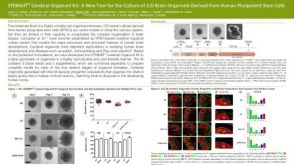 科学海报STEMdiff™ Cerebral Organoid Kit: A New Tool for the Culture of 3D Brain Organoids Derived from hPSCs
 沪公网安备31010102008431号