Miranda C et al. (OCT 2015)
Biotechnology Journal 10 10 1612--1624
Spatial and temporal control of cell aggregation efficiently directs human pluripotent stem cells towards neural commitment
3D suspension culture is generally considered a promising method to achieve efficient expansion and controlled differentiation of human pluripotent stem cells (hPSCs). In this work,we focused on developing an integrated culture platform for expansion and neural commitment of hPSCs into neural precursors using 3D suspension conditions and chemically-defined culture media. We evaluated different inoculation methodologies for hPSC expansion as 3D aggregates and characterized the resulting cultures in terms of aggregate size distribution. It was demonstrated that upon single-cell inoculation,after four days of culture,3D aggregates were composed of homogenous populations of hPSC and were characterized by an average diameter of 139 ± 26 μm,which was determined to be the optimal size to initiate neural commitment. Temporal analysis revealed that upon neural specification it is possible to maximize the percentage of neural precursor cells expressing the neural markers Sox1 and Pax6 after nine days of culture. These results highlight our ability to define a robust method for production of hPSC-derived neural precursors that minimizes processing steps and that constitutes a promising alternative to the traditional planar adherent culture system due to a high potential for scaling-up.
View Publication
产品号#:
05850
05857
05870
05875
27305
85850
85857
85870
85875
产品名:
mTeSR™1
mTeSR™1
Gallegos-Cá et al. (AUG 2015)
Stem cells and development 24 16 1901--1911
For diseases of the brain,the pig (Sus scrofa) is increasingly being used as a model organism that shares many anatomical and biological similarities with humans. We report that pig induced pluripotent stem cells (iPSC) can recapitulate events in early mammalian neural development. Pig iPSC line (POU5F1(high)/SSEA4(low)) had a higher potential to form neural rosettes (NR) containing neuroepithelial cells than either POU5F1(low)/SSEA4(low) or POU5F1(low)/SSEA4(high) lines. Thus,POU5F1 and SSEA4 pluripotency marker profiles in starting porcine iPSC populations can predict their propensity to form more robust NR populations in culture. The NR were isolated and expanded in vitro,retaining their NR morphology and neuroepithelial molecular properties. These cells expressed anterior central nervous system fate markers OTX2 and GBX2 through at least seven passages,and responded to retinoic acid,promoting a more posterior fate (HOXB4+,OTX2-,and GBX2-). These findings offer insight into pig iPSC development,which parallels the human iPSC in both anterior and posterior neural cell fates. These in vitro similarities in early neural differentiation processes support the use of pig iPSC and differentiated neural cells as a cell therapy in allogeneic porcine neural injury and degeneration models,providing relevant translational data for eventual human neural cell therapies.
View Publication
产品号#:
05850
05857
05870
05875
07923
85850
85857
85870
85875
产品名:
Dispase (1 U/mL)
mTeSR™1
mTeSR™1
Su CTE et al. (FEB 2015)
Journal of visualized experiments : JoVE 96 1--9
An Optogenetic Approach for Assessing Formation of Neuronal Connections in a Co-culture System.
Here we describe a protocol to generate a co-culture consisting of 2 different neuronal populations. Induced pluripotent stem cells (iPSCs) are reprogrammed from human fibroblasts using episomal vectors. Colonies of iPSCs can be observed 30 days after initiation of fibroblast reprogramming. Pluripotent colonies are manually picked and grown in neural induction medium to permit differentiation into neural progenitor cells (NPCs). iPSCs rapidly convert into neuroepithelial cells within 1 week and retain the capability to self-renew when maintained at a high culture density. Primary mouse NPCs are differentiated into astrocytes by exposure to a serum-containing medium for 7 days and form a monolayer upon which embryonic day 18 (E18) rat cortical neurons (transfected with channelrhodopsin-2 (ChR2)) are added. Human NPCs tagged with the fluorescent protein,tandem dimer Tomato (tdTomato),are then seeded onto the astrocyte/cortical neuron culture the following day and allowed to differentiate for 28 to 35 days. We demonstrate that this system forms synaptic connections between iPSC-derived neurons and cortical neurons,evident from an increase in the frequency of synaptic currents upon photostimulation of the cortical neurons. This co-culture system provides a novel platform for evaluating the ability of iPSC-derived neurons to create synaptic connections with other neuronal populations.
View Publication
产品号#:
05850
05857
05870
05875
85850
85857
85870
85875
产品名:
mTeSR™1
mTeSR™1
Rodrigues G et al. ( 2015)
1283 137--145
Purification of human induced pluripotent stem cell-derived neural precursors using magnetic activated cell sorting.
Neural precursor (NP) cells derived from human induced pluripotent stem cells (hiPSCs),and their neuronal progeny,will play an important role in disease modeling,drug screening tests,central nervous system development studies,and may even become valuable for regenerative medicine treatments. Nonetheless,it is challenging to obtain homogeneous and synchronously differentiated NP populations from hiPSCs,and after neural commitment many pluripotent stem cells remain in the differentiated cultures. Here,we describe an efficient and simple protocol to differentiate hiPSC-derived NPs in 12 days,and we include a final purification stage where Tra-1-60+ pluripotent stem cells (PSCs) are removed using magnetic activated cell sorting (MACS),leaving the NP population nearly free of PSCs.
View Publication
产品号#:
05850
05857
05870
05875
85850
85857
85870
85875
产品名:
mTeSR™1
mTeSR™1
Xie Y et al. (NOV 2014)
Stem Cell Reports 3 5 743--757
Defining the role of oxygen tension in human neural progenitor fate
Hypoxia augments human embryonic stem cell (hESC) self-renewal via hypoxia-inducible factor 2??-activated OCT4 transcription. Hypoxia also increases the efficiency of reprogramming differentiated cells to a pluripotent-like state. Combined,these findings suggest that low O2 tension would impair the purposeful differentiation of pluripotent stem cells. Here,we show that low O2 tension and hypoxiainducible factor (HIF) activity instead promote appropriate hESC differentiation. Through gain- and loss-of-function studies,we implicate O2 tension as a modifier of a key cell fate decision,namely whether neural progenitors differentiate toward neurons or glia. Furthermore,our data show that even transient changes in O2 concentration can affect cell fate through HIF by regulating the activity of MYC,a regulator of LIN28/let-7 that is critical for fate decisions in the neural lineage.We also identify key small molecules that can take advantage of this pathway to quickly and efficiently promote the development of mature cell types.
View Publication
Sox2 expression defines a heterogeneous population of neurosphere-forming cells in the adult murine brain.
The identification of neural stem cells (NSCs) in situ has been prevented by the inability to identify a marker consistently expressed in all adult NSCs and is thus generally accomplished using the in vitro neurosphere-forming assay. The high-mobility group transcription factor Sox2 is expressed in embryonic neural epithelial stem cells; because these cells are thought to give rise to the adult NSC population,we hypothesized that Sox2 may continue to be expressed in adult NSCs. Using Sox2:EGFP transgenic mice,we show that Sox2 is expressed in neurogenic regions along the rostral-caudal axis of the central nervous system throughout life. Furthermore,all neurospheres derived from these neurogenic regions express Sox2,suggesting that Sox2 is indeed expressed in adult NSCs. We demonstrate that NSCs are heterogeneous within the adult brain,with differing capacities for cell production. In vitro,all neurospheres express Sox2,but the expression of markers common to early progenitor cells within individual neurospheres varies; this heterogeneity of NSCs is mirrored in vivo. For example,both glial fibrillary acidic protein and NG2 are expressed within individual neurospheres,but their expression is mutually exclusive; likewise,these two markers show distinct staining patterns within the Sox2+ regions of the brain's neurogenic regions. Thus,we propose that the expression of Sox2 is a unifying characteristic of NSCs in the adult brain,but that not all NSCs maintain the ability to form all neural cell types in vivo.
View Publication
产品号#:
05700
05701
05702
产品名:
NeuroCult™ 基础培养基(小鼠和大鼠)
NeuroCult™ 扩增添加物(小鼠和大鼠)
NeuroCult™扩增试剂盒(小鼠和大鼠)
Lippmann ES et al. (APR 2014)
Stem Cells 32 4 1032--1042
Defined human pluripotent stem cell culture enables highly efficient neuroepithelium derivation without small molecule inhibitors.
The embryonic neuroepithelium gives rise to the entire central nervous system in vivo,making it an important tissue for developmental studies and a prospective cell source for regenerative applications. Current protocols for deriving homogenous neuroepithelial cultures from human pluripotent stem cells (hPSCs) consist of either embryoid body-mediated neuralization followed by a manual isolation step or adherent differentiation using small molecule inhibitors. Here,we report that hPSCs maintained under chemically defined,feeder-independent,and xeno-free conditions can be directly differentiated into pure neuroepithelial cultures ([mt]90% Pax6(+)/N-cadherin(+) with widespread rosette formation) within 6 days under adherent conditions,without small molecule inhibitors,and using only minimalistic medium consisting of Dulbecco's modified Eagle's medium/F-12,sodium bicarbonate,selenium,ascorbic acid,transferrin,and insulin (i.e.,E6 medium). Furthermore,we provide evidence that the defined culture conditions enable this high level of neural conversion in contrast to hPSCs maintained on mouse embryonic fibroblasts (MEFs). In addition,hPSCs previously maintained on MEFs could be rapidly converted to a neural compliant state upon transfer to these defined conditions while still maintaining their ability to generate all three germ layers. Overall,this fully defined and scalable protocol should be broadly useful for generating therapeutic neural cells for regenerative applications.
View Publication
产品号#:
05850
05857
05870
05875
85850
85857
85870
85875
产品名:
mTeSR™1
mTeSR™1
Young KM et al. (AUG 2007)
The Journal of neuroscience : the official journal of the Society for Neuroscience 27 31 8286--96
Subventricular zone stem cells are heterogeneous with respect to their embryonic origins and neurogenic fates in the adult olfactory bulb.
We determined the embryonic origins of adult forebrain subventricular zone (SVZ) stem cells by Cre-lox fate mapping in transgenic mice. We found that all parts of the telencephalic neuroepithelium,including the medial ganglionic eminence and lateral ganglionic eminence (LGE) and the cerebral cortex,contribute multipotent,self-renewing stem cells to the adult SVZ. Descendants of the embryonic LGE and cortex settle in ventral and dorsal aspects of the dorsolateral SVZ,respectively. Both populations contribute new (5-bromo-2'-deoxyuridine-labeled) tyrosine hydroxylase- and calretinin-positive interneurons to the adult olfactory bulb. However,calbindin-positive interneurons in the olfactory glomeruli were generated exclusively by LGE-derived stem cells. Thus,different SVZ stem cells have different embryonic origins,colonize different parts of the SVZ,and generate different neuronal progeny,suggesting that some aspects of embryonic patterning are preserved in the adult SVZ. This could have important implications for the design of endogenous stem cell-based therapies in the future.
View Publication
产品号#:
05700
05701
05702
05740
产品名:
NeuroCult™ 基础培养基(小鼠和大鼠)
NeuroCult™ 扩增添加物(小鼠和大鼠)
NeuroCult™扩增试剂盒(小鼠和大鼠)
Fernando P et al. (OCT 2005)
FASEB journal : official publication of the Federation of American Societies for Experimental Biology 19 12 1671--3
Neural stem cell differentiation is dependent upon endogenous caspase 3 activity.
Caspase proteases have become the focal point for the development and application of anti-apoptotic therapies in a variety of central nervous system diseases. However,this approach is based on the premise that caspase function is limited to invoking cell death signals. Here,we show that caspase-3 activity is elevated in nonapoptotic differentiating neuronal cell populations. Moreover,peptide inhibition of protease activity effectively inhibits the differentiation process in a cultured neurosphere model. These results implicate caspase-3 activation as a conserved feature of neuronal differentiation and suggest that targeted inhibition of this protease in neural cell populations may have unintended consequences.
View Publication
产品号#:
05700
05701
05702
05703
05704
产品名:
NeuroCult™ 基础培养基(小鼠和大鼠)
NeuroCult™ 扩增添加物(小鼠和大鼠)
NeuroCult™扩增试剂盒(小鼠和大鼠)
NeuroCult™ 分化添加物(小鼠和大鼠)
NeuroCult™ 分化试剂盒(小鼠和大鼠)
Lippmann ES et al. (FEB 2014)
Scientific reports 4 February 2014 4160
A retinoic acid-enhanced, multicellular human blood-brain barrier model derived from stem cell sources.
Blood-brain barrier (BBB) models are often used to investigate BBB function and screen brain-penetrating therapeutics,but it has been difficult to construct a human model that possesses an optimal BBB phenotype and is readily scalable. To address this challenge,we developed a human in vitro BBB model comprising brain microvascular endothelial cells (BMECs),pericytes,astrocytes and neurons derived from renewable cell sources. First,retinoic acid (RA) was used to substantially enhance BBB phenotypes in human pluripotent stem cell (hPSC)-derived BMECs,particularly through adherens junction,tight junction,and multidrug resistance protein regulation. RA-treated hPSC-derived BMECs were subsequently co-cultured with primary human brain pericytes and human astrocytes and neurons derived from human neural progenitor cells (NPCs) to yield a fully human BBB model that possessed significant tightness as measured by transendothelial electrical resistance (˜5,000 $\$(2)). Overall,this scalable human BBB model may enable a wide range of neuroscience studies.
View Publication
Hotta R et al. (APR 2016)
Neurogastroenterology and motility : the official journal of the European Gastrointestinal Motility Society 28 4 498--512
Isogenic enteric neural progenitor cells can replace missing neurons and glia in mice with Hirschsprung disease.
BACKGROUND Transplanting autologous patient-derived enteric neuronal stem/progenitor cells (ENSCs) is an innovative approach to replacing missing enteric neurons in patients with Hirschsprung disease (HSCR). Using autologous cells eliminates immunologic and ethical concerns raised by other cell sources. However,whether postnatal aganglionic bowel is permissive for transplanted ENSCs and whether ENSCs from HSCR patients can be successfully isolated,cultured,and transplanted in vivo remains unknown. METHODS ENSCs isolated from the ganglionic intestine of Ednrb(-/-) mice (HSCR-ENSCs) were characterized immunohistochemically and evaluated for their capacity to proliferate and differentiate in vitro. Fluorescently labeled ENSCs were co-cultured ex vivo with aganglionic Ednrb(-/-) colon. For in vivo transplantation,HSCR-ENSCs were labeled with lentivirus expressing green fluorescent protein (GFP) and implanted into aganglionic embryonic chick gut in ovo and postnatal aganglionic Ednrb(-/-) rectum in vivo. KEY RESULTS HSCR-ENSCs maintain normal capacity self-renewal and neuronal differentiation. Moreover,the Ednrb(-/-) aganglionic environment is permissive to engraftment by wild-type ENSCs ex vivo and supports migratrion and neuroglial differentiation of these cells following transplantation in vivo. Lentiviral GFP-labeled HSCR-ENSCs populated embryonic chick hindgut and postnatal colon of Ednrb(-/-) HSCR,with cells populating the intermuscular layer and forming enteric neurons and glia. CONCLUSIONS & INFERENCES ENSCs can be isolated and cultured from mice with HSCR,and transplanted into the aganglionic bowel of HSCR littermates to generate enteric neuronal networks. These results in an isogenic model establish the potential of using autologous-derived stem cells to treat HSCR and other intestinal neuropathies.
View Publication


 EasySep™小鼠TIL(CD45)正选试剂盒




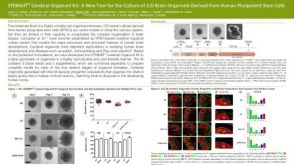 科学海报STEMdiff™ Cerebral Organoid Kit: A New Tool for the Culture of 3D Brain Organoids Derived from hPSCs
 沪公网安备31010102008431号