Sox2 expression defines a heterogeneous population of neurosphere-forming cells in the adult murine brain.
The identification of neural stem cells (NSCs) in situ has been prevented by the inability to identify a marker consistently expressed in all adult NSCs and is thus generally accomplished using the in vitro neurosphere-forming assay. The high-mobility group transcription factor Sox2 is expressed in embryonic neural epithelial stem cells; because these cells are thought to give rise to the adult NSC population,we hypothesized that Sox2 may continue to be expressed in adult NSCs. Using Sox2:EGFP transgenic mice,we show that Sox2 is expressed in neurogenic regions along the rostral-caudal axis of the central nervous system throughout life. Furthermore,all neurospheres derived from these neurogenic regions express Sox2,suggesting that Sox2 is indeed expressed in adult NSCs. We demonstrate that NSCs are heterogeneous within the adult brain,with differing capacities for cell production. In vitro,all neurospheres express Sox2,but the expression of markers common to early progenitor cells within individual neurospheres varies; this heterogeneity of NSCs is mirrored in vivo. For example,both glial fibrillary acidic protein and NG2 are expressed within individual neurospheres,but their expression is mutually exclusive; likewise,these two markers show distinct staining patterns within the Sox2+ regions of the brain's neurogenic regions. Thus,we propose that the expression of Sox2 is a unifying characteristic of NSCs in the adult brain,but that not all NSCs maintain the ability to form all neural cell types in vivo.
View Publication
产品号#:
05700
05701
05702
产品名:
NeuroCult™ 基础培养基(小鼠和大鼠)
NeuroCult™ 扩增添加物(小鼠和大鼠)
NeuroCult™扩增试剂盒(小鼠和大鼠)
Elliott E and Ginzburg I (JAN 2009)
FEBS letters 583 1 229--34
BAG-1 is preferentially expressed in neuronal precursor cells of the adult mouse brain and regulates their proliferation in vitro.
BAG-1 protein has been well characterized as necessary for proper neuronal development. However,little is known about the function of BAG-1 in the adult brain. In this work,the expression and localization of BAG-1 in the mature mouse brain was studied. The levels of both BAG-1 isoforms decrease significantly in the brain during development. BAG-1 was found preferentially expressed in Neuronal Precursor Cells (NPCs) in the two major niches of neurogenesis. Lentiviral mediated overexpression of BAG-1 increased the proliferation rate of cultured NPCs. In addition,depletion of BAG-1 from NPCs induced a decrease in NPCs proliferation in the presence of a stress hormone,corticosterone. These data suggest a role for BAG-1 in mechanisms of neurogenesis in the adult mouse brain.
View Publication
Young KM et al. (AUG 2007)
The Journal of neuroscience : the official journal of the Society for Neuroscience 27 31 8286--96
Subventricular zone stem cells are heterogeneous with respect to their embryonic origins and neurogenic fates in the adult olfactory bulb.
We determined the embryonic origins of adult forebrain subventricular zone (SVZ) stem cells by Cre-lox fate mapping in transgenic mice. We found that all parts of the telencephalic neuroepithelium,including the medial ganglionic eminence and lateral ganglionic eminence (LGE) and the cerebral cortex,contribute multipotent,self-renewing stem cells to the adult SVZ. Descendants of the embryonic LGE and cortex settle in ventral and dorsal aspects of the dorsolateral SVZ,respectively. Both populations contribute new (5-bromo-2'-deoxyuridine-labeled) tyrosine hydroxylase- and calretinin-positive interneurons to the adult olfactory bulb. However,calbindin-positive interneurons in the olfactory glomeruli were generated exclusively by LGE-derived stem cells. Thus,different SVZ stem cells have different embryonic origins,colonize different parts of the SVZ,and generate different neuronal progeny,suggesting that some aspects of embryonic patterning are preserved in the adult SVZ. This could have important implications for the design of endogenous stem cell-based therapies in the future.
View Publication
Fernando P et al. (OCT 2005)
FASEB journal : official publication of the Federation of American Societies for Experimental Biology 19 12 1671--3
Neural stem cell differentiation is dependent upon endogenous caspase 3 activity.
Caspase proteases have become the focal point for the development and application of anti-apoptotic therapies in a variety of central nervous system diseases. However,this approach is based on the premise that caspase function is limited to invoking cell death signals. Here,we show that caspase-3 activity is elevated in nonapoptotic differentiating neuronal cell populations. Moreover,peptide inhibition of protease activity effectively inhibits the differentiation process in a cultured neurosphere model. These results implicate caspase-3 activation as a conserved feature of neuronal differentiation and suggest that targeted inhibition of this protease in neural cell populations may have unintended consequences.
View Publication
产品号#:
05700
05701
05702
05703
05704
产品名:
NeuroCult™ 基础培养基(小鼠和大鼠)
NeuroCult™ 扩增添加物(小鼠和大鼠)
NeuroCult™扩增试剂盒(小鼠和大鼠)
NeuroCult™ 分化添加物(小鼠和大鼠)
NeuroCult™ 分化试剂盒(小鼠和大鼠)
Paulsen BdS et al. (APR 2014)
Schizophrenia Research 154 1-3 30--35
Valproate reverts zinc and potassium imbalance in schizophrenia-derived reprogrammed cells
Schizophrenia has been considered a devastating clinical syndrome rather than a single disease. Nevertheless,the mechanisms behind the onset of schizophrenia have been only partially elucidated. Several studies propose that levels of trace elements are abnormal in schizophrenia; however,conflicting data generated from different biological sources prevent conclusions being drawn. In this work,we used synchrotron radiation X-ray microfluorescence spectroscopy to compare trace element levels in neural progenitor cells (NPCs) derived from two clones of induced pluripotent stem cell lines of a clozapine-resistant schizophrenic patient and two controls. Our data reveal the presence of elevated levels of potassium and zinc in schizophrenic NPCs. Neural cells treated with valproate,an adjunctive medication for schizophrenia,brought potassium and zinc content back to control levels. These results expand the understanding of atomic element imbalance related to schizophrenia and may provide novel insights for the screening of drugs to treat mental disorders. ?? 2014 Elsevier B.V.
View Publication
产品号#:
05850
05857
05870
05875
85850
85857
85870
85875
产品名:
mTeSR™1
mTeSR™1
Ma I and Allan AL (JUN 2011)
Stem cell reviews 7 2 292--306
The role of human aldehyde dehydrogenase in normal and cancer stem cells.
Normal stem cells and cancer stem cells (CSCs) share similar properties,in that both have the capacity to self-renew and differentiate into multiple cell types. In both the normal stem cell and cancer stem cell fields,there has been a great need for a universal marker that can effectively identify and isolate these rare populations of cells in order to characterize them and use this information for research and therapeutic purposes. Currently,it would appear that certain isoenzymes of the aldehyde dehydrogenase (ALDH) superfamily may be able to fulfill this role as a marker for both normal and cancer stem cells. ALDH has been identified as an important enzyme in the protection of normal hematopoietic stem cells,and is now also widely used as a marker to identify and isolate various types of normal stem cells and CSCs. In addition,emerging evidence suggests that ALDH1 is not only a marker for stem cells,but may also play important functional roles related to self-protection,differentiation,and expansion. This comprehensive review discusses the role that ALDH plays in normal stem cells and CSCs,with focus on ALDH1 and ALDH3A1. Discrepancies in the functional themes between cell types and future perspectives for therapeutic applications will also be discussed.
View Publication
产品号#:
01700
01705
01702
产品名:
ALDEFLUOR™ 试剂盒
ALDEFLUOR™ DEAB试剂, 1.5 mM, 1 mL
ALDEFLUOR™检测缓冲液
Mazur-Kolecka B et al. (MAY 2012)
Journal of neuroscience research 90 5 999--1010
Effect of DYRK1A activity inhibition on development of neuronal progenitors isolated from Ts65Dn mice.
Overexpression of dual-specificity tyrosine-(Y)-phosphorylation-regulated kinase 1A (DYRK1A),encoded by a gene located in the Down syndrome (DS) critical region,is considered a major contributor to developmental abnormalities in DS. DYRK1A regulates numerous genes involved in neuronal commitment,differentiation,maturation,and apoptosis. Because alterations of neurogenesis could lead to impaired brain development and mental retardation in individuals with DS,pharmacological normalization of DYRK1A activity has been postulated as DS therapy. We tested the effect of harmine,a specific DYRK1A inhibitor,on the development of neuronal progenitor cells (NPCs) isolated from the periventricular zone of newborn mice with segmental trisomy 16 (Ts65Dn mice),a mouse model for DS that overexpresses Dyrk1A by 1.5-fold. Trisomy did not affect the ability of NPCs to expand in culture. Twenty-four hours after stimulation of migration and neuronal differentiation,NPCs showed increased expression of Dyrk1A,particularly in the trisomic cultures. After 7 days,NPCs developed into a heterogeneous population of differentiating neurons and astrocytes that expressed Dyrk1A in the nuclei. In comparison with disomic cells,NPCs with trisomy showed premature neuronal differentiation and enhanced γ-aminobutyric acid (GABA)-ergic differentiation,but astrocyte development was unchanged. Harmine prevented premature neuronal maturation of trisomic NPCs but not acceleration of GABA-ergic development. In control NPCs,harmine treatment caused altered neuronal development of NPCs,similar to that in trisomic NPCs with Dyrk1A overexpression. This study suggests that pharmacological normalization of DYRK1A activity may have a potential role in DS therapy.
View Publication
产品号#:
05700
05701
05702
05703
05704
05707
产品名:
NeuroCult™ 基础培养基(小鼠和大鼠)
NeuroCult™ 扩增添加物(小鼠和大鼠)
NeuroCult™扩增试剂盒(小鼠和大鼠)
NeuroCult™ 分化添加物(小鼠和大鼠)
NeuroCult™ 分化试剂盒(小鼠和大鼠)
NeuroCult™化学解离试剂盒(小鼠)
Arscott WT et al. (SEP 2011)
Brain research 1413 1--8
Interferon β-1b directly modulates human neural stem/progenitor cell fate.
Interferon beta (IFN-β) is a mainline treatment for multiple sclerosis (MS); however its exact mechanism of action is not completely understood. IFN-β is known as an immunomodulator; although recent evidence suggests that IFN-β may also act directly on neural stem/progenitor cells (NPCs) in the central nervous system (CNS). NPCs can differentiate into all neural lineage cells,which could contribute to the remyelination and repair of MS lesions. Understanding how IFN-β influences NPC physiology is critical to develop more specific therapies that can better assist this repair process. In this study,we investigated the effects of IFN β-1b (Betaseron®) on human NPCs in vitro (hNPCs). Our data demonstrate a dose-dependent response of hNPCs to IFN β-1b treatment via sustained proliferation and differentiation. Furthermore,we offer insight into the signaling pathways involved in these mechanisms. Overall,this study shows a direct effect of IFN β-1b on hNPCs and highlights the need to further understand how current MS treatments can modulate endogenous NPC populations within the CNS.
View Publication
Heterotopically transplanted CVO neural stem cells generate neurons and migrate with SVZ cells in the adult mouse brain.
Production of new neurons throughout adulthood has been well characterized in two brain regions,the subventricular zone (SVZ) of the anterolateral ventricle and the subgranular zone (SGZ) of the hippocampus. The neurons produced from these regions arise from neural stem cells (NSCs) found in highly regulated stem cell niches. We recently showed that midline structures called circumventricular organs (CVOs) also contain NSCs capable of neurogenesis and/or astrogliogenesis in vitro and in situ (Bennett et al.). The present study demonstrates that NSCs derived from two astrogliogenic CVOs,the median eminence and organum vasculosum of the lamina terminalis of the nestin-GFP mouse,possess the potential to integrate into the SVZ and differentiate into cells with a neuronal phenotype. These NSCs,following expansion and BrdU-labeling in culture and heterotopic transplantation into a region proximal to the SVZ in adult mice,migrate caudally to the SVZ and express early neuronal markers (TUC-4,PSA-NCAM) as they migrate along the rostral migratory stream. CVO-derived BrdU(+) cells ultimately reach the olfactory bulb where they express early (PSA-NCAM) and mature (NeuN) neuronal markers. Collectively,these data suggest that although NSCs derived from the ME and OVLT CVOs are astrogliogenic in situ,they produce cells phenotypic of neurons in vivo when placed in a neurogenic environment. These findings may have implications for neural repair in the adult brain.
View Publication


 EasySep™小鼠TIL(CD45)正选试剂盒




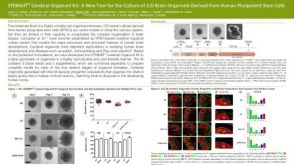 科学海报STEMdiff™ Cerebral Organoid Kit: A New Tool for the Culture of 3D Brain Organoids Derived from hPSCs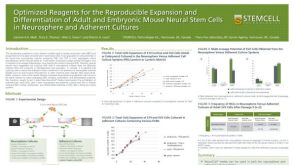

 沪公网安备31010102008431号