Lu J et al. (OCT 2012)
Integrative biology : quantitative biosciences from nano to macro 4 10 1223--36
Advancing practical usage of microtechnology: a study of the functional consequences of dielectrophoresis on neural stem cells.
The integration of microscale engineering,microfluidics,and AC electrokinetics such as dielectrophoresis has generated novel microsystems that enable quantitative analysis of cellular phenotype,function,and physiology. These systems are increasingly being used to assess diverse cell types,such as stem cells,so it becomes critical to thoroughly evaluate whether the systems themselves impact cell function. For example,engineered microsystems have been utilized to investigate neural stem/progenitor cells (NSPCs),which are of interest due to their potential to treat CNS disease and injury. Analysis by dielectrophoresis (DEP) microsystems determined that unlabeled NSPCs with distinct fate potential have previously unrecognized distinguishing electrophysiological characteristics,suggesting that NSPCs could be isolated by DEP microsystems without the use of cell type specific labels. To gauge the potential impact of DEP sorting on NSPCs,we investigated whether electric field exposure of varying times affected survival,proliferation,or fate potential of NSPCs in suspension. We found short-term DEP exposure (1 min or less) had no effect on NSPC survival,proliferation,or fate potential revealed by differentiation. Moreover,NSPC proliferation (measured by DNA synthesis and cell cycle kinetics) and fate potential were not altered by any length of DEP exposure (up to 30 min). However,lengthy exposure (textgreater5 min) to frequencies near the crossover frequency (50-100 kHz) led to decreased survival of NSPCs (maximum ∼30% cell loss after 30 min). Based on experimental observations and mathematical simulations of cells in suspension,we find that frequencies near the crossover frequency generate an induced transmembrane potential that results in cell swelling and rupture. This is in contrast to the case for adherent cells since negative DEP frequencies lower than the crossover frequency generate the highest induced transmembrane potential and damage for these cells. We clarify contrasting effects of DEP on adherent and suspended cells,which are related to the cell position within the electric field and the strength of the electric field at specific distances from the electrodes. Modeling of electrode configurations predicts optimal designs to induce cell movement by DEP while limiting the induced transmembrane potential. We find DEP electric fields are not harmful to stem cells in suspension at short exposure times,thus providing a basis for developing DEP-based applications for stem cells.
View Publication
产品号#:
05707
产品名:
NeuroCult™化学解离试剂盒(小鼠)
Mazur-Kolecka B et al. (MAY 2012)
Journal of neuroscience research 90 5 999--1010
Effect of DYRK1A activity inhibition on development of neuronal progenitors isolated from Ts65Dn mice.
Overexpression of dual-specificity tyrosine-(Y)-phosphorylation-regulated kinase 1A (DYRK1A),encoded by a gene located in the Down syndrome (DS) critical region,is considered a major contributor to developmental abnormalities in DS. DYRK1A regulates numerous genes involved in neuronal commitment,differentiation,maturation,and apoptosis. Because alterations of neurogenesis could lead to impaired brain development and mental retardation in individuals with DS,pharmacological normalization of DYRK1A activity has been postulated as DS therapy. We tested the effect of harmine,a specific DYRK1A inhibitor,on the development of neuronal progenitor cells (NPCs) isolated from the periventricular zone of newborn mice with segmental trisomy 16 (Ts65Dn mice),a mouse model for DS that overexpresses Dyrk1A by 1.5-fold. Trisomy did not affect the ability of NPCs to expand in culture. Twenty-four hours after stimulation of migration and neuronal differentiation,NPCs showed increased expression of Dyrk1A,particularly in the trisomic cultures. After 7 days,NPCs developed into a heterogeneous population of differentiating neurons and astrocytes that expressed Dyrk1A in the nuclei. In comparison with disomic cells,NPCs with trisomy showed premature neuronal differentiation and enhanced γ-aminobutyric acid (GABA)-ergic differentiation,but astrocyte development was unchanged. Harmine prevented premature neuronal maturation of trisomic NPCs but not acceleration of GABA-ergic development. In control NPCs,harmine treatment caused altered neuronal development of NPCs,similar to that in trisomic NPCs with Dyrk1A overexpression. This study suggests that pharmacological normalization of DYRK1A activity may have a potential role in DS therapy.
View Publication
产品号#:
05700
05701
05702
05703
05704
05707
产品名:
NeuroCult™ 基础培养基(小鼠和大鼠)
NeuroCult™ 扩增添加物(小鼠和大鼠)
NeuroCult™扩增试剂盒(小鼠和大鼠)
NeuroCult™ 分化添加物(小鼠和大鼠)
NeuroCult™ 分化试剂盒(小鼠和大鼠)
NeuroCult™化学解离试剂盒(小鼠)
Arscott WT et al. (SEP 2011)
Brain research 1413 1--8
Interferon β-1b directly modulates human neural stem/progenitor cell fate.
Interferon beta (IFN-β) is a mainline treatment for multiple sclerosis (MS); however its exact mechanism of action is not completely understood. IFN-β is known as an immunomodulator; although recent evidence suggests that IFN-β may also act directly on neural stem/progenitor cells (NPCs) in the central nervous system (CNS). NPCs can differentiate into all neural lineage cells,which could contribute to the remyelination and repair of MS lesions. Understanding how IFN-β influences NPC physiology is critical to develop more specific therapies that can better assist this repair process. In this study,we investigated the effects of IFN β-1b (Betaseron®) on human NPCs in vitro (hNPCs). Our data demonstrate a dose-dependent response of hNPCs to IFN β-1b treatment via sustained proliferation and differentiation. Furthermore,we offer insight into the signaling pathways involved in these mechanisms. Overall,this study shows a direct effect of IFN β-1b on hNPCs and highlights the need to further understand how current MS treatments can modulate endogenous NPC populations within the CNS.
View Publication
产品号#:
05751
产品名:
NeuroCult™ NS-A 扩增试剂盒(人)
Ma I and Allan AL (JUN 2011)
Stem cell reviews 7 2 292--306
The role of human aldehyde dehydrogenase in normal and cancer stem cells.
Normal stem cells and cancer stem cells (CSCs) share similar properties,in that both have the capacity to self-renew and differentiate into multiple cell types. In both the normal stem cell and cancer stem cell fields,there has been a great need for a universal marker that can effectively identify and isolate these rare populations of cells in order to characterize them and use this information for research and therapeutic purposes. Currently,it would appear that certain isoenzymes of the aldehyde dehydrogenase (ALDH) superfamily may be able to fulfill this role as a marker for both normal and cancer stem cells. ALDH has been identified as an important enzyme in the protection of normal hematopoietic stem cells,and is now also widely used as a marker to identify and isolate various types of normal stem cells and CSCs. In addition,emerging evidence suggests that ALDH1 is not only a marker for stem cells,but may also play important functional roles related to self-protection,differentiation,and expansion. This comprehensive review discusses the role that ALDH plays in normal stem cells and CSCs,with focus on ALDH1 and ALDH3A1. Discrepancies in the functional themes between cell types and future perspectives for therapeutic applications will also be discussed.
View Publication
产品号#:
01700
01705
01702
产品名:
ALDEFLUOR™ 试剂盒
ALDEFLUOR™ DEAB试剂, 1.5 mM, 1 mL
ALDEFLUOR™检测缓冲液
Keller GM (DEC 1995)
Current opinion in cell biology 7 6 862--9
In vitro differentiation of embryonic stem cells.
Under appropriate conditions in culture,embryonic stem cells will differentiate and form embryoid bodies that have been shown to contain cells of the hematopoietic,endothelial,muscle and neuronal lineages. Many aspects of the lineage-specific differentiation programs observed within the embryoid bodies reflect those found in the embryo,indicating that this model system provides access to early cell populations that develop in a normal fashion. Recent studies involving the differentiation of genetically altered embryonic stem cells highlight the potential of this in vitro differentiation system for defining the function of genes in early development.
View Publication
Although human induced pluripotent stem cells (hiPSCs) hold great potential for the study of human diseases affecting disparate cell types,they have been underutilized in seeking mechanistic insights into the pathogenesis of congenital craniofacial disorders. Craniofrontonasal syndrome (CFNS) is a rare X-linked disorder caused by mutations in EFNB1 and characterized by craniofacial,skeletal,and neurological anomalies. Heterozygous females are more severely affected than hemizygous males,a phenomenon termed cellular interference that involves mosaicism for EPHRIN-B1 function. Although the mechanistic basis for cellular interference in CFNS has been hypothesized to involve Eph/ephrin-mediated cell segregation,no direct evidence for this has been demonstrated. Here,by generating hiPSCs from CFNS patients,we demonstrate that mosaicism for EPHRIN-B1 expression induced by random X inactivation in heterozygous females results in robust cell segregation in human neuroepithelial cells,thus supplying experimental evidence that Eph/ephrin-mediated cell segregation is relevant to pathogenesis in human CFNS patients.
View Publication
Young KM et al. (AUG 2007)
The Journal of neuroscience : the official journal of the Society for Neuroscience 27 31 8286--96
Subventricular zone stem cells are heterogeneous with respect to their embryonic origins and neurogenic fates in the adult olfactory bulb.
We determined the embryonic origins of adult forebrain subventricular zone (SVZ) stem cells by Cre-lox fate mapping in transgenic mice. We found that all parts of the telencephalic neuroepithelium,including the medial ganglionic eminence and lateral ganglionic eminence (LGE) and the cerebral cortex,contribute multipotent,self-renewing stem cells to the adult SVZ. Descendants of the embryonic LGE and cortex settle in ventral and dorsal aspects of the dorsolateral SVZ,respectively. Both populations contribute new (5-bromo-2'-deoxyuridine-labeled) tyrosine hydroxylase- and calretinin-positive interneurons to the adult olfactory bulb. However,calbindin-positive interneurons in the olfactory glomeruli were generated exclusively by LGE-derived stem cells. Thus,different SVZ stem cells have different embryonic origins,colonize different parts of the SVZ,and generate different neuronal progeny,suggesting that some aspects of embryonic patterning are preserved in the adult SVZ. This could have important implications for the design of endogenous stem cell-based therapies in the future.
View Publication
产品号#:
05700
05701
05702
05740
产品名:
NeuroCult™ 基础培养基(小鼠和大鼠)
NeuroCult™ 扩增添加物(小鼠和大鼠)
NeuroCult™扩增试剂盒(小鼠和大鼠)
Binder LI et al. (SEP 1984)
Proceedings of the National Academy of Sciences of the United States of America 81 17 5613--7
Heterogeneity of microtubule-associated protein 2 during rat brain development.
The electrophoretic pattern of the large microtubule-associated protein,MAP2,changes during rat brain development. Immunoblots of NaDodSO4 extracts obtained from the cerebral cortex,cerebellum,and thalamus at 10-15 days after birth reveal only a single electrophoretic species when probed with any of three MAP2 monoclonal antibodies. By contrast,adult MAP2 contains two immunoreactive species,MAP2a and MAP2b. The single band of MAP2 from immature brain electrophoretically comigrates with adult MAP2b. Between postnatal days 17 and 18,immature MAP2 simultaneously resolves into two species in both the cerebellum and cerebral cortex. Immunoblots of NaDodSO4 extracts from spinal cord demonstrate the adult complement of MAP2 by day 10,indicating that MAP2 does not change coordinately throughout the entire central nervous system. In vitro cAMP-dependent phosphorylation of immature MAP2 causes a band split reminiscent of that seen during brain development in vivo. The possibility that the developmentally regulated changes observed in MAP2 during brain maturation are due to timed phosphorylation events is discussed.
View Publication
Sox2 expression defines a heterogeneous population of neurosphere-forming cells in the adult murine brain.
The identification of neural stem cells (NSCs) in situ has been prevented by the inability to identify a marker consistently expressed in all adult NSCs and is thus generally accomplished using the in vitro neurosphere-forming assay. The high-mobility group transcription factor Sox2 is expressed in embryonic neural epithelial stem cells; because these cells are thought to give rise to the adult NSC population,we hypothesized that Sox2 may continue to be expressed in adult NSCs. Using Sox2:EGFP transgenic mice,we show that Sox2 is expressed in neurogenic regions along the rostral-caudal axis of the central nervous system throughout life. Furthermore,all neurospheres derived from these neurogenic regions express Sox2,suggesting that Sox2 is indeed expressed in adult NSCs. We demonstrate that NSCs are heterogeneous within the adult brain,with differing capacities for cell production. In vitro,all neurospheres express Sox2,but the expression of markers common to early progenitor cells within individual neurospheres varies; this heterogeneity of NSCs is mirrored in vivo. For example,both glial fibrillary acidic protein and NG2 are expressed within individual neurospheres,but their expression is mutually exclusive; likewise,these two markers show distinct staining patterns within the Sox2+ regions of the brain's neurogenic regions. Thus,we propose that the expression of Sox2 is a unifying characteristic of NSCs in the adult brain,but that not all NSCs maintain the ability to form all neural cell types in vivo.
View Publication
产品号#:
05700
05701
05702
产品名:
NeuroCult™ 基础培养基(小鼠和大鼠)
NeuroCult™ 扩增添加物(小鼠和大鼠)
NeuroCult™扩增试剂盒(小鼠和大鼠)
Elliott E and Ginzburg I (JAN 2009)
FEBS letters 583 1 229--34
BAG-1 is preferentially expressed in neuronal precursor cells of the adult mouse brain and regulates their proliferation in vitro.
BAG-1 protein has been well characterized as necessary for proper neuronal development. However,little is known about the function of BAG-1 in the adult brain. In this work,the expression and localization of BAG-1 in the mature mouse brain was studied. The levels of both BAG-1 isoforms decrease significantly in the brain during development. BAG-1 was found preferentially expressed in Neuronal Precursor Cells (NPCs) in the two major niches of neurogenesis. Lentiviral mediated overexpression of BAG-1 increased the proliferation rate of cultured NPCs. In addition,depletion of BAG-1 from NPCs induced a decrease in NPCs proliferation in the presence of a stress hormone,corticosterone. These data suggest a role for BAG-1 in mechanisms of neurogenesis in the adult mouse brain.
View Publication
产品号#:
05700
05701
05702
产品名:
NeuroCult™ 基础培养基(小鼠和大鼠)
NeuroCult™ 扩增添加物(小鼠和大鼠)
NeuroCult™扩增试剂盒(小鼠和大鼠)
Hotta R et al. (APR 2016)
Neurogastroenterology and motility : the official journal of the European Gastrointestinal Motility Society 28 4 498--512
Isogenic enteric neural progenitor cells can replace missing neurons and glia in mice with Hirschsprung disease.
BACKGROUND Transplanting autologous patient-derived enteric neuronal stem/progenitor cells (ENSCs) is an innovative approach to replacing missing enteric neurons in patients with Hirschsprung disease (HSCR). Using autologous cells eliminates immunologic and ethical concerns raised by other cell sources. However,whether postnatal aganglionic bowel is permissive for transplanted ENSCs and whether ENSCs from HSCR patients can be successfully isolated,cultured,and transplanted in vivo remains unknown. METHODS ENSCs isolated from the ganglionic intestine of Ednrb(-/-) mice (HSCR-ENSCs) were characterized immunohistochemically and evaluated for their capacity to proliferate and differentiate in vitro. Fluorescently labeled ENSCs were co-cultured ex vivo with aganglionic Ednrb(-/-) colon. For in vivo transplantation,HSCR-ENSCs were labeled with lentivirus expressing green fluorescent protein (GFP) and implanted into aganglionic embryonic chick gut in ovo and postnatal aganglionic Ednrb(-/-) rectum in vivo. KEY RESULTS HSCR-ENSCs maintain normal capacity self-renewal and neuronal differentiation. Moreover,the Ednrb(-/-) aganglionic environment is permissive to engraftment by wild-type ENSCs ex vivo and supports migratrion and neuroglial differentiation of these cells following transplantation in vivo. Lentiviral GFP-labeled HSCR-ENSCs populated embryonic chick hindgut and postnatal colon of Ednrb(-/-) HSCR,with cells populating the intermuscular layer and forming enteric neurons and glia. CONCLUSIONS & INFERENCES ENSCs can be isolated and cultured from mice with HSCR,and transplanted into the aganglionic bowel of HSCR littermates to generate enteric neuronal networks. These results in an isogenic model establish the potential of using autologous-derived stem cells to treat HSCR and other intestinal neuropathies.
View Publication


 EasySep™小鼠TIL(CD45)正选试剂盒




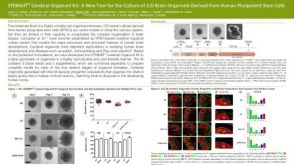 科学海报STEMdiff™ Cerebral Organoid Kit: A New Tool for the Culture of 3D Brain Organoids Derived from hPSCs
 沪公网安备31010102008431号