Dorosko SM and Connor RI (OCT 2010)
Journal of virology 84 20 10533--42
Primary human mammary epithelial cells endocytose HIV-1 and facilitate viral infection of CD4+ T lymphocytes.
The contribution of mammary epithelial cells (MEC) to human immunodeficiency virus type 1 (HIV-1) in breast milk remains largely unknown. While breast milk contains CD4(+) cells throughout the breast-feeding period,it is not known whether MEC directly support HIV-1 infection or facilitate infection of CD4(+) cells in the breast compartment. This study evaluated primary human MEC for direct infection with HIV-1 and for indirect transfer of infection to CD4(+) target cells. Primary human MEC were isolated and assessed for expression of HIV-1 receptors. MEC were exposed to CCR5-,CXCR4- and dual-tropic strains of HIV-1 and evaluated for viral reverse transcription and integration and productive viral infection. MEC were also tested for the ability to transfer HIV to CD4(+) target cells and to activate resting CD4(+) T cells. Our results demonstrate that MEC express HIV-1 receptor proteins CD4,CCR5,CXCR4,and galactosyl ceramide (GalCer). While no evidence for direct infection of MEC was found,HIV-1 virions were observed in MEC endosomal compartments. Coculture of HIV-exposed MEC resulted in productive infection of activated CD4(+) T cells. In addition,MEC secretions increased HIV-1 replication and proliferation of infected target cells. Overall,our results indicate that MEC are capable of endosomal uptake of HIV-1 and can facilitate virus infection and replication in CD4(+) target cells. These findings suggest that MEC may serve as a viral reservoir for HIV-1 and may enhance infection of CD4(+) T lymphocytes in vivo.
View Publication
产品号#:
19052
19052RF
产品名:
EasySep™人CD4+ T细胞富集试剂盒
RoboSep™ 人CD4+ T细胞富集试剂盒含滤芯吸头
Antunes I et al. (DEC 2010)
Journal of virology 84 24 12564--75
Suppression of innate immune pathology by regulatory T cells during Influenza A virus infection of immunodeficient mice.
The viral infection of higher vertebrates elicits potent innate and adaptive host immunity. However,an excessive or inappropriate immune response also may lead to host pathology that often is more severe than the direct effects of viral replication. Therefore,several mechanisms exist that regulate the magnitude and class of the immune response. Here,we have examined the potential involvement of regulatory T (Treg) cells in limiting pathology induced by influenza A virus (IAV) infection. Using lymphocyte-deficient mice as hosts,we showed that Treg cell reconstitution resulted in a significant delay in weight loss and prolonged survival following infection. The adoptively transferred Treg cells did not affect the high rate of IAV replication in the lungs of lymphocyte-deficient hosts,and therefore their disease-ameliorating effect was mediated through the suppression of innate immune pathology. Mechanistically,Treg cells reduced the accumulation and altered the distribution of monocytes/macrophages in the lungs of IAV-infected hosts. This reduction in lung monocytosis was associated with a specific delay in monocyte chemotactic protein-2 (MCP-2) induction in the infected lungs. Nevertheless,Treg cells failed to prevent the eventual development of severe disease in lymphocyte-deficient hosts,which likely was caused by the ongoing IAV replication. Indeed,using T-cell-deficient mice,which mounted a T-cell-independent B cell response to IAV,we further showed that the combination of virus-neutralizing antibodies and transferred Treg cells led to the complete prevention of clinical disease following IAV infection. Taken together,these results suggested that innate immune pathology and virus-induced pathology are the two main contributors to pathogenesis during IAV infection.
View Publication
产品号#:
19782
19792
产品名:
Jia W et al. (FEB 2011)
Journal of immunology (Baltimore,Md. : 1950) 186 3 1564--74
Autophagy regulates endoplasmic reticulum homeostasis and calcium mobilization in T lymphocytes.
Macroautophagy (hereafter referred to as autophagy) is an evolutionarily conserved intracellular bulk degradation pathway that plays critical roles in eliminating intracellular pathogens,presenting endogenous Ags,and regulating T lymphocyte survival and proliferation. In this study,we have investigated the role of autophagy in regulating the endoplasmic reticulum (ER) compartment in T lymphocytes. We found that ER content is expanded in mature autophagy-related protein (Atg) 7-deficient T lymphocytes. Atg7-deficient T cells stimulated through the TCR display impaired influx,but not efflux,of calcium,and ER calcium stores are increased in Atg7-deficient T cells. Treatment with the ER sarco/ER Ca(2+)-ATPase pump inhibitor thapsigargin rescues the calcium influx defect in Atg7-deficient T lymphocytes,suggesting that this impairment is caused by an intrinsic defect in ER. Furthermore,we found that the stimulation-induced redistribution of stromal interaction molecule-1,a critical event for the store-operated Ca(2+) release-activated Ca(2+) channel opening,is impaired in Atg7-deficient T cells. Together,these findings indicate that the expanded ER compartment in Atg7-deficient T cells contains increased calcium stores,and the inability of these stores to be depleted causes defective calcium influx in these cells. Our results demonstrate that autophagy plays an important role in maintaining ER and calcium homeostasis in T lymphocytes.
View Publication
产品号#:
19751
19751RF
产品名:
Zeng J et al. (MAY 2012)
The Journal of Immunology 188 9 4297--4304
Enhancing Immunostimulatory Function of Human Embryonic Stem Cell-Derived Dendritic Cells by CD1d Overexpression
Human embryonic stem cell-derived dendritic cells (hESC-DCs) may potentially provide a platform to generate off-the-shelf" therapeutic cancer vaccines. To apply hESC-DCs for cancer immunotherapy in a semiallogeneic setting�
View Publication
J. H. Choi et al. ( 2019)
Science (New York,N.Y.) 364 6440
LMBR1L regulates lymphopoiesis through Wnt/beta-catenin signaling.
Precise control of Wnt signaling is necessary for immune system development. In this study,we detected severely impaired development of all lymphoid lineages in mice,resulting from an N-ethyl-N-nitrosourea-induced mutation in the limb region 1-like gene (Lmbr1l),which encodes a membrane-spanning protein with no previously described function in immunity. The interaction of LMBR1L with glycoprotein 78 (GP78) and ubiquitin-associated domain-containing protein 2 (UBAC2) attenuated Wnt signaling in lymphocytes by preventing the maturation of FZD6 and LRP6 through ubiquitination within the endoplasmic reticulum and by stabilizing destruction complex" proteins. LMBR1L-deficient T cells exhibited hallmarks of Wnt/beta-catenin activation and underwent apoptotic cell death in response to proliferative stimuli. LMBR1L has an essential function during lymphopoiesis and lymphoid activation acting as a negative regulator of the Wnt/beta-catenin pathway."
View Publication
产品号#:
19853
19853RF
17961
17961RF
产品名:
EasySep™小鼠CD8+ T细胞分选试剂盒
RoboSep™ 小鼠CD8+ T细胞分选试剂盒
EasySep™人Naïve Pan-T细胞分选试剂盒
RoboSep™ 人Naïve Pan-T细胞分选试剂盒
S. C. David et al. (may 2019)
Nature microbiology
Direct interaction of whole-inactivated influenza A and pneumococcal vaccines enhances influenza-specific immunity.
The upper respiratory tract is continuously exposed to a vast array of potentially pathogenic viruses and bacteria. Influenza A virus (IAV) has particular synergism with the commensal bacterium Streptococcus pneumoniae in this niche,and co-infection exacerbates pathogenicity and causes significant mortality. However,it is not known whether this synergism is associated with a direct interaction between the two pathogens. We have previously reported that co-administration of a whole-inactivated IAV vaccine (gamma-Flu) with a whole-inactivated pneumococcal vaccine (gamma-PN) enhances pneumococcal-specific responses. In this study,we show that mucosal co-administration of gamma-Flu and gamma-PN similarly augments IAV-specific immunity,particularly tissue-resident memory cell responses in the lung. In addition,our in vitro analysis revealed that S. pneumoniae directly interacts with both gamma-Flu and with live IAV,facilitating increased uptake by macrophages as well as increased infection of epithelial cells by IAV. These observations provide an additional explanation for the synergistic pathogenicity of IAV and S. pneumoniae,as well as heralding the prospect of exploiting the phenomenon to develop better vaccine strategies for both pathogens.
View Publication
产品号#:
19858
19858RF
产品名:
EasySep™小鼠Naïve CD8+ T细胞分选试剂盒
RoboSep™ 小鼠Naïve CD8+ T细胞分选试剂盒
A. Lopresti et al. (jun 2019)
JCI insight 5
Sensitive and easy screening for circulating tumor cells by flow cytometry.
Circulating Tumor Cells (CTCs) represent an easy,repeatable and representative access to information regarding solid tumors. However,their detection remains difficult because of their paucity,their short half-life,and the lack of reliable surface biomarkers. Flow cytometry (FC) is a fast,sensitive and affordable technique,ideal for rare cells detection. Adapted to CTCs detection (i.e. extremely rare cells),most FC-based techniques require a time-consuming pre-enrichment step,followed by a 2-hours staining procedure,impeding on the efficiency of CTCs detection. We overcame these caveats and reduced the procedure to less than one hour,with minimal manipulation. First,cells were simultaneously fixed,permeabilized,then stained. Second,using low-speed FC acquisition conditions and two discriminators (cell size and pan-cytokeratin expression),we suppressed the pre-enrichment step. Applied to blood from donors with or without known malignant diseases,this protocol ensures a high recovery of the cells of interest independently of their epithelial-mesenchymal plasticity and can predict which samples are derived from cancer donors. This proof-of-concept study lays the bases of a sensitive tool to detect CTCs from a small amount of blood upstream of in-depth analyses.
View Publication
产品号#:
15122
15162
产品名:
RosetteSep™人CD45去除抗体混合物
RosetteSep™人CD45去除抗体混合物
D. Park et al. (may 2019)
Scientific reports 9 1 7094
Differences in the molecular signatures of mucosal-associated invariant T cells and conventional T cells.
Mucosal-associated invariant T (MAIT) cells exhibit different characteristics from those of TCRalpha7.2- conventional T cells. They play important roles in various inflammatory diseases,including rheumatoid arthritis and inflammatory bowel disease. MAIT cells express a single T cell receptor alpha chain,TCRalpha7.2 segment associated with Jalpha33 and CDR3 with fixed length,which recognizes bacteria-derived vitamin B metabolites. However,the characteristics of MAIT cells and TCRalpha7.2+ CD161- T cells have never been compared. Here,we performed RNA sequencing to compare the properties of MAIT cells,TCRalpha7.2- conventional T cells and TCRalpha7.2+ CD161- T cells. Genome-wide transcriptomes of MAIT cells,TCRalpha7.2- conventional T cells,and TCRalpha7.2+ CD161- T cells were compared and analyzed using causal network analysis. This is the first report comparing the transcriptomes of MAIT cells,TCRalpha7.2- conventional T cells and TCRalpha7.2+ CD161- T cells. We also identified the predominant signaling pathways of MAIT cells,which differed from those of TCRalpha7.2- conventional T cells and TCRalpha7.2+ CD161- T cells,through a gene set enrichment test and upstream regulator analysis and identified the genes responsible for the characteristic MAIT cell phenotypes. Our study advances the complete understanding of MAIT biology.
View Publication
产品号#:
15021
15061
产品名:
RosetteSep™人T细胞富集抗体混合物
RosetteSep™人T细胞富集抗体混合物
D. M. Previte et al. (apr 2019)
Cell reports 27 1 129--141.e4
Lymphocyte Activation Gene-3 Maintains Mitochondrial and Metabolic Quiescence in Naive CD4+ T Cells.
Lymphocyte activation gene-3 (LAG-3) is an inhibitory receptor expressed by CD4+ T cells and tempers their homeostatic expansion. Because CD4+ T cell proliferation is tightly coupled to bioenergetics,we investigate the role of LAG-3 in modulating naive CD4+ T cell metabolism. LAG-3 deficiency enhances the metabolic profile of naive CD4+ T cells by elevating levels of mitochondrial biogenesis. In vivo,LAG-3 blockade partially restores expansion and the metabolic phenotype of wild-type CD4+ T cells to levels of Lag3-/- CD4+ T cells,solidifying that LAG-3 controls these processes. Lag3-/- CD4+ T cells also demonstrate greater signal transducer and activator of transcription 5 (STAT5) activation,enabling resistance to interleukin-7 (IL-7) deprivation. These results implicate this pathway as a target of LAG-3-mediated inhibition. Additionally,enhancement of STAT5 activation,as a result of LAG-3 deficiency,contributes to greater activation potential in these cells. These results identify an additional mode of regulation elicited by LAG-3 in controlling CD4+ T cell responses.
View Publication


 EasySep™小鼠TIL(CD45)正选试剂盒





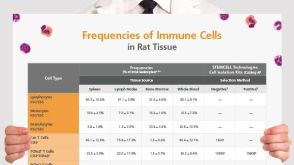 挂图Frequencies of Immune Cells in Rat Tissue Lists the estimated frequencies of more than 15 immune cell types in Sprague Dawley rats
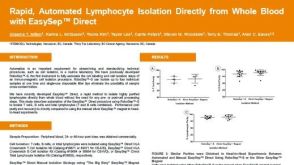 科学海报Rapid, Automated Lymphocyte Isolation Directly from Whole Blood with EasySep™ Direct
 沪公网安备31010102008431号