Ohoka Y et al. (JAN 2011)
Journal of immunology (Baltimore,Md. : 1950) 186 2 733--44
Retinoic acid-induced CCR9 expression requires transient TCR stimulation and cooperativity between NFATc2 and the retinoic acid receptor/retinoid X receptor complex.
Retinoic acid (RA) imprints gut-homing specificity on T cells upon activation by inducing the expression of chemokine receptor CCR9 and integrin α4β7. CCR9 expression seemed to be more highly dependent on RA than was the α4β7 expression,but its molecular mechanism remained unclear. In this article,we show that NFAT isoforms NFATc1 and NFATc2 directly interact with RA receptor (RAR) and retinoid X receptor (RXR) but play differential roles in RA-induced CCR9 expression on murine naive CD4(+) T cells. TCR stimulation for 6-24 h was required for the acquisition of responsiveness to RA and induced activation of NFATc1 and NFATc2. However,RA failed to induce CCR9 expression as long as TCR stimulation continued. After terminating TCR stimulation or adding cyclosporin A to the culture,Ccr9 gene transcription was induced,accompanied by inactivation of NFATc1 and sustained activation of NFATc2. Reporter and DNA-affinity precipitation assays demonstrated that the binding of NFATc2 to two NFAT-binding sites and that of the RAR/RXR complex to an RA response element half-site in the 5'-flanking region of the mouse Ccr9 gene were critical for RA-induced promoter activity. NFATc2 directly bound to RARα and RXRα,and it enhanced the binding of RARα to the RA response element half-site. NFATc1 also bound to the NFAT-binding sites and directly to RARα and RXRα,but it inhibited the NFATc2-dependent promoter activity. These results suggest that the cooperativity between NFATc2 and the RAR/RXR complex is essential for CCR9 expression on T cells and that NFATc1 interferes with the action of NFATc2.
View Publication
产品号#:
19752
19752RF
产品名:
Huang S-H et al. (JAN 2018)
The Journal of clinical investigation
Latent HIV reservoirs exhibit inherent resistance to elimination by CD8+ T cells.
The presence of persistent,latent HIV reservoirs in CD4+ T cells obstructs current efforts to cure infection. The so-called kick-and-kill paradigm proposes to purge these reservoirs by combining latency-reversing agents with immune effectors such as cytotoxic T lymphocytes. Support for this approach is largely based on success in latency models,which do not fully reflect the makeup of latent reservoirs in individuals on long-term antiretroviral therapy (ART). Recent studies have shown that CD8+ T cells have the potential to recognize defective proviruses,which comprise the vast majority of all infected cells,and that the proviral landscape can be shaped over time due to in vivo clonal expansion of infected CD4+ T cells. Here,we have shown that treating CD4+ T cells from ART-treated individuals with combinations of potent latency-reversing agents and autologous CD8+ T cells consistently reduced cell-associated HIV DNA,but failed to deplete replication-competent virus. These CD8+ T cells recognized and potently eliminated CD4+ T cells that were newly infected with autologous reservoir virus,ruling out a role for both immune escape and CD8+ T cell dysfunction. Thus,our results suggest that cells harboring replication-competent HIV possess an inherent resistance to CD8+ T cells that may need to be addressed to cure infection.
View Publication
Type 1 Interferons Potentiate Human CD8+ T-Cell Cytotoxicity Through a STAT4- and Granzyme B-Dependent Pathway.
Events defining the progression to human type 1 diabetes (T1D) have remained elusive owing to the complex interaction between genetics,the immune system,and the environment. Type 1 interferons (T1-IFN) are known to be a constituent of the autoinflammatory milieu within the pancreas of patients with T1D. However,the capacity of IFNα/β to modulate human activated autoreactive CD8+ T-cell (cytotoxic T lymphocyte) responses within the islets of patients with T1D has not been investigated. Here,we engineer human β-cell-specific cytotoxic T lymphocytes and demonstrate that T1-IFN augments cytotoxicity by inducing rapid phosphorylation of STAT4,resulting in direct binding at the granzyme B promoter within 2 h of exposure. The current findings provide novel insights concerning the regulation of effector function by T1-IFN in human antigen-experienced CD8+ T cells and provide a mechanism by which the presence of T1-IFN potentiates diabetogenicity within the autoimmune islet.
View Publication
产品号#:
15023
15063
产品名:
RosetteSep™人CD8+ T细胞富集抗体混合物
RosetteSep™人CD8+ T细胞富集抗体混合物
专家访谈
Cori Fain
Overcoming Life Circumstances to Pursue Neuroimmunology Research
Topics:
Neuroimmunology research
Immune-mediated blood brain barrier disruption in cerebral malaria
Martinez-Gonzalez I et al. (JUL 2016)
Immunity 45 1 198--208
Allergen-Experienced Group 2 Innate Lymphoid Cells Acquire Memory-like Properties and Enhance Allergic Lung Inflammation.
Group 2 innate lymphoid cells (ILC2s) in the lung are stimulated by inhaled allergens. ILC2s do not directly recognize allergens but they are stimulated by cytokines including interleukin (IL)-33 released by damaged epithelium. In response to allergens,lung ILC2s produce T helper 2 cell type cytokines inducing T cell-independent allergic lung inflammation. Here we examined the fate of lung ILC2s upon allergen challenges. ILC2s proliferated and secreted cytokines upon initial stimulation with allergen or IL-33,and this phase was followed by a contraction phase as cytokine production ceased. Some ILC2s persisted long after the resolution of the inflammation as allergen-experienced ILC2s and responded to unrelated allergens more potently than naive ILC2s,mediating severe allergic inflammation. The allergen-experienced ILC2s exhibited a gene expression profile similar to that of memory T cells. The memory-like properties of allergen-experienced ILC2s may explain why asthma patients are often sensitized to multiple allergens.
View Publication
产品号#:
19842
产品名:
EasySep™小鼠ILC2富集试剂盒
Halim L et al. (JUL 2017)
Cell reports 20 3 757--770
An Atlas of Human Regulatory T Helper-like Cells Reveals Features of Th2-like Tregs that Support a Tumorigenic Environment.
Regulatory T cells (Tregs) play a pivotal role in maintaining immunological tolerance,but they can also play a detrimental role by preventing antitumor responses. Here,we characterized T helper (Th)-like Treg subsets to further delineate their biological function and tissue distribution,focusing on their possible contribution to disease states. RNA sequencing and functional assays revealed that Th2-like Tregs displayed higher viability and autocrine interleukin-2 (IL-2)-mediated activation than other subsets. Th2-like Tregs were preferentially found in tissues rather than circulation and exhibited the highest migratory capacity toward chemokines enriched at tumor sites. These cellular responses led us to hypothesize that this subset could play a role in maintaining a tumorigenic environment. Concurrently,Th2-like Tregs were enriched specifically in malignant tissues from patients with melanoma and colorectal cancer compared to healthy tissue. Overall,our results suggest that Th2-like Tregs may contribute to a tumorigenic environment due to their increased cell survival,higher migratory capacity,and selective T-effector suppressive ability.
View Publication
L. L. Lu et al. ( 2019)
Nature medicine 25 6 977--987
IFN-gamma-independent immune markers of Mycobacterium tuberculosis exposure.
Exposure to Mycobacterium tuberculosis (Mtb) results in heterogeneous clinical outcomes including primary progressive tuberculosis and latent Mtb infection (LTBI). Mtb infection is identified using the tuberculin skin test and interferon-gamma (IFN-gamma) release assay IGRA,and a positive result may prompt chemoprophylaxis to prevent progression to tuberculosis. In the present study,we report on a cohort of Ugandan individuals who were household contacts of patients with TB. These individuals were highly exposed to Mtb but tested negative disease by IFN-gamma release assay and tuberculin skin test,'resisting' development of classic LTBI. We show that 'resisters' possess IgM,class-switched IgG antibody responses and non-IFN-gamma T cell responses to the Mtb-specific proteins ESAT6 and CFP10,immunologic evidence of exposure to Mtb. Compared to subjects with classic LTBI,'resisters' display enhanced antibody avidity and distinct Mtb-specific IgG Fc profiles. These data reveal a distinctive adaptive immune profile among Mtb-exposed subjects,supporting an expanded definition of the host response to Mtb exposure,with implications for public health and the design of clinical trials.
View Publication
产品号#:
17858
17858RF
15025
15065
100-0694
19059
19059RF
产品名:
EasySep™人CD14正选试剂盒II
RoboSep™ 人CD14正选试剂盒II
RosetteSep™人NK细胞富集抗体混合物
RosetteSep™人NK细胞富集抗体混合物
EasySep™人CD14正选试剂盒II
EasySep™人单核细胞富集试剂盒
RoboSep™ 人单核细胞富集试剂盒含滤芯吸头
P. Petrov et al. (mar 2019)
Scientific reports 9 1 4155
Computational analysis of the evolutionarily conserved Missing In Metastasis/Metastasis Suppressor 1 gene predicts novel interactions, regulatory regions and transcriptional control.
Missing in Metastasis (MIM),or Metastasis Suppressor 1 (MTSS1),is a highly conserved protein,which links the plasma membrane to the actin cytoskeleton. MIM has been implicated in various cancers,however,its modes of action remain largely enigmatic. Here,we performed an extensive in silico characterisation of MIM to gain better understanding of its function. We detected previously unappreciated functional motifs including adaptor protein (AP) complex interaction site and a C-helix,pointing to a role in endocytosis and regulation of actin dynamics,respectively. We also identified new functional regions,characterised with phosphorylation sites or distinct hydrophilic properties. Strong negative selection during evolution,yielding high conservation of MIM,has been combined with positive selection at key sites. Interestingly,our analysis of intra-molecular co-evolution revealed potential regulatory hotspots that coincided with reduced potentially pathogenic polymorphisms. We explored databases for the mutations and expression levels of MIM in cancer. Experimentally,we focused on chronic lymphocytic leukaemia (CLL),where MIM showed high overall expression,however,downregulation on poor prognosis samples. Finally,we propose strong conservation of MTSS1 also on the transcriptional level and predict novel transcriptional regulators. Our data highlight important targets for future studies on the role of MIM in different tissues and cancers.
View Publication
产品号#:
15024
15064
产品名:
RosetteSep™人B细胞富集抗体混合物
RosetteSep™人B细胞富集抗体混合物
A. A. Titov et al. (jul 2019)
Journal of immunology (Baltimore,Md. : 1950) 203 2 338--348
Metformin Inhibits the Type 1 IFN Response in Human CD4+ T Cells.
In systemic lupus erythematosus,defective clearance of apoptotic debris and activation of innate cells result in a chronically activated type 1 IFN response,which can be measured in PBMCs of most patients. Metformin,a widely used prescription drug for Type 2 diabetes,has a therapeutic effect in several mouse models of lupus through mechanisms involving inhibition of oxidative phosphorylation and a decrease in CD4+ T cell activation. In this study,we report that in CD4+ T cells from human healthy controls and human systemic lupus erythematosus patients,metformin inhibits the transcription of IFN-stimulated genes (ISGs) after IFN-alpha treatment. Accordingly,metformin inhibited the phosphorylation of pSTAT1 (Y701) and its binding to IFN-stimulated response elements that control ISG expression. These effects were independent of AMPK activation or mTORC1 inhibition but were replicated using inhibitors of the electron transport chain respiratory complexes I,III,and IV. This indicates that mitochondrial respiration is required for ISG expression in CD4+ T cells and provides a novel mechanism by which metformin may exert a therapeutic effect in autoimmune diseases.
View Publication


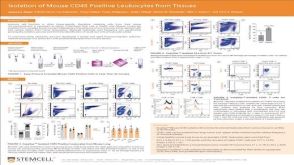
 EasySep™小鼠TIL(CD45)正选试剂盒




 专家访谈Cori Fain Overcoming Life Circumstances to Pursue Neuroimmunology Research

 沪公网安备31010102008431号