Stingl J et al. (MAY 2001)
Breast cancer research and treatment 67 2 93--109
Characterization of bipotent mammary epithelial progenitor cells in normal adult human breast tissue.
The purpose of the present study was to characterize primitive epithelial progenitor populations present in adult normal human mammary tissue using a combination of flow cytometry and in vitro colony assay procedures. Three types of human breast epithelial cell (HBEC) progenitors were identified: luminal-restricted,myoepithelial-restricted and bipotent progenitors. The first type expressed epithelial cell adhesion molecule (EpCAM),alpha6 integrin and MUC1 and generated colonies composed exclusively of cells positive for the luminal-associated markers keratin 8/18,keratin 19,EpCAM and MUC1. Bipotent progenitors produced colonies containing a central core of cells expressing luminal markers surrounded by keratin 14+ myoepithelial-like cells. Single cell cultures confirmed the bipotentiality of these progenitors. Their high expression of alpha6 integrin and low expression of MUC1 suggests a basal position of these cells in the mammary epithelium in vivo. Serial passage in vitro of an enriched population of bipotent progenitors demonstrated that only myoepithelial-restricted progenitors could be readily generated under the culture conditions used. These results support a hierarchical branching model of HBEC progenitor differentiation from a primitive uncommitted cell to luminal- and myoepithelial-restricted progenitors.
View Publication
产品号#:
01700
01705
05601
05610
01420
01421
01702
产品名:
ALDEFLUOR™ 试剂盒
ALDEFLUOR™ DEAB试剂, 1.5 mM, 1 mL
EpiCult™-B 人培养基
EpiCult™-B 小鼠培养基
ALDEFLUOR™检测缓冲液
Kaabinejadian S et al. (MAY 2016)
The Journal of Immunology 196 10 4263--73
Immunodominant West Nile virus T cell epitopes are fewer in number and fashionably late
Class I HLA molecules mark infected cells for immune targeting by presenting pathogen-encoded peptides on the cell surface. Characterization of viral peptides unique to infected cells is important for understanding CD8(+) T cell responses and for the development of T cell-based immunotherapies. Having previously reported a series of West Nile virus (WNV) epitopes that are naturally presented by HLA-A*02:01,in this study we generated TCR mimic (TCRm) mAbs to three of these peptide/HLA complexes-the immunodominant SVG9 (E protein),the subdominant SLF9 (NS4B protein),and the immunorecessive YTM9 (NS3 protein)-and used these TCRm mAbs to stain WNV-infected cell lines and primary APCs. TCRm staining of WNV-infected cells demonstrated that the immunorecessive YTM9 appeared several hours earlier and at 5- to 10-fold greater density than the more immunogenic SLF9 and SVG9 ligands,respectively. Moreover,staining following inhibition of the TAP demonstrated that all three viral ligands were presented in a TAP-dependent manner despite originating from different cellular compartments. To our knowledge,this study represents the first use of TCRm mAbs to define the kinetics and magnitude of HLA presentation for a series of epitopes encoded by one virus,and the results depict a pattern whereby individual epitopes differ considerably in abundance and availability. The observations that immunodominant ligands can be found at lower levels and at later time points after infection suggest that a reevaluation of the factors that combine to shape T cell reactivity may be warranted.
View Publication
产品号#:
03800
03801
03802
03803
03804
03805
03806
产品名:
ClonaCell™-HY杂交瘤试剂盒
ClonaCell™-HY培养基A
ClonaCell™-HY 培养基 B
ClonaCell™-HY 培养基 C
ClonaCell™-HY 培养基 D
ClonaCell™-HY 培养基 E
ClonaCell™-HY PEG
Li P et al. (JUL 2016)
Nature medicine 22 7 807--11
Stimulating the RIG-I pathway to kill cells in the latent HIV reservoir following viral reactivation.
The persistence of latent HIV proviruses in long-lived CD4(+) T cells despite antiretroviral therapy (ART) is a major obstacle to viral eradication. Because current candidate latency-reversing agents (LRAs) induce HIV transcription,but fail to clear these cellular reservoirs,new approaches for killing these reactivated latent HIV reservoir cells are urgently needed. HIV latency depends upon the transcriptional quiescence of the integrated provirus and the circumvention of immune defense mechanisms. These defenses include cell-intrinsic innate responses that use pattern-recognition receptors (PRRs) to detect viral pathogens,and that subsequently induce apoptosis of the infected cell. Retinoic acid (RA)-inducible gene I (RIG-I,encoded by DDX58) forms one class of PRRs that mediates apoptosis and the elimination of infected cells after recognition of viral RNA. Here we show that acitretin,an RA derivative approved by the US Food and Drug Administration (FDA),enhances RIG-I signaling ex vivo,increases HIV transcription,and induces preferential apoptosis of HIV-infected cells. These effects are abrogated by DDX58 knockdown. Acitretin also decreases proviral DNA levels in CD4(+) T cells from HIV-positive subjects on suppressive ART,an effect that is amplified when combined with suberoylanilide hydroxamic acid (SAHA),a histone deacetylase inhibitor. Pharmacological enhancement of an innate cellular-defense network could provide a means by which to eliminate reactivated cells in the latent HIV reservoir.
View Publication
产品号#:
17952
17952RF
100-0696
产品名:
EasySep™人CD4+ T细胞分选试剂盒
RoboSep™ 人CD4+ T细胞分选试剂盒
EasySep™人CD4+ T细胞分离试剂盒
Grö et al. (JUL 2016)
Blood
LFA-1 integrin antibodies inhibit leukocyte α4β1-mediated adhesion by intracellular signaling.
Binding of ICAM-1 (intercellular adhesion molecule-1) to the β2-integrin LFA-1 (leukocyte function associated antigen-1) is known to induce crosstalk to the α4β1 integrin. Using different LFA-1 monoclonal antibodies we have been able to study the requirement and mechanism of action for the crosstalk in considerable detail. LFA-1 activating antibodies and those inhibitory antibodies that signal to α4β1 induce phosphorylation of Thr-758 on the β2-chain,which is followed by binding of 14-3-3 proteins and signaling through the G protein exchange factor Tiam1. This results in dephosphorylation of Thr-788/789 on the β1-chain of α4β1 and loss of binding to its ligand VCAM-1 (vascular cell adhesion molecule-1). The results show that with LFA-1 antibodies,we can either 1) activate LFA-1 and inhibit α4β1,2) inhibit both LFA-1 and α4β1,3) inhibit LFA-1 but not α4β1 or 4) not affect LFA-1 or α4β1 These findings are important for the understanding of integrin regulation and for the interpretation of the effect of integrin antibodies and their use in clinical applications.
View Publication


 EasySep™小鼠TIL(CD45)正选试剂盒




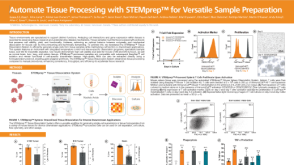 科学海报Automate Tissue Processing with STEMprep™ for Versatile Sample Preparation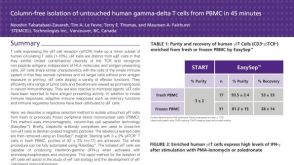
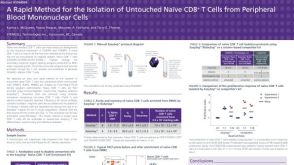 科学海报Cell Isolation to Obtain Untouched Naïve CD8 T Cells from Peripheral Blood Mononuclear Cells (PBMCs)
 科学海报Cell Isolation of Human CD4+ Memory T Cells By Column-Free Immunomagnetic Cell Separation
 挂图Antigen Processing and Presentation Overview of the mechanisms by which antigens are processed and presented to T cells
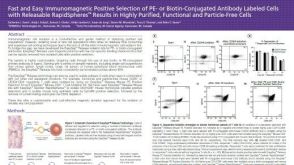 科学海报Positive Selection of PE- or Biotin-Conjugated Antibody Labeled Cells with Releasable Rapidspheres™

 沪公网安备31010102008431号