Lymphodepletion in the ApcMin/+ mouse model of intestinal tumorigenesis.
Germ line mutations in the Adenomatous polyposis coli tumor suppressor gene cause a hereditary form of intestinal tumorigenesis in both mice and man. Here we show that in Apc(Min/+) mice,which carry a heterozygous germ line mutation at codon 850 of Apc,there is progressive loss of immature and mature thymocytes from approximately 80 days of age with complete regression of the thymus by 120 days. In addition,Apc(Min/+) mice show parallel depletion of splenic natural killer (NK) cells,immature B cells,and B progenitor cells in bone marrow due to complete loss of interleukin 7 (IL-7)-dependent B-cell progenitors. Using bone marrow transplantation experiments into wild-type recipients,we have shown that the capacity of transplanted Apc(Min/+) bone marrow cells for T- and B-cell development appears normal. In contrast,although the Apc(Min/+) bone marrow microenvironment supported short-term reconstitution with wild-type bone marrow,Apc(Min/+) animals that received transplants subsequently underwent lymphodepletion. Fibroblast colony-forming unit (CFU-F) colony assays revealed a significant reduction in colony-forming mesenchymal progenitor cells in the bone marrow of Apc(Min/+) mice compared with wild-type animals prior to the onset of lymphodepletion. This suggests that an altered bone marrow microenvironment may account for the selective lymphocyte depletion observed in this model of familial adenomatous polyposis.
View Publication
产品号#:
03630
03434
03444
05501
05502
产品名:
MethoCult™ M3630
MethoCult™ GF M3434
MethoCult™ GF M3434
Gutierrez-Ramos JC and Palacios R (OCT 1992)
Proceedings of the National Academy of Sciences of the United States of America 89 19 9171--5
In vitro differentiation of embryonic stem cells into lymphocyte precursors able to generate T and B lymphocytes in vivo.
Embryonic stem cells can be induced in vitro,by coculture with the stromal line RP.0.10 and a mixture of interleukins 3,6,and 7,to differentiate into T (Joro75+) and B (B-220+) lymphocyte progenitors and other (Thy-1+,PgP-1+,c-kit+,Joro75-,B-220-,F4/80-,Mac-1-) hemopoietic precursors. The progeny of in vitro-induced embryonic stem cells can reconstitute the lymphoid compartments of T- and B-lymphocyte-deficient scid mice and generate mature T and B lymphocytes in sublethally irradiated normal mice. Exogenous cytokines can dramatically alter the developmental fate of embryonic stem cells in culture. The in vitro system described here should facilitate the study of molecular events leading to cell-lineage commitment and to the formation of hemopoietic stem cells and their immediate lymphoid progeny.
View Publication
产品号#:
06902
06952
00321
00322
00323
00324
00325
产品名:
Iwasaki-Arai J et al. (MAY 2003)
The Journal of experimental medicine 197 10 1311--22
Enforced granulocyte/macrophage colony-stimulating factor signals do not support lymphopoiesis, but instruct lymphoid to myelomonocytic lineage conversion.
We evaluated the effects of ectopic granulocyte/macrophage colony-stimulating factor (GM-CSF) signals on hematopoietic commitment and differentiation. Lineage-restricted progenitors purified from mice with the ubiquitous transgenic human GM-CSF receptor (hGM-CSFR) were used for the analysis. In cultures with hGM-CSF alone,hGM-CSFR-expressing (hGM-CSFR+) granulocyte/monocyte progenitors (GMPs) and megakaryocyte/erythrocyte progenitors (MEPs) exclusively gave rise to granulocyte/monocyte (GM) and megakaryocyte/erythroid (MegE) colonies,respectively,providing formal proof that GM-CSF signals support the GM and MegE lineage differentiation without affecting the physiological myeloid fate. hGM-CSFR transgenic mice were crossed with mice deficient in interleukin (IL)-7,an essential cytokine for T and B cell development. Administration of hGM-CSF in these mice could not restore T or B lymphopoiesis,indicating that enforced GM-CSF signals cannot substitute for IL-7 to promote lymphopoiesis. Strikingly,textgreater50% hGM-CSFR+ common lymphoid progenitors (CLPs) and textgreater20% hGM-CSFR+ pro-T cells gave rise to granulocyte,monocyte,and/or myeloid dendritic cells,but not MegE lineage cells in the presence of hGM-CSF. Injection of hGM-CSF into mice transplanted with hGM-CSFR+ CLPs blocked their lymphoid differentiation,but induced development of GM cells in vivo. Thus,hGM-CSF transduces permissive signals for myeloerythroid differentiation,whereas it transmits potent instructive signals for the GM differentiation to CLPs and early T cell progenitors. These data suggest that a majority of CLPs and a fraction of pro-T cells possess plasticity for myelomonocytic differentiation that can be activated by ectopic GM-CSF signals,supporting the hypothesis that the down-regulation of GM-CSFR is a critical event in producing cells with a lymphoid-restricted lineage potential.
View Publication
产品号#:
04100
产品名:
MethoCult™ H4100
Pekalski ML et al. (AUG 2017)
JCI insight 2 16
Neonatal and adult recent thymic emigrants produce IL-8 and express complement receptors CR1 and CR2.
The maintenance of peripheral naive T lymphocytes in humans is dependent on their homeostatic division,not continuing emigration from the thymus,which undergoes involution with age. However,postthymic maintenance of naive T cells is still poorly understood. Previously we reported that recent thymic emigrants (RTEs) are contained in CD31+CD25- naive T cells as defined by their levels of signal joint T cell receptor rearrangement excision circles (sjTRECs). Here,by differential gene expression analysis followed by protein expression and functional studies,we define that the naive T cells having divided the least since thymic emigration express complement receptors (CR1 and CR2) known to bind complement C3b- and C3d-decorated microbial products and,following activation,produce IL-8 (CXCL8),a major chemoattractant for neutrophils in bacterial defense. We also observed an IL-8-producing memory T cell subpopulation coexpressing CR1 and CR2 and with a gene expression signature resembling that of RTEs. The functions of CR1 and CR2 on T cells remain to be determined,but we note that CR2 is the receptor for Epstein-Barr virus,which is a cause of T cell lymphomas and a candidate environmental factor in autoimmune disease.
View Publication
产品号#:
15022
15062
产品名:
RosetteSep™人CD4+ T细胞富集抗体混合物
RosetteSep™人CD4+ T细胞富集抗体混合物
Katzman SD et al. (OCT 2010)
Proceedings of the National Academy of Sciences of the United States of America 107 42 18085--90
Duration of antigen receptor signaling determines T-cell tolerance or activation.
The early events that determine the decision between lymphocyte tolerance and activation are not well-understood. Using a model of systemic self-antigen recognition by CD4(+) T cells,we show,using single-cell biochemical analyses,that tolerance is characterized by transient signaling events downstream of T-cell receptor engagement in the mammalian target of rapamycin (mTOR) and NF-κB pathways. Parallel studies done by live cell imaging show that the key difference between tolerance and activation is the duration of the T cell-antigen presenting cell (APC) interaction,as revealed by stable T-cell immobilization on antigen encounter. Brief T cell-APC interactions result in tolerance,and prolonged interactions are associated with activation and the development of effector cells. These studies show that the duration of T cell-APC interactions and magnitude of associated TCR-mediated signaling are key determinants of lymphocyte tolerance vs. activation.
View Publication
产品号#:
19752
19752RF
产品名:
Pahwa R et al. (DEC 2010)
Journal of immunological methods 363 1 67--79
Isolation and expansion of human natural T regulatory cells for cellular therapy.
Natural T regulatory cells (nTregs) play a key role in inducing and maintaining immunological tolerance. Cell-based therapy using purified nTregs is under consideration for several conditions,but procedures employed to date have resulted in cell populations that are contaminated with cytokine secreting effector cells. We have established a method for isolation and ex vivo expansion of human nTregs from healthy blood donors for cellular therapy aimed at preventing allograft rejection in organ transplants. The Robosep instrument was used for initial nTreg isolation and rapamycin was included in the expansion phase of cell cultures. The resulting cell population exhibited a stable CD4(+)CD25(++bright)Foxp3(+) phenotype,had potent functional ability to suppress CD4(+)CD25(negative) T cells without evidence of conversion to effector T cells including TH17 cells,and manifested little to no production of pro-inflammatory cytokines upon in vitro stimulation. Boolean gating analysis of cytokine-expressing cells by flow cytometry for 32 possible profile end points revealed that 96% of expanded nTregs did not express any cytokine. From a single buffy coat,approximately 80 million pure nTregs were harvested after expansion under cGMP conditions; these cell numbers are adequate for infusion of approximately one million cells kg�?�¹ for cell therapy in clinical trials.
View Publication
产品号#:
21000
20119
20155
15862
15862RF
产品名:
RoboSep™- S
RoboSep™ 吸头组件抛光剂
RoboSep™分选管套装(9个塑料管)
Abadier M et al. (DEC 2017)
Cell reports 21 13 3885--3899
Effector and Regulatory T Cells Roll at High Shear Stress by Inducible Tether and Sling Formation.
The adaptive immune response involves T cell differentiation and migration to sites of inflammation. T cell trafficking is initiated by rolling on inflamed endothelium. Tethers and slings,discovered in neutrophils,facilitate cell rolling at high shear stress. Here,we demonstrate that the ability to form tethers and slings during rolling is highly inducible in T helper 1 (Th1),Th17,and regulatory T (Treg) cells but less in Th2 cells. In vivo,endogenous Treg cells rolled stably in cremaster venules at physiological shear stress. Quantitative dynamic footprinting nanoscopy of Th1,Th17,and Treg cells uncovered the formation of multiple tethers per cell. Human Th1 cells also showed tethers and slings. RNA sequencing (RNA-seq) revealed the induction of cell migration and cytoskeletal genes in sling-forming cells. We conclude that differentiated CD4 T cells stabilize rolling by inducible tether and sling formation. These phenotypic changes approximate the adhesion phenotype of neutrophils and support CD4 T cell access to sites of inflammation.
View Publication
产品号#:
19762
19762RF
产品名:
EasySep™小鼠中性粒细胞富集试剂盒
RoboSep™ 小鼠中性粒细胞富集试剂盒含滤芯吸头
Kansy BA et al. (NOV 2017)
Cancer research 77 22 6353--6364
PD-1 Status in CD8+ T Cells Associates with Survival and Anti-PD-1 Therapeutic Outcomes in Head and Neck Cancer.
Improved understanding of expression of immune checkpoint receptors (ICR) on tumor-infiltrating lymphocytes (TIL) may facilitate more effective immunotherapy in head and neck cancer (HNC) patients. A higher frequency of PD-1+ TIL has been reported in human papillomavirus (HPV)+ HNC patients,despite the role of PD-1 in T-cell exhaustion. This discordance led us to hypothesize that the extent of PD-1 expression more accurately defines T-cell function and prognostic impact,because PD-1high T cells may be more exhausted than PD-1low T cells and may influence clinical outcome and response to anti-PD-1 immunotherapy. In this study,PD-1 expression was indeed upregulated on HNC patient TIL,and the frequency of these PD-1+ TIL was higher in HPV+ patients (P = 0.006),who nonetheless experienced significantly better clinical outcome. However,PD-1high CD8+ TILs were more frequent in HPV- patients and represented a more dysfunctional subset with compromised IFN-γ secretion. Moreover,HNC patients with higher frequencies of PD-1high CD8+ TIL showed significantly worse disease-free survival and higher hazard ratio for recurrence (P < 0.001),while higher fractions of PD-1low T cells associated with HPV positivity and better outcome. In a murine HPV+ HNC model,anti-PD-1 mAb therapy differentially modulated PD-1high/low populations,and tumor rejection associated with loss of dysfunctional PD-1high CD8+ T cells and a significant increase in PD-1low TIL. Thus,the extent of PD-1 expression on CD8+ TIL provides a potential biomarker for anti-PD-1-based immunotherapy. Cancer Res; 77(22); 6353-64. textcopyright2017 AACR.
View Publication
产品号#:
19051
19051RF
产品名:
EasySep™人T细胞富集试剂盒
RoboSep™ 人T细胞富集试剂盒含滤芯吸头
Albert BJ et al. (AUG 2017)
Scientific reports 7 1 7456
Combinations of isoform-targeted histone deacetylase inhibitors and bryostatin analogues display remarkable potency to activate latent HIV without global T-cell activation.
Current antiretroviral therapy (ART) for HIV/AIDS slows disease progression by reducing viral loads and increasing CD4 counts. Yet ART is not curative due to the persistence of CD4+ T-cell proviral reservoirs that chronically resupply active virus. Elimination of these reservoirs through the administration of synergistic combinations of latency reversing agents (LRAs),such as histone deacetylase (HDAC) inhibitors and protein kinase C (PKC) modulators,provides a promising strategy to reduce if not eradicate the viral reservoir. Here,we demonstrate that largazole and its analogues are isoform-targeted histone deacetylase inhibitors and potent LRAs. Significantly,these isoform-targeted HDAC inhibitors synergize with PKC modulators,namely bryostatin-1 analogues (bryologs). Implementation of this unprecedented LRA combination induces HIV-1 reactivation to unparalleled levels and avoids global T-cell activation within resting CD4+ T-cells.
View Publication
产品号#:
19052
19052RF
17861
产品名:
EasySep™人CD4+ T细胞富集试剂盒
RoboSep™ 人CD4+ T细胞富集试剂盒含滤芯吸头
EasySep™人Pan-CD25正选和去除试剂盒
Yates F et al. (DEC 2002)
Blood 100 12 3942--9
Gene therapy of RAG-2-/- mice: sustained correction of the immunodeficiency.
Patients with mutations of either RAG-1 or RAG-2 genes suffer from severe combined immunodeficiency (SCID) characterized by the lack of T and B lymphocytes. The only curative treatment today consists of hematopoietic stem cell (HSC) transplantation,which is only partially successful in the absence of an HLA genoidentical donor,thus justifying research to find an alternative therapeutic approach. To this end,RAG-2-deficient mice were used to test whether retrovirally mediated ex vivo gene transfer into HSCs could provide long-term correction of the immunologic deficiency. Murine RAG-2-/-Sca-1(+) selected bone marrow cells were transduced with a modified Moloney leukemia virus (MLV)-based MND (myeloproliferative sarcoma virus enhancer,negative control region deleted,dl587rev primer-binding site substituted) retroviral vector containing the RAG-2 cDNA and transplanted into RAG-2-/- sublethally irradiated mice (3Gy). Two months later,T- and B-cell development was achieved in all mice. Diverse repertoire of T cells as well as proliferative capacity in the presence of mitogens,allogeneic cells,and keyhole limpet hemocyanin (KLH) were shown. B-cell function as shown by serum Ig levels and antibody response to a challenge by KLH also developed. Lymphoid subsets and function were shown to be stable over a one-year period without evidence of any detectable toxicity. Noteworthy,a selective advantage for transduced lymphoid cells was evidenced by comparative provirus quantification in lymphoid and myeloid lineages. Altogether,this study demonstrates the efficiency of ex vivo RAG-2 gene transfer in HSCs to correct the immune deficiency of RAG-2-/- mice,constituting a significant step toward clinical application.
View Publication
产品号#:
09600
09650
产品名:
StemSpan™ SFEM
StemSpan™ SFEM
He W et al. (NOV 2017)
Cancer research 77 22 6375--6388
CD155T/TIGIT Signaling Regulates CD8+ T-cell Metabolism and Promotes Tumor Progression in Human Gastric Cancer.
The T-cell surface molecule TIGIT is an immune checkpoint molecule that inhibits T-cell responses,but its roles in cancer are little understood. In this study,we evaluated the role TIGIT checkpoint plays in the development and progression of gastric cancer. We show that the percentage of CD8 T cells that are TIGIT+ was increased in gastric cancer patients compared with healthy individuals. These cells showed functional exhaustion with impaired activation,proliferation,cytokine production,and metabolism,all of which were rescued by glucose. In addition,gastric cancer tissue and cell lines expressed CD155,which bound TIGIT receptors and inactivated CD8 T cells. In a T cell-gastric cancer cell coculture system,gastric cancer cells deprived CD8 T cells of glucose and impaired CD8 T-cell effector functions; these effects were neutralized by the additional glucose or by TIGIT blockade. In gastric cancer tumor cells,CD155 silencing increased T-cell metabolism and IFNγ production,whereas CD155 overexpression inhibited T-cell metabolism and IFNγ production; this inhibition was neutralized by TIGIT blockade. Targeting CD155/TIGIT enhanced CD8 T-cell reaction and improved survival in tumor-bearing mice. Combined targeting of TIGIT and PD-1 further enhanced CD8 T-cell activation and improved survival in tumor-bearing mice. Our results suggest that gastric cancer cells inhibit CD8 T-cell metabolism through CD155/TIGIT signaling,which inhibits CD8 T-cell effector functions,resulting in hyporesponsive antitumor immunity. These findings support the candidacy of CD155/TIGIT as a potential therapeutic target in gastric cancer. Cancer Res; 77(22); 6375-88. textcopyright2017 AACR.
View Publication


 EasySep™小鼠TIL(CD45)正选试剂盒




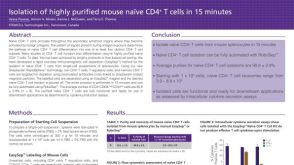 科学海报Immunomagnetic Cell Isolation of Highly Purified Mouse Naïve CD4+ T Cells in 15 Minutes
 沪公网安备31010102008431号