Huang S-H et al. (JAN 2018)
The Journal of clinical investigation
Latent HIV reservoirs exhibit inherent resistance to elimination by CD8+ T cells.
The presence of persistent,latent HIV reservoirs in CD4+ T cells obstructs current efforts to cure infection. The so-called kick-and-kill paradigm proposes to purge these reservoirs by combining latency-reversing agents with immune effectors such as cytotoxic T lymphocytes. Support for this approach is largely based on success in latency models,which do not fully reflect the makeup of latent reservoirs in individuals on long-term antiretroviral therapy (ART). Recent studies have shown that CD8+ T cells have the potential to recognize defective proviruses,which comprise the vast majority of all infected cells,and that the proviral landscape can be shaped over time due to in vivo clonal expansion of infected CD4+ T cells. Here,we have shown that treating CD4+ T cells from ART-treated individuals with combinations of potent latency-reversing agents and autologous CD8+ T cells consistently reduced cell-associated HIV DNA,but failed to deplete replication-competent virus. These CD8+ T cells recognized and potently eliminated CD4+ T cells that were newly infected with autologous reservoir virus,ruling out a role for both immune escape and CD8+ T cell dysfunction. Thus,our results suggest that cells harboring replication-competent HIV possess an inherent resistance to CD8+ T cells that may need to be addressed to cure infection.
View Publication
产品号#:
19052
19052RF
产品名:
EasySep™人CD4+ T细胞富集试剂盒
RoboSep™ 人CD4+ T细胞富集试剂盒含滤芯吸头
Newby BN et al. ( 2017)
Diabetes 66 12 3061--3071
Type 1 Interferons Potentiate Human CD8+ T-Cell Cytotoxicity Through a STAT4- and Granzyme B-Dependent Pathway.
Events defining the progression to human type 1 diabetes (T1D) have remained elusive owing to the complex interaction between genetics,the immune system,and the environment. Type 1 interferons (T1-IFN) are known to be a constituent of the autoinflammatory milieu within the pancreas of patients with T1D. However,the capacity of IFNα/β to modulate human activated autoreactive CD8+ T-cell (cytotoxic T lymphocyte) responses within the islets of patients with T1D has not been investigated. Here,we engineer human β-cell-specific cytotoxic T lymphocytes and demonstrate that T1-IFN augments cytotoxicity by inducing rapid phosphorylation of STAT4,resulting in direct binding at the granzyme B promoter within 2 h of exposure. The current findings provide novel insights concerning the regulation of effector function by T1-IFN in human antigen-experienced CD8+ T cells and provide a mechanism by which the presence of T1-IFN potentiates diabetogenicity within the autoimmune islet.
View Publication
产品号#:
15023
15063
产品名:
RosetteSep™人CD8+ T细胞富集抗体混合物
RosetteSep™人CD8+ T细胞富集抗体混合物
Prodeus A et al. (SEP 2017)
JCI insight 2 18
VISTA.COMP - an engineered checkpoint receptor agonist that potently suppresses T cell-mediated immune responses.
V-domain immunoglobulin suppressor of T cell activation (VISTA) is a recently discovered immune checkpoint ligand that functions to suppress T cell activity. The therapeutic potential of activating this immune checkpoint pathway to reduce inflammatory responses remains untapped,largely due to the inability to derive agonists targeting its unknown receptor. A dimeric construct of the IgV domain of VISTA (VISTA-Fc) was shown to suppress the activation of T cells in vitro. However,this effect required its immobilization on a solid surface,suggesting that VISTA-Fc may display limited efficacy as a VISTA-receptor agonist in vivo. Herein,we have designed a stable pentameric VISTA construct (VISTA.COMP) by genetically fusing its IgV domain to the pentamerization domain from the cartilage oligomeric matrix protein (COMP). In contrast to VISTA-Fc,VISTA.COMP does not require immobilization to inhibit the proliferation of CD4+ T cells undergoing polyclonal activation. Furthermore,we show that VISTA.COMP,but not VISTA-Fc,functions as an immunosuppressive agonist in vivo capable of prolonging the survival of skin allografts in a mouse transplant model as well as rescuing mice from acute concanavalin-A-induced hepatitis. Collectively,we believe our data demonstrate that VISTA.COMP is a checkpoint receptor agonist and the first agent to our knowledge targeting the putative VISTA-receptor to suppress T cell-mediated immune responses.
View Publication


 EasySep™小鼠TIL(CD45)正选试剂盒




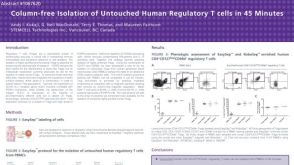 科学海报Immunomagnetic Cell Isolation of Untouched Human Regulatory T Cells
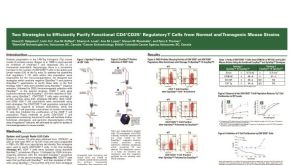 科学海报Cell Isolation of Functional CD4+CD25+ Regulatory T Cells from Mouse Strains
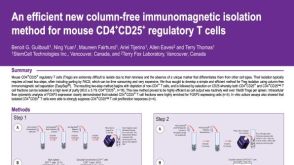 科学海报Immunomagnetic Isolation Method for Mouse CD4+CD25+ Regulatory T Cells
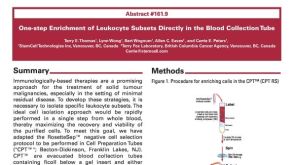 科学海报One-Step Enrichment of Leukocyte Subsets Directly in the Blood Collection Tube
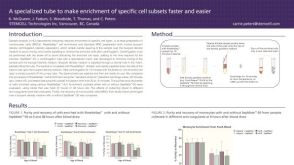 科学海报A Specialized Tube to Make Enrichment of Specific Cell Subsets Faster and Easier

 沪公网安备31010102008431号