Pharmacologic modulation of the calcium-sensing receptor enhances hematopoietic stem cell lodgment in the adult bone marrow.
The ability of hematopoietic stem cells (HSCs) to undergo self-renewal is partly regulated by external signals originating from the stem cell niche. Our previous studies with HSCs obtained from fetal liver of mice deficient for the calcium-sensing receptor (CaR) have shown the crucial role of this receptor in HSC lodgment and engraftment in the bone marrow (BM) endosteal niche. Using a CaR agonist,Cinacalcet,we assessed the effects of stimulating the CaR on the function of murine HSCs. Our results show that CaR stimulation increases primitive hematopoietic cell activity in vitro,including growth in stromal cell cocultures,adhesion to extracellular matrix molecules such as collagen I and fibronectin,and migration toward the chemotactic stimulus,stromal cell-derived factor 1α. Receptor stimulation also led to augmented in vivo homing,CXCR4-mediated lodgment at the endosteal niche,and engraftment capabilities. These mechanisms by which stimulating the CaR dictates preferential localization of HSCs in the BM endosteal niche provide additional insights into the fundamental interrelationship between the stem cell and its niche. These studies also have implications in the area of clinical stem cell transplantation,where ex vivo modulation of the CaR may be envisioned as a strategy to enhance HSC engraftment in the BM.
View Publication
产品号#:
03434
03444
产品名:
MethoCult™ GF M3434
MethoCult™ GF M3434
Mian MF et al. (JUL 2010)
Molecular therapy : the journal of the American Society of Gene Therapy 18 7 1379--88
FimH can directly activate human and murine natural killer cells via TLR4.
Although the importance of natural killer (NK) cells in innate immune responses against tumors or viral infections are well documented,their ability to directly recognize pathogens is less well defined. We have recently reported FimH,a bacterial fimbrial protein,as a novel Toll-like receptor (TLR)4 ligand that potently induces antiviral responses. Here,we investigated whether FimH either directly or indirectly can activate human and murine NK cells. We demonstrate that FimH potently activates both human and murine NK cells in vitro to induce cytokines [interferon (IFN)-gamma and tumor necrosis factor (TNF)-alpha] and cytotoxicity. Importantly,NK cells directly recognize FimH-expressing pathogens as FimH(+),but not FimH(-),bacteria were able to activate human NK cells. FimH activation of NK cells required TLR4 and MyD88 signaling,as NK cells from both TLR4(-/-) and MyD88(-/-) mice as well as human NK-92 cells,which lack TLR4,were all unresponsive to FimH. In addition,TLR4 neutralization significantly abrogated the response of human NK cells to FimH. Activation of purified NK cells by FimH was independent of lipopolysaccharide (LPS) or other bacterial contaminations. These data demonstrate for the first time that highly purified NK cells directly recognize and respond to FimH via TLR4-MyD88 pathways to aid innate protection against cancer or microbial infections.
View Publication


 EasySep™小鼠TIL(CD45)正选试剂盒




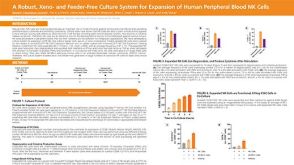 科学海报A Robust, Xeno- and Feeder-Free Culture System for Expansion of Human Peripheral Blood NK Cells
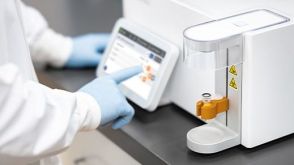 实验方案Optimizing Delivery Efficiency with Fluorescent Dextran Using the CellPore™ Transfection System
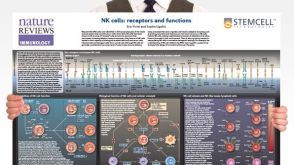 挂图Natural Killer Cells Overview of NK cell receptors, subsets, activation and function
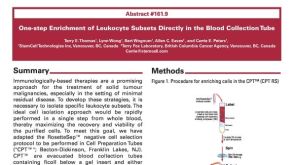 科学海报One-Step Enrichment of Leukocyte Subsets Directly in the Blood Collection Tube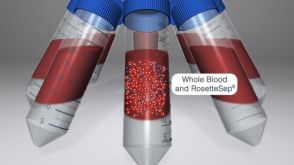


 沪公网安备31010102008431号