Yamin R et al. (MAY 2016)
Cell Reports 15 7 1542--53
HCMV vCXCL1 Binds Several Chemokine Receptors and Preferentially Attracts Neutrophils over NK Cells by Interacting with CXCR2.
HCMV is a highly sophisticated virus that has developed various mechanisms for immune evasion and viral dissemination throughout the body (partially mediated by neutrophils). NK cells play an important role in elimination of HCMV-infected cells. Both neutrophils and NK cells utilize similar sets of chemokine receptors to traffic,to and from,various organs. However,the mechanisms by which HCMV attracts neutrophils and not NK cells are largely unknown. Here,we show a unique viral protein,vCXCL1,which targets three chemokine receptors: CXCR1 and CXCR2 expressed on neutrophils and CXCR1 and CX3CR1 expressed on NK cells. Although vCXCL1 attracted both cell types,neutrophils migrated faster and more efficiently than NK cells through the binding of CXCR2. Therefore,we propose that HCMV has developed vCXCL1 to orchestrate its rapid systemic dissemination through preferential attraction of neutrophils and uses alternative mechanisms to counteract the later attraction of NK cells.
View Publication
产品号#:
19055
19055RF
产品名:
EasySep™人NK细胞富集试剂盒
RoboSep™ 人NK细胞富集试剂盒含滤芯吸头
Mace EM et al. ( 2016)
Nature communications 7 12171
Human NK cell development requires CD56-mediated motility and formation of the developmental synapse.
While distinct stages of natural killer (NK) cell development have been defined,the molecular interactions that shape human NK cell maturation are poorly understood. Here we define intercellular interactions between developing NK cells and stromal cells which,through contact-dependent mechanisms,promote the generation of mature,functional human NK cells from CD34(+) precursors. We show that developing NK cells undergo unique,developmental stage-specific sustained and transient interactions with developmentally supportive stromal cells,and that the relative motility of NK cells increases as they move through development in vitro and ex vivo. These interactions include the formation of a synapse between developing NK cells and stromal cells,which we term the developmental synapse. Finally,we identify a role for CD56 in developmental synapse structure,NK cell motility and NK cell development. Thus,we define the developmental synapse leading to human NK cell functional maturation.
View Publication
产品号#:
05150
15025
15065
产品名:
MyeloCult™ H5100
RosetteSep™人NK细胞富集抗体混合物
RosetteSep™人NK细胞富集抗体混合物
Vitenshtein A et al. (OCT 2016)
Cell host & microbe 20 4 527--534
NK Cell Recognition of Candida glabrata through Binding of NKp46 and NCR1 to Fungal Ligands Epa1, Epa6, and Epa7.
Natural killer (NK) cells form an important arm of the innate immune system and function to combat a wide range of invading pathogens,ranging from viruses to bacteria. However,the means by which NK cells accomplish recognition of pathogens with a limited repertoire of receptors remain largely unknown. In the current study,we describe the recognition of an emerging fungal pathogen,Candida glabrata,by the human NK cytotoxic receptor NKp46 and its mouse ortholog,NCR1. Using NCR1 knockout mice,we observed that this receptor-mediated recognition was crucial for controlling C. glabrata infection in vitro and in vivo. Finally,we delineated the fungal ligands to be the C. glabrata adhesins Epa1,Epa6,and Epa7 and demonstrated that clearance of systemic C. glabrata infections in vivo depends on their recognition by NCR1. As NKp46 and NCR1 have been previously shown to bind viral adhesion receptors,we speculate that NKp46/NCR1 may be a novel type of pattern recognition receptor.
View Publication


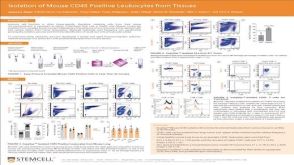
 EasySep™小鼠TIL(CD45)正选试剂盒




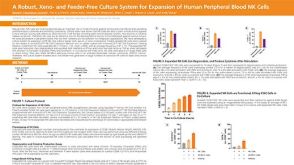 科学海报A Robust, Xeno- and Feeder-Free Culture System for Expansion of Human Peripheral Blood NK Cells
 实验方案Optimizing Delivery Efficiency with Fluorescent Dextran Using the CellPore™ Transfection System
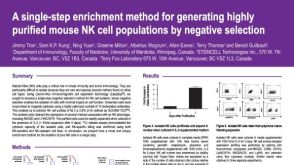 科学海报Cell Enrichment to Obtain Mouse NK Cell Populations By Negative Selection

 沪公网安备31010102008431号