Altered B-cell receptor signaling kinetics distinguish human follicular lymphoma B cells from tumor-infiltrating nonmalignant B cells.
The B-cell receptor (BCR) transmits life and death signals throughout B-cell development,and altered BCR signaling may be required for survival of B-lymphoma cells. We used single-cell signaling profiles to compare follicular lymphoma (FL) B cells and nonmalignant host B cells within individual patient biopsies and identified BCR-mediated signaling events specific to lymphoma B cells. Expression of CD20,Bcl-2,and BCR light chain isotype (kappa or lambda) distinguished FL tumor B-cell and nontumor host B-cell subsets within FL patient biopsies. BCR-mediated signaling via phosphorylation of Btk,Syk,Erk1/2,and p38 occurred more rapidly in tumor B cells from FL samples than in infiltrating nontumor B cells,achieved greater levels of per-cell signaling,and sustained this level of signaling for hours longer than nontumor B cells. The timing and magnitude of BCR-mediated signaling in nontumor B cells within an FL sample instead resembled that observed in mature B cells from the peripheral blood of healthy subjects. BCR signaling pathways that are potentiated specifically in lymphoma cells should provide new targets for therapeutic attention.
View Publication
产品号#:
09850
产品名:
Inoue S et al. (AUG 2006)
Cancer research 66 15 7741--7
Inhibitory effects of B cells on antitumor immunity.
B-cell functions in antitumor immunity are not well understood. In this study,we evaluated the role of B cells in the development of antitumor immunity using Friend murine leukemia virus gag-expressing mouse EL-4 (EL-4 gag),D5 mouse melanoma,or MCA304 mouse sarcoma cells. To screen tumors for susceptibility to B-cell-deficient immune environments,spleen cells from naive C57BL/6 [wild-type (WT)] and B-cell knockout (BKO) mice were cultured with irradiated tumor cells in vitro. When cells were stimulated with EL-4 gag or D5 (but not MCA304 tumors),IFN-gamma production from CD8 T cells and natural killer cells was markedly decreased in WT compared with BKO cultures. IFN-gamma production was correlated with CD40 ligand expression on the tumor and inversely with interleukin-10 (IL-10) production by B cells. Sorted WT B cells produced more IL-10 than CD40 knockout (CD40KO) B cells when cocultured with EL-4 gag or D5 (but not MCA304). IFN-gamma production by BKO cells was reduced by the addition of sorted naive WT B cells (partially by CD40KO B cells) or recombinant mouse IL-10. In vivo tumor progression mirrored in vitro studies in that WT mice were unable to control tumor growth whereas EL-4 gag and D5 tumors (but not MCA304) were eliminated in BKO mice. Robust in vivo antitumor CTLs developed only in BKO tumor-challenged mice. Our studies provide the first mechanistic basis for the concept that B-cell depletion could therapeutically enhance antitumor immune responses to certain tumors by decreasing IL-10 production from B cells.
View Publication
产品号#:
18754
18754RF
产品名:
Doreau A et al. (JUL 2009)
Nature immunology 10 7 778--85
Interleukin 17 acts in synergy with B cell-activating factor to influence B cell biology and the pathophysiology of systemic lupus erythematosus.
Studies have suggested involvement of interleukin 17 (IL-17) in autoimmune diseases,although its effect on B cell biology has not been clearly established. Here we demonstrate that IL-17 alone or in combination with B cell-activating factor controlled the survival and proliferation of human B cells and their differentiation into immunoglobulin-secreting cells. This effect was mediated mainly through the nuclear factor-kappaB-regulated transcription factor Twist-1. In support of the relevance of our observations and the potential involvement of IL-17 in B cell biology,we found that the serum of patients with systemic lupus erythematosus had higher concentrations of IL-17 than did the serum of healthy people and that IL-17 abundance correlated with the disease severity of systemic lupus erythematosus.
View Publication
产品号#:
18054
18054RF
产品名:
Fung YL et al. (OCT 2010)
Blood 116 16 3073--9
Recipient T lymphocytes modulate the severity of antibody-mediated transfusion-related acute lung injury.
Transfusion-related acute lung injury (TRALI) is a serious complication of transfusion and has been ranked as one of the leading causes of transfusion-related fatalities. Nonetheless,many details of the immunopathogenesis of TRALI,particularly with respect to recipient factors are unknown. We used a murine model of antibody-mediated TRALI in an attempt to understand the role that recipient lymphocytes might play in TRALI reactions. Intravenous injection of an IgG2a antimurine major histocompatibility complex class I antibody (34-1-2s) into BALB/c mice induced moderate hypothermia and pulmonary granulocyte accumulation but no pulmonary edema nor mortality. In contrast,34-1-2s injections into mice with severe combined immunodeficiency caused severe hypothermia,severe pulmonary edema,and approximately 40% mortality indicating a critical role for T and B lymphocytes in suppressing TRALI reactions. Adoptive transfer of purified CD8(+) T lymphocytes or CD4(+) T cells but not CD19(+) B cells into the severe combined immunodeficiency mice alleviated the antibody-induced hypothermia,lung damage,and mortality,suggesting that T lymphocytes were responsible for the protective effect. Taken together,these results suggest that recipient T lymphocytes play a significant role in suppressing antibody-mediated TRALI reactions. They identify a potentially new recipient mechanism that controls the severity of TRALI reactions.
View Publication
产品号#:
18751
18751RF
18754
18754RF
产品名:
Sin S-H et al. (OCT 2010)
Journal of virology 84 20 10653--60
The viral latency-associated nuclear antigen augments the B-cell response to antigen in vivo.
Gammaherpesviruses,including Kaposi sarcoma-associated herpesvirus (KSHV),establish latency in B cells. We hypothesized that the KSHV latency-associated nuclear antigen (LANA/orf73) provides a selective advantage to infected B cells by driving proliferation in response to antigen. To test this,we used LANA B-cell transgenic mice. Eight days after immunization with antigen without adjuvant,LANA mice had significantly more activated germinal center (GC) B cells (CD19(+) PNA(+) CD71(+)) than controls. This was dependent upon B-cell receptor since LANA did not restore the GC defect of CD19 knockout mice. However,LANA was able to restore the marginal zone defect in CD19 knockout mice.
View Publication
Patel MR et al. (DEC 2010)
Cancer research 70 24 10141--9
Longitudinal, noninvasive imaging of T-cell effector function and proliferation in living subjects.
Adoptive immunotherapy is evolving to assume an increasing role in treating cancer. Most imaging studies in adoptive immunotherapy to date have focused primarily on locating tumor-specific T cells rather than understanding their effector functions. In this study,we report the development of a noninvasive imaging strategy to monitor T-cell activation in living subjects by linking a reporter gene to the Granzyme B promoter (pGB),whose transcriptional activity is known to increase during T-cell activation. Because pGB is relatively weak and does not lead to sufficient reporter gene expression for noninvasive imaging,we specifically employed 2 signal amplification strategies,namely the Two Step Transcription Amplification (TSTA) strategy and the cytomegalovirus enhancer (CMVe) strategy,to maximize firefly luciferase reporter gene expression. Although both amplification strategies were capable of increasing pGB activity in activated primary murine splenocytes,only the level of bioluminescence activity achieved with the CMVe strategy was adequate for noninvasive imaging in mice. Using T cells transduced with a reporter vector containing the hybrid pGB-CMVe promoter,we were able to optically image T-cell effector function longitudinally in response to tumor antigens in living mice. This methodology has the potential to accelerate the study of adoptive immunotherapy in preclinical cancer models.
View Publication


 EasySep™小鼠TIL(CD45)正选试剂盒




 实验方案Optimizing Delivery Efficiency with Fluorescent Dextran Using the CellPore™ Transfection System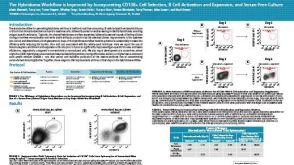

 沪公网安备31010102008431号