Meziane EK et al. (JUL 2011)
Journal of cell science 124 Pt 13 2175--86
Knockdown of Fbxo7 reveals its regulatory role in proliferation and differentiation of haematopoietic precursor cells.
Fbxo7 is an unusual F-box protein because most of its interacting proteins are not substrates for ubiquitin-mediated degradation. Fbxo7 directly binds p27 and Cdk6,enhances the level of cyclin D-Cdk6 complexes,and its overexpression causes Cdk6-dependent transformation of immortalised fibroblasts. Here,we test the ability of Fbxo7 to transform haematopoietic pro-B (Ba/F3) cells which,unexpectedly,it was unable to do despite high levels of Cdk6. Instead,reduction of Fbxo7 expression increased proliferation,decreased cell size and shortened G1 phase. Analysis of cell cycle regulators showed that cells had decreased levels of p27,and increased levels of S phase cyclins and Cdk2 activity. Also,Fbxo7 protein levels correlated inversely with those of CD43,suggesting direct regulation of its expression and,therefore,of B cell maturation. Alterations to Cdk6 protein levels did not affect the cell cycle,indicating that Cdk6 is neither rate-limiting nor essential in Ba/F3 cells; however,decreased expression of Cdk6 also enhanced levels of CD43,indicating that expression of CD43 is independent of cell cycle regulation. The physiological effect of reduced levels of Fbxo7 was assessed by creating a transgenic mouse with a LacZ insertion into the Fbxo7 locus. Homozygous Fbxo7(LacZ) mice showed significantly increased pro-B cell and pro-erythroblast populations,consistent with Fbxo7 having an anti-proliferative function and/or a role in promoting maturation of precursor cells.
View Publication
产品号#:
03234
产品名:
MethoCult™ M3234
Putnam AL et al. (NOV 2013)
American journal of transplantation : official journal of the American Society of Transplantation and the American Society of Transplant Surgeons 13 11 3010--20
Clinical grade manufacturing of human alloantigen-reactive regulatory T cells for use in transplantation.
Regulatory T cell (Treg) therapy has the potential to induce transplantation tolerance so that immunosuppression and associated morbidity can be minimized. Alloantigen-reactive Tregs (arTregs) are more effective at preventing graft rejection than polyclonally expanded Tregs (PolyTregs) in murine models. We have developed a manufacturing process to expand human arTregs in short-term cultures using good manufacturing practice-compliant reagents. This process uses CD40L-activated allogeneic B cells to selectively expand arTregs followed by polyclonal restimulation to increase yield. Tregs expanded 100- to 1600-fold were highly alloantigen reactive and expressed the phenotype of stable Tregs. The alloantigen-expanded Tregs had a diverse TCR repertoire. They were more potent than PolyTregs in vitro and more effective at controlling allograft injuries in vivo in a humanized mouse model.
View Publication
Lagresle-Peyrou C et al. (JAN 2006)
Blood 107 1 63--72
Long-term immune reconstitution in RAG-1-deficient mice treated by retroviral gene therapy: a balance between efficiency and toxicity.
Severe combined immunodeficiency (SCID) caused by mutations in RAG1 or RAG2 genes is characterized by a complete block in T- and B-cell development. The only curative treatment is allogeneic hematopoietic stem cell transplantation,which gives a high survival rate (90%) when an HLA-genoidentical donor exists but unsatisfactory results when only partially compatible donors are available. We have thus been interested in the development of a potential alternative treatment by using retroviral gene transfer of a normal copy of RAG1 cDNA. We show here that this approach applied to RAG-1-deficient mice restores normal B- and T-cell function even in the presence of a reduced number of mature B cells. The reconstitution is stable over time,attesting to a selective advantage of transduced progenitors. Notably,a high transgene copy number was detected in all lymphoid organs,and this was associated with a risk of lymphoproliferation as observed in one mouse. Altogether,these results demonstrate that correction of RAG-1 deficiency can be achieved by gene therapy in immunodeficient mice but that human application would require the use of self-inactivated vector to decrease the risk of lymphoproliferative diseases.
View Publication
产品号#:
09600
09650
产品名:
StemSpan™ SFEM
StemSpan™ SFEM
Golay J et al. (MAR 2006)
Haematologica 91 3 322--30
The sensitivity of acute lymphoblastic leukemia cells carrying the t(12;21) translocation to campath-1H-mediated cell lysis.
BACKGROUND AND OBJECTIVES: Campath-1H is used in conditioning regimens and more recently as an anti-leukemic therapy in acute lymphoblastic leukemias (ALL). We therefore investigated CD52 expression and campath-1H-mediated lysis of ALL cells in vitro. DESIGN AND METHODS: Complement-mediated cytotoxicity assays were performed on freshly isolated neoplastic cells and cell lines using human serum. Antibody-dependent cellular cytotoxicity (ADCC) was performed by calcein-AM release assays. RESULTS: CD52 was expressed in four out of eight ALL cell lines studied. Among 61 freshly isolated ALL samples CD52 was expressed at varying levels in 87% of cases. Whereas ADCC was equivalent in different CD52+ lines,complement-dependent cytotoxicity (CDC) was variable. The REH cell line bearing the t(12;21) translocation showed 47-60% lysis when treated with 10 microg/mL campath-1H compared to 0-6% for the other cell lines expressing equivalent amounts of CD52. Furthermore all nine ALL samples with t(12;21) showed very high CDC (mean 97%) compared to the other 24 CD52+cases (mean 24%)(ptextless0.0001). In t(12;21) samples,efficient CDC was obtained with as little as 1 microg/mL campath-1H. CDC correlated in part with CD52 levels,suggesting that CD52 expression and other yet undefined factors contribute to the particular sensitivity of t(12;21) cells. The resistance of non t(12;21) ALL cases could be overcome to a limited extent by increasing the concentration of campath-1H,blocking the CD55 and CD59 complement inhibitors,and more effectively by combining campath-1H with fludarabine. INTERPRETATION AND CONCLUSIONS: We conclude that most ALL samples express CD52 to a variable level and that campath-1H has cytotoxic activity against CD52+ALL,alone or in combination with cytotoxic drugs.
View Publication
产品号#:
09600
09650
产品名:
StemSpan™ SFEM
StemSpan™ SFEM
Baens M et al. (MAY 2006)
Cancer research 66 10 5270--7
Selective expansion of marginal zone B cells in Emicro-API2-MALT1 mice is linked to enhanced IkappaB kinase gamma polyubiquitination.
The translocation t(11;18)(q21;q21) that generates an API2-MALT1 fusion protein is the most common structural abnormality among the genetic defects reported in mucosa-associated lymphoid tissue (MALT)-type lymphomas,and its presence correlates with the apparent lack of further genetic instability or chromosomal imbalances. Hence,constitutive nuclear factor-kappaB (NF-kappaB) activation induced by the API2-MALT1 fusion protein is considered essential for B-cell transformation. To examine its role in B-cell development and lymphomagenesis,Emu-API2-MALT1 transgenic mice were produced. Our data show that expression of the API2-MALT1 fusion protein alone is not sufficient for the development of lymphoma masses within 50 weeks. Nevertheless,API2-MALT1 expression affected B-cell maturation in the bone marrow and triggered the specific expansion of splenic marginal zone B cells. Polyubiquitination of IkappaB kinase gamma (IKKgamma),indicative for enhanced NF-kappaB activation,was increased in splenic lymphocytes and promoted the survival of B cells ex vivo. In addition,we show that the API2-MALT1 fusion resided in the cholesterol- and sphingolipid-enriched membrane microdomains,termed lipid rafts. We provide evidence that association of the MALT1 COOH terminal with the lipid rafts,which is mediated by the API2 portion,is sufficient to trigger NF-kappaB activation via enhanced polyubiquitination of IKKgamma. Taken together,these data support the hypothesis that the API2-MALT1 fusion protein can contribute to MALT lymphoma formation via increased NF-kappaB activation.
View Publication
产品号#:
03630
产品名:
MethoCult™ M3630
Chou W-C et al. (NOV 2006)
Blood 108 9 3005--11
STAT3 positively regulates an early step in B-cell development.
Transcription factors are critical for instructing the development of B lymphocytes from multipotential progenitor cells in the bone marrow (BM). Here,we show that the absence of STAT3 impaired B-cell development. Mice selectively lacking STAT3 in BM progenitor cells displayed reduced numbers of mature B cells,both in the BM and in the periphery. The reduction in the B-cell compartment included reduced percentages and numbers of pro-B,pre-B,and immature B cells in the absence of STAT3,whereas the number of pre-pro-B cells was increased. We found that pro-B and pre-B-cell populations lacking STAT3 were hyporesponsive to IL-7 because of a decreased number of IL-7-responsive cells rather than decreased expression or signaling of IL-7Ralpha. Moreover,STAT3-deficient mice displayed enhanced apoptosis in the pro-B population when deprived of survival factors,suggesting that at least 2 mechanisms (impaired differentiation and enhanced apoptosis) are involved in the mutant phenotype. Last,BM transplantation confirmed that impaired B lymphopoiesis in the absence of STAT3 was caused by a cell autonomous defect. In sum,these studies defined a specific role for STAT3 in early B-cell development,probably acting at the pre-pro-B transition by contributing to the survival of IL-7-responsive progenitors.
View Publication
产品号#:
03630
产品名:
MethoCult™ M3630
Brunet de la Grange P et al. (NOV 2006)
Blood 108 9 2998--3004
Low SCL/TAL1 expression reveals its major role in adult hematopoietic myeloid progenitors and stem cells.
Stem cell leukemia/T cell acute leukemia 1 (SCL/TAL1) plays a key role in the development of murine primitive hematopoiesis but its functions in adult definitive hematopoiesis are still unclear. Using lentiviral delivery of TAL1-directed shRNA in human hematopoietic cells,we show that decreased expression of TAL1 induced major disorders at different levels of adult hematopoietic cell development. Erythroid and myeloid cell production in cultures was dramatically decreased in TAL1-directed shRNA-expressing cells,whereas lymphoid B-cell development was normal. These results confirm the role of TAL1 in the erythroid compartment and show TLA1's implication in the function of myeloid committed progenitors. Moreover,long-term cultures and transplantation of TAL1-directed shRNA-expressing CD34+ cells into irradiated nonobese diabetic-severe combined immunodeficient (NOD-SCID) mice led to dramatically low levels of human cells of all lineages including the B-lymphoid lineage,strongly suggesting that TAL1 has a role in the early commitment of hematopoietic stem cells (HSCs) in humans. Cultures and transplantation experiments performed with mouse Sca1+ cells gave identical results. Altogether,these observations definitively show that TAL1 participates in the regulation of hematopoiesis from HSCs to myeloid progenitors,and pinpoint TAL1 as a master protein of human and murine adult hematopoiesis.
View Publication
产品号#:
03434
03444
18756
18756RF
18056
18056RF
产品名:
MethoCult™ GF M3434
MethoCult™ GF M3434
EasySep™小鼠SCA1正选试剂盒
RoboSep™ 小鼠SCA1正选试剂盒含滤芯吸头
Isham CR et al. (MAR 2007)
Blood 109 6 2579--88
Chaetocin: a promising new antimyeloma agent with in vitro and in vivo activity mediated via imposition of oxidative stress.
Chaetocin,a thiodioxopiperazine natural product previously unreported to have anticancer effects,was found to have potent antimyeloma activity in IL-6-dependent and -independent myeloma cell lines in freshly collected sorted and unsorted patient CD138(+) myeloma cells and in vivo. Chaetocin largely spares matched normal CD138(-) patient bone marrow leukocytes,normal B cells,and neoplastic B-CLL (chronic lymphocytic leukemia) cells,indicating a high degree of selectivity even in closely lineage-related B cells. Furthermore,chaetocin displays superior ex vivo antimyeloma activity and selectivity than doxorubicin and dexamethasone,and dexamethasone- or doxorubicin-resistant myeloma cell lines are largely non-cross-resistant to chaetocin. Mechanistically,chaetocin is dramatically accumulated in cancer cells via a process inhibited by glutathione and requiring intact/unreduced disulfides for uptake. Once inside the cell,its anticancer activity appears mediated primarily through the imposition of oxidative stress and consequent apoptosis induction. Moreover,the selective antimyeloma effects of chaetocin appear not to reflect differential intracellular accumulation of chaetocin but,instead,heightened sensitivity of myeloma cells to the cytotoxic effects of imposed oxidative stress. Considered collectively,chaetocin appears to represent a promising agent for further study as a potential antimyeloma therapeutic.
View Publication
产品号#:
18054
18054RF
21000
20119
20155
19154
19154RF
73592
产品名:
RoboSep™- S
RoboSep™ 吸头组件抛光剂
RoboSep™分选管套装(9个塑料管)
毛壳素
Begum AN et al. (JUL 2014)
Translational psychiatry 4 January e414
Women with the Alzheimer's risk marker ApoE4 lose A-specific CD4 T cells 10-20 years before men.
Adaptive immunity to self-antigens causes autoimmune disorders,such as multiple sclerosis,psoriasis and type 1 diabetes; paradoxically,T- and B-cell responses to amyloid-$\$(A$\$) reduce Alzheimer's disease (AD)-associated pathology and cognitive impairment in mouse models of the disease. The manipulation of adaptive immunity has been a promising therapeutic approach for the treatment of AD,although vaccine and anti-A$\$ approaches have proven difficult in patients,thus far. CD4(+) T cells have a central role in regulating adaptive immune responses to antigens,and A$\$-specific CD4(+) T cells have been shown to reduce AD pathology in mouse models. As these cells may facilitate endogenous mechanisms that counter AD,an evaluation of their abundance before and during AD could provide important insights. A$\$-CD4see is a new assay developed to quantify A$\$-specific CD4(+) T cells in human blood,using dendritic cells derived from human pluripotent stem cells. In tests of textgreater50 human subjects A$\$-CD4see showed an age-dependent decline of A$\$-specific CD4(+) T cells,which occurs earlier in women than men. In aggregate,men showed a 50% decline in these cells by the age of 70 years,but women reached the same level before the age of 60 years. Notably,women who carried the AD risk marker apolipoproteinE-ɛ4 (ApoE4) showed the earliest decline,with a precipitous drop between 45 and 52 years,when menopause typically begins. A$\$-CD4see requires a standard blood draw and provides a minimally invasive approach for assessing changes in A$\$ that may reveal AD-related changes in physiology by a decade. Furthermore,CD4see probes can be modified to target any peptide,providing a powerful new tool to isolate antigen-specific CD4(+) T cells from human subjects.
View Publication
产品号#:
05850
05857
05870
05875
85850
85857
85870
85875
产品名:
mTeSR™1
mTeSR™1
Bornancin F et al. ( 2015)
The Journal of Immunology 194 8 3723--3734
Deficiency of MALT1 Paracaspase Activity Results in Unbalanced Regulatory and Effector T and B Cell Responses Leading to Multiorgan Inflammation
The paracaspase MALT1 plays an important role in immune receptor-driven signaling pathways leading to NF-κB activation. MALT1 promotes signaling by acting as a scaffold,recruiting downstream signaling proteins,as well as by proteolytic cleavage of multiple substrates. However,the relative contributions of these two different activities to T and B cell function are not well understood. To investigate how MALT1 proteolytic activity contributes to overall immune cell regulation,we generated MALT1 protease-deficient mice (Malt1(PD/PD)) and compared their phenotype with that of MALT1 knockout animals (Malt1(-/-)). Malt1(PD/PD) mice displayed defects in multiple cell types including marginal zone B cells,B1 B cells,IL-10-producing B cells,regulatory T cells,and mature T and B cells. In general,immune defects were more pronounced in Malt1(-/-) animals. Both mouse lines showed abrogated B cell responses upon immunization with T-dependent and T-independent Ags. In vitro,inactivation of MALT1 protease activity caused reduced stimulation-induced T cell proliferation,impaired IL-2 and TNF-α production,as well as defective Th17 differentiation. Consequently,Malt1(PD/PD) mice were protected in a Th17-dependent experimental autoimmune encephalomyelitis model. Surprisingly,Malt1(PD/PD) animals developed a multiorgan inflammatory pathology,characterized by Th1 and Th2/0 responses and enhanced IgG1 and IgE levels,which was delayed by wild-type regulatory T cell reconstitution. We therefore propose that the pathology characterizing Malt1(PD/PD) animals arises from an immune imbalance featuring pathogenic Th1- and Th2/0-skewed effector responses and reduced immunosuppressive compartments. These data uncover a previously unappreciated key function of MALT1 protease activity in immune homeostasis and underline its relevance in human health and disease.
View Publication


 EasySep™小鼠TIL(CD45)正选试剂盒




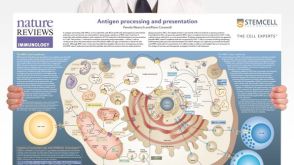 挂图Antigen Processing and Presentation Overview of the mechanisms by which antigens are processed and presented to T cells
 沪公网安备31010102008431号