Irish JM et al. (AUG 2006)
Journal of immunology (Baltimore,Md. : 1950) 177 3 1581--9
Kinetics of B cell receptor signaling in human B cell subsets mapped by phosphospecific flow cytometry.
Differences in BCR signaling may govern outcomes as diverse as proliferation and cell death. We profiled BCR signaling kinetics in subsets of primary human B cells using flow cytometry. In the predominant population expressing IgM,BCR cross-linking led to a quick burst of Syk,ERK1/2,and p38 signaling. In contrast,IgG B cells sustained higher per-cell ERK1/2 phosphorylation over time. This dichotomy suggested a mechanism for dampening signals transmitted by IgM. Regulatory phosphatase activity in IgM B cells was BCR-mediated and initiated more slowly than kinase activity. This BCR-mediated phosphatase activity was sensitive to inhibition by H(2)O(2) and required to attenuate IgM BCR signaling. These results provide the first kinetic maps of BCR signaling in primary human B cell subsets and enable new studies of signaling in B cell disorders,such as autoimmunity and cancer.
View Publication
产品号#:
09850
产品名:
Walker WE et al. (OCT 2006)
Journal of immunology (Baltimore,Md. : 1950) 177 8 5307--16
Absence of innate MyD88 signaling promotes inducible allograft acceptance.
Prior experimental strategies to induce transplantation tolerance have focused largely on modifying adaptive immunity. However,less is known concerning the role of innate immune signaling in the induction of transplantation tolerance. Using a highly immunogenic murine skin transplant model that resists transplantation tolerance induction when innate immunity is preserved,we show that absence of MyD88,a key innate Toll like receptor signal adaptor,abrogates this resistance and facilitates inducible allograft acceptance. In our model,absence of MyD88 impairs inflammatory dendritic cell responses that reduce T cell activation. This effect increases T cell susceptibility to suppression mediated by CD4+ CD25+ regulatory T cells. Therefore,this study provides evidence that absence of MyD88 promotes inducible allograft acceptance and implies that inhibiting innate immunity may be a potential,clinically relevant strategy to facilitate transplantation tolerance.
View Publication
产品号#:
18758
18758RF
18768
18768RF
19752
19752RF
19753
19753RF
产品名:
Ciurea SO et al. (AUG 2007)
Blood 110 3 986--93
Pivotal contributions of megakaryocytes to the biology of idiopathic myelofibrosis.
In order to investigate the biologic processes underlying and resulting from the megakaryocytic hyperplasia that characterizes idiopathic myelofibrosis (IMF),peripheral blood CD34+ cells isolated from patients with IMF,polycythemia vera (PV),and G-CSF-mobilized healthy volunteers were cultured in the presence of stem cell factor and thrombopoietin. IMF CD34+ cells generated 24-fold greater numbers of megakaryocytes (MKs) than normal CD34+ cells. IMF MKs were also shown to have a delayed pattern of apoptosis and to overexpress the antiapoptotic protein bcl-xL. MK hyperplasia in IMF is,therefore,likely a consequence of both the increased ability of IMF progenitor cells to generate MKs and a decreased rate of MK apoptosis. Media conditioned (CM) by CD61+ cells generated in vitro from CD34+ cells were then assayed for the levels of growth factors and proteases. Higher levels of transforming growth factor-beta (TGF-beta) and active matrix metalloproteinase-9 (MMP9) were observed in media conditioned with IMF CD61+ cells than normal or PV CD61+ cells. Both normal and IMF CD61+ cells produced similar levels of VEGF. MK-derived TGF-B and MMP-9,therefore,likely contribute to the development of many pathological epiphenomena associated with IMF.
View Publication
Chalmers SA et al. (MAY 2016)
Scientific Reports 6 26164
Therapeutic Blockade of Immune Complex-Mediated Glomerulonephritis by Highly Selective Inhibition of Bruton's Tyrosine Kinase.
Lupus nephritis (LN) is a potentially dangerous end organ pathology that affects upwards of 60% of lupus patients. Bruton's tyrosine kinase (BTK) is important for B cell development,Fc receptor signaling,and macrophage polarization. In this study,we investigated the effects of a novel,highly selective and potent BTK inhibitor,BI-BTK-1,in an inducible model of LN in which mice receive nephrotoxic serum (NTS) containing anti-glomerular antibodies. Mice were treated once daily with vehicle alone or BI-BTK-1,either prophylactically or therapeutically. When compared with control treated mice,NTS-challenged mice treated prophylactically with BI-BTK-1 exhibited significantly attenuated kidney disease,which was dose dependent. BI-BTK-1 treatment resulted in decreased infiltrating IBA-1+ cells,as well as C3 deposition within the kidney. RT-PCR on whole kidney RNA and serum profiling indicated that BTK inhibition significantly decreased levels of LN-relevant inflammatory cytokines and chemokines. Renal RNA expression profiling by RNA-seq revealed that BI-BTK-1 dramatically modulated pathways related to inflammation and glomerular injury. Importantly,when administered therapeutically,BI-BTK-1 reversed established proteinuria and improved renal histopathology. Our results highlight the important role for BTK in the pathogenesis of immune complex-mediated nephritis,and BTK inhibition as a promising therapeutic target for LN.
View Publication
A. A. Titov et al. (jul 2019)
Journal of immunology (Baltimore,Md. : 1950) 203 2 338--348
Metformin Inhibits the Type 1 IFN Response in Human CD4+ T Cells.
In systemic lupus erythematosus,defective clearance of apoptotic debris and activation of innate cells result in a chronically activated type 1 IFN response,which can be measured in PBMCs of most patients. Metformin,a widely used prescription drug for Type 2 diabetes,has a therapeutic effect in several mouse models of lupus through mechanisms involving inhibition of oxidative phosphorylation and a decrease in CD4+ T cell activation. In this study,we report that in CD4+ T cells from human healthy controls and human systemic lupus erythematosus patients,metformin inhibits the transcription of IFN-stimulated genes (ISGs) after IFN-alpha treatment. Accordingly,metformin inhibited the phosphorylation of pSTAT1 (Y701) and its binding to IFN-stimulated response elements that control ISG expression. These effects were independent of AMPK activation or mTORC1 inhibition but were replicated using inhibitors of the electron transport chain respiratory complexes I,III,and IV. This indicates that mitochondrial respiration is required for ISG expression in CD4+ T cells and provides a novel mechanism by which metformin may exert a therapeutic effect in autoimmune diseases.
View Publication
P. Petrov et al. (mar 2019)
Scientific reports 9 1 4155
Computational analysis of the evolutionarily conserved Missing In Metastasis/Metastasis Suppressor 1 gene predicts novel interactions, regulatory regions and transcriptional control.
Missing in Metastasis (MIM),or Metastasis Suppressor 1 (MTSS1),is a highly conserved protein,which links the plasma membrane to the actin cytoskeleton. MIM has been implicated in various cancers,however,its modes of action remain largely enigmatic. Here,we performed an extensive in silico characterisation of MIM to gain better understanding of its function. We detected previously unappreciated functional motifs including adaptor protein (AP) complex interaction site and a C-helix,pointing to a role in endocytosis and regulation of actin dynamics,respectively. We also identified new functional regions,characterised with phosphorylation sites or distinct hydrophilic properties. Strong negative selection during evolution,yielding high conservation of MIM,has been combined with positive selection at key sites. Interestingly,our analysis of intra-molecular co-evolution revealed potential regulatory hotspots that coincided with reduced potentially pathogenic polymorphisms. We explored databases for the mutations and expression levels of MIM in cancer. Experimentally,we focused on chronic lymphocytic leukaemia (CLL),where MIM showed high overall expression,however,downregulation on poor prognosis samples. Finally,we propose strong conservation of MTSS1 also on the transcriptional level and predict novel transcriptional regulators. Our data highlight important targets for future studies on the role of MIM in different tissues and cancers.
View Publication


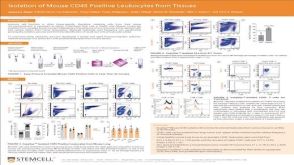
 EasySep™小鼠TIL(CD45)正选试剂盒




 实验方案Optimizing Delivery Efficiency with Fluorescent Dextran Using the CellPore™ Transfection System

 沪公网安备31010102008431号