Portis T and Longnecker R (JAN 2003)
Journal of virology 77 1 105--14
Epstein-Barr virus LMP2A interferes with global transcription factor regulation when expressed during B-lymphocyte development.
Epstein-Barr virus (EBV) is associated with the development of malignant lymphomas and lymphoproliferative disorders in immunocompromised individuals. The LMP2A protein of EBV is thought to play a central role in this process by allowing the virus to persist in latently infected B lymphocytes. We have demonstrated that LMP2A,when expressed in B cells of transgenic mice,allows normal B-cell developmental checkpoints to be bypassed. To identify cellular genes targeted by LMP2A that are involved in this process,we have utilized DNA microarrays to compare gene transcription in B cells from wild-type versus LMP2A transgenic mice. In B cells from LMP2A transgenic mice,we observed decreased expression of many genes associated with normal B-cell development as well as reduced levels of the transcription factors that regulate their expression. In particular,expression of the transcription factor E2A was down-regulated in bone marrow and splenic B cells. Furthermore,E2A activity was inhibited in these cells as determined by decreased DNA binding and reduced expression of its target genes,including the transcription factors early B-cell factor and Pax-5. Expression of two E2A inhibitors,Id2 and SCL,was up-regulated in splenic B cells expressing LMP2A,suggesting a possible mechanism for E2A inhibition. These results indicate that LMP2A deregulates transcription factor expression and activity in developing B cells,and this likely allows for a bypass of normal signaling events required for proper B-cell development. The ability of LMP2A to interfere with B-cell transcription factor regulation has important implications regarding its role in EBV latency.
View Publication
产品号#:
03630
产品名:
MethoCult™ M3630
Heavey B et al. (AUG 2003)
The EMBO journal 22 15 3887--97
Myeloid lineage switch of Pax5 mutant but not wild-type B cell progenitors by C/EBPalpha and GATA factors.
The developmental potential of hematopoietic progenitors is restricted early on to either the erythromyeloid or lymphoid lineages. The broad developmental potential of Pax5(-/-) pro-B cells is in apparent conflict with such a strict separation,although these progenitors realize the myeloid and erythroid potential with lower efficiency compared to the lymphoid cell fates. Here we demonstrate that ectopic expression of the transcription factors C/EBPalpha,GATA1,GATA2 and GATA3 strongly promoted in vitro macrophage differentiation and myeloid colony formation of Pax5(-/-) pro-B cells. GATA2 and GATA3 expression also resulted in efficient engraftment and myeloid development of Pax5(-/-) pro-B cells in vivo. The myeloid transdifferentiation of Pax5(-/-) pro-B cells was accompanied by the rapid activation of myeloid genes and concomitant repression of B-lymphoid genes by C/EBPalpha and GATA factors. These data identify the Pax5(-/-) pro-B cells as lymphoid progenitors with a latent myeloid potential that can be efficiently activated by myeloid transcription factors. The same regulators were unable to induce a myeloid lineage switch in Pax5(+/+) pro-B cells,indicating that Pax5 dominates over myeloid transcription factors in B-lymphocytes.
View Publication
产品号#:
03334
03434
03444
产品名:
MethoCult™ M3334
MethoCult™ GF M3434
MethoCult™ GF M3434
Irish JM et al. (NOV 2006)
Blood 108 9 3135--42
Altered B-cell receptor signaling kinetics distinguish human follicular lymphoma B cells from tumor-infiltrating nonmalignant B cells.
The B-cell receptor (BCR) transmits life and death signals throughout B-cell development,and altered BCR signaling may be required for survival of B-lymphoma cells. We used single-cell signaling profiles to compare follicular lymphoma (FL) B cells and nonmalignant host B cells within individual patient biopsies and identified BCR-mediated signaling events specific to lymphoma B cells. Expression of CD20,Bcl-2,and BCR light chain isotype (kappa or lambda) distinguished FL tumor B-cell and nontumor host B-cell subsets within FL patient biopsies. BCR-mediated signaling via phosphorylation of Btk,Syk,Erk1/2,and p38 occurred more rapidly in tumor B cells from FL samples than in infiltrating nontumor B cells,achieved greater levels of per-cell signaling,and sustained this level of signaling for hours longer than nontumor B cells. The timing and magnitude of BCR-mediated signaling in nontumor B cells within an FL sample instead resembled that observed in mature B cells from the peripheral blood of healthy subjects. BCR signaling pathways that are potentiated specifically in lymphoma cells should provide new targets for therapeutic attention.
View Publication
产品号#:
09850
产品名:
Inoue S et al. (AUG 2006)
Cancer research 66 15 7741--7
Inhibitory effects of B cells on antitumor immunity.
B-cell functions in antitumor immunity are not well understood. In this study,we evaluated the role of B cells in the development of antitumor immunity using Friend murine leukemia virus gag-expressing mouse EL-4 (EL-4 gag),D5 mouse melanoma,or MCA304 mouse sarcoma cells. To screen tumors for susceptibility to B-cell-deficient immune environments,spleen cells from naive C57BL/6 [wild-type (WT)] and B-cell knockout (BKO) mice were cultured with irradiated tumor cells in vitro. When cells were stimulated with EL-4 gag or D5 (but not MCA304 tumors),IFN-gamma production from CD8 T cells and natural killer cells was markedly decreased in WT compared with BKO cultures. IFN-gamma production was correlated with CD40 ligand expression on the tumor and inversely with interleukin-10 (IL-10) production by B cells. Sorted WT B cells produced more IL-10 than CD40 knockout (CD40KO) B cells when cocultured with EL-4 gag or D5 (but not MCA304). IFN-gamma production by BKO cells was reduced by the addition of sorted naive WT B cells (partially by CD40KO B cells) or recombinant mouse IL-10. In vivo tumor progression mirrored in vitro studies in that WT mice were unable to control tumor growth whereas EL-4 gag and D5 tumors (but not MCA304) were eliminated in BKO mice. Robust in vivo antitumor CTLs developed only in BKO tumor-challenged mice. Our studies provide the first mechanistic basis for the concept that B-cell depletion could therapeutically enhance antitumor immune responses to certain tumors by decreasing IL-10 production from B cells.
View Publication
产品号#:
18754
18754RF
产品名:
Chatzouli M et al. ( 2014)
The Journal of Immunology 192 10 4518--4524
Heterogeneous Functional Effects of Concomitant B Cell Receptor and TLR Stimulation in Chronic Lymphocytic Leukemia with Mutated versus Unmutated Ig Genes
We recently reported that chronic lymphocytic leukemia (CLL) subgroups with distinct clonotypic BCRs present discrete patterns of TLR expression,function,and/or tolerance. In this study,to explore whether specific types of BCR/TLR collaboration exist in CLL,we studied the effect of single versus concomitant BCR and/or TLR stimulation on CLL cells from mutated (M-CLL) and unmutated CLL (U-CLL) cases. We stimulated negatively isolated CLL cells by using anti-IgM,imiquimod,and CpG oligodeoxynucleotide for BCR,TLR7,and TLR9,respectively,alone or in combination for different time points. After in vitro culture in the absence of stimulation,differences in p-ERK were identified at any time point,with higher p-ERK levels in U-CLL versus M-CLL. Pronounced p-ERK induction was seen by single stimulation in U-CLL,whereas BCR/TLR synergism was required in
View Publication
产品号#:
15024
15064
产品名:
RosetteSep™人B细胞富集抗体混合物
RosetteSep™人B细胞富集抗体混合物
Currie KS et al. (MAY 2014)
Journal of medicinal chemistry 57 9 3856--73
Discovery of GS-9973, a selective and orally efficacious inhibitor of spleen tyrosine kinase.
Spleen tyrosine kinase (Syk) is an attractive drug target in autoimmune,inflammatory,and oncology disease indications. The most advanced Syk inhibitor,R406,1 (or its prodrug form fostamatinib,2),has shown efficacy in multiple therapeutic indications,but its clinical progress has been hampered by dose-limiting adverse effects that have been attributed,at least in part,to the off-target activities of 1. It is expected that a more selective Syk inhibitor would provide a greater therapeutic window. Herein we report the discovery and optimization of a novel series of imidazo[1,2-a]pyrazine Syk inhibitors. This work culminated in the identification of GS-9973,68,a highly selective and orally efficacious Syk inhibitor which is currently undergoing clinical evaluation for autoimmune and oncology indications.
View Publication


 EasySep™小鼠TIL(CD45)正选试剂盒




 科学海报One-Step Enrichment of Leukocyte Subsets Directly in the Blood Collection Tube
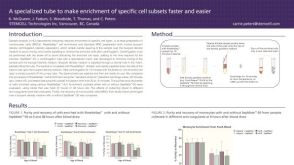 科学海报A Specialized Tube to Make Enrichment of Specific Cell Subsets Faster and Easier



 沪公网安备31010102008431号