Activation-induced cytidine deaminase deficiency accelerates autoimmune diabetes in NOD mice.
B cells play an important role in type 1 diabetes (T1D) development. However,the role of B cell activation-induced cytidine deaminase (AID) in diabetes development is not clear. We hypothesized that AID is important in the immunopathogenesis of T1D. To test this hypothesis,we generated AID-deficient (AID-/-) NOD mice. We found that AID-/-NOD mice developed accelerated T1D,with worse insulitis and high levels of anti-insulin autoantibody in the circulation. Interestingly,neither maternal IgG transferred through placenta,nor IgA transferred through milk affected the accelerated diabetes development. AID-/-NOD mice showed increased activation and proliferation of B and T cells. We found enhanced T-B cell interactions in AID-/-NOD mice,with increased T-bet and IFN-γ expression in CD4+ T cells in the presence of AID-/- B cells. Moreover,excessive lymphoid expansion was observed in AID-/-NOD mice. Importantly,antigen-specific BDC2.5 CD4+ T cells caused more rapid onset of diabetes when cotransferred with AID-/- B cells than when cotransferred with AID+/+ B cells. Thus,our study provides insights into the role of AID in T1D. Our data also suggest that AID is a negative regulator of immune tolerance and ablation of AID can lead to exacerbated islet autoimmunity and accelerated T1D development.
View Publication
产品号#:
19854
19854RF
产品名:
EasySep™小鼠B细胞分选试剂盒
RoboSep™ 小鼠B细胞分选试剂盒
Smith KS et al. (NOV 2002)
Molecular and cellular biology 22 21 7678--87
Transformation of bone marrow B-cell progenitors by E2a-Hlf requires coexpression of Bcl-2.
The chimeric transcription factor E2a-Hlf is an oncoprotein associated with a subset of acute lymphoblastic leukemias of early B-lineage derivation. We employed a retroviral transduction-transplantation approach to evaluate the oncogenic effects of E2a-Hlf on murine B-cell progenitors harvested from adult bone marrow. Expression of E2a-Hlf induced short-lived clusters of primary hematopoietic cells but no long-term growth on preformed bone marrow stromal cell layers comprised of the AC6.21 cell line. Coexpression with Bcl-2,however,resulted in the sustained self-renewal of early preB-I cells that required stromal and interleukin-7 (IL-7) support for growth in vitro. Immortalized cells were unable to induce leukemias after transplantation into nonirradiated syngeneic hosts,unlike the leukemic properties and cytokine independence of preB-I cells transformed by p190(Bcr-Abl) under identical in vitro conditions. However,bone marrow cells expressing E2a-Hlf in combination with Bcl-2,but not E2a-Hlf alone,induced leukemias in irradiated recipients with long latencies,demonstrating both a requirement for suppression of apoptosis and the need for further secondary mutations in leukemia pathogenesis. Coexpression of IL-7 substituted for Bcl-2 to induce the in vitro growth of pre-B cells expressing E2a-Hlf,but leukemic conversion required additional abrogation of undefined stromal requirements and was associated with alterations in the Arf/Mdm2/p53 pathway. Thus,E2a-Hlf enhances the self-renewal of bone marrow B-cell progenitors without inciting a p53 tumor surveillance response or abrogating stromal and cytokine requirements for growth,which are nevertheless abrogated during progression to a leukemogenic phenotype.
View Publication
产品号#:
03134
产品名:
MethoCult™ M3134
Yates F et al. (DEC 2002)
Blood 100 12 3942--9
Gene therapy of RAG-2-/- mice: sustained correction of the immunodeficiency.
Patients with mutations of either RAG-1 or RAG-2 genes suffer from severe combined immunodeficiency (SCID) characterized by the lack of T and B lymphocytes. The only curative treatment today consists of hematopoietic stem cell (HSC) transplantation,which is only partially successful in the absence of an HLA genoidentical donor,thus justifying research to find an alternative therapeutic approach. To this end,RAG-2-deficient mice were used to test whether retrovirally mediated ex vivo gene transfer into HSCs could provide long-term correction of the immunologic deficiency. Murine RAG-2-/-Sca-1(+) selected bone marrow cells were transduced with a modified Moloney leukemia virus (MLV)-based MND (myeloproliferative sarcoma virus enhancer,negative control region deleted,dl587rev primer-binding site substituted) retroviral vector containing the RAG-2 cDNA and transplanted into RAG-2-/- sublethally irradiated mice (3Gy). Two months later,T- and B-cell development was achieved in all mice. Diverse repertoire of T cells as well as proliferative capacity in the presence of mitogens,allogeneic cells,and keyhole limpet hemocyanin (KLH) were shown. B-cell function as shown by serum Ig levels and antibody response to a challenge by KLH also developed. Lymphoid subsets and function were shown to be stable over a one-year period without evidence of any detectable toxicity. Noteworthy,a selective advantage for transduced lymphoid cells was evidenced by comparative provirus quantification in lymphoid and myeloid lineages. Altogether,this study demonstrates the efficiency of ex vivo RAG-2 gene transfer in HSCs to correct the immune deficiency of RAG-2-/- mice,constituting a significant step toward clinical application.
View Publication
产品号#:
09600
09650
产品名:
StemSpan™ SFEM
StemSpan™ SFEM
Glodek AM et al. (FEB 2003)
The Journal of experimental medicine 197 4 461--73
Sustained activation of cell adhesion is a differentially regulated process in B lymphopoiesis.
It is largely unknown how hematopoietic progenitors are positioned within specialized niches of the bone marrow microenvironment during development. Chemokines such as CXCL12,previously called stromal cell-derived factor 1,are known to activate cell integrins of circulating leukocytes resulting in transient adhesion before extravasation into tissues. However,this short-term effect does not explain the mechanism by which progenitor cells are retained for prolonged periods in the bone marrow. Here we show that in human bone marrow CXCL12 triggers a sustained adhesion response specifically in progenitor (pro- and pre-) B cells. This sustained adhesion diminishes during B cell maturation in the bone marrow and,strikingly,is absent in circulating mature B cells,which exhibit only transient CXCL12-induced adhesion. The duration of adhesion is tightly correlated with CXCL12-induced activation of focal adhesion kinase (FAK),a known molecule involved in integrin-mediated signaling. Sustained adhesion of progenitor B cells is associated with prolonged FAK activation,whereas transient adhesion in circulating B cells is associated with short-lived FAK activation. Moreover,sustained and transient adhesion responses are differentially affected by pharmacological inhibitors of protein kinase C and phosphatidylinositol 3-kinase. These results provide a developmental cell stage-specific mechanism by which chemokines orchestrate hematopoiesis through sustained rather than transient activation of adhesion and cell survival pathways.
View Publication


 EasySep™小鼠TIL(CD45)正选试剂盒




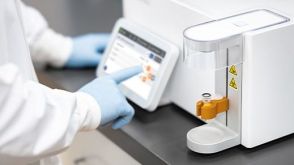 实验方案Optimizing Delivery Efficiency with Fluorescent Dextran Using the CellPore™ Transfection System

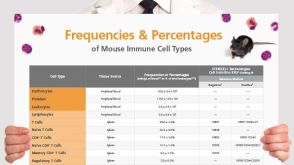 挂图Frequencies and Percentages of Mouse Immune Cell Types List of the frequencies of over 25 immune cell types in C57BL/6 mice
 沪公网安备31010102008431号