Seo J-H et al. (SEP 2010)
Cancer research 70 18 7325--35
A specific need for CRKL in p210BCR-ABL-induced transformation of mouse hematopoietic progenitors.
CRKL (CRK-like) is an adapter protein predominantly phosphorylated in cells that express the tyrosine kinase p210(BCR-ABL),the fusion product of a (9;22) chromosomal translocation causative for chronic myeloid leukemia. It has been unclear,however,whether CRKL plays a functional role in p210(BCR-ABL) transformation. Here,we show that CRKL is required for p210(BCR-ABL) to support interleukin-3-independent growth of myeloid progenitor cells and long-term outgrowth of B-lymphoid cells from fetal liver-derived hematopoietic progenitor cells. Furthermore,a synthetic phosphotyrosyl peptide that binds to the CRKL SH2 domain with high affinity blocks association of endogenous CRKL with the p210(BCR-ABL) complex and reduces c-MYC levels in K562 human leukemic cells as well as in mouse hematopoietic cells transformed by p210(BCR-ABL) or the imatinib-resistant mutant T315I. These results indicate that the function of CRKL as an adapter protein is essential for p210(BCR-ABL)-induced transformation.
View Publication
Biologic and genetic characterization of the novel amyloidogenic lambda light chain-secreting human cell lines, ALMC-1 and ALMC-2.
Primary systemic amyloidosis (AL) is a rare monoclonal plasma cell (PC) disorder characterized by the deposition of misfolded immunoglobulin (Ig) light chains (LC) in vital organs throughout the body. To our knowledge,no cell lines have ever been established from AL patients. Here we describe the establishment of the ALMC-1 and ALMC-2 cell lines from an AL patient. Both cell lines exhibit a PC phenotype and display cytokine-dependent growth. Using a comprehensive genetic approach,we established the genetic relationship between the cell lines and the primary patient cells,and we were also able to identify new genetic changes accompanying tumor progression that may explain the natural history of this patient's disease. Importantly,we demonstrate that free lambda LC secreted by both cell lines contained a beta structure and formed amyloid fibrils. Despite absolute Ig LC variable gene sequence identity,the proteins show differences in amyloid formation kinetics that are abolished by the presence of Na(2)SO(4). The formation of amyloid fibrils from these naturally secreting human LC cell lines is unprecedented. Moreover,these cell lines will provide an invaluable tool to better understand AL,from the combined perspectives of amyloidogenic protein structure and amyloid formation,genetics,and cell biology.
View Publication
产品号#:
18357
18357RF
21000
20119
20155
18387
18387RF
产品名:
RoboSep™- S
RoboSep™ 吸头组件抛光剂
RoboSep™分选管套装(9个塑料管)
Griffin DO et al. (JAN 2011)
The Journal of experimental medicine 208 1 67--80
Human B1 cells in umbilical cord and adult peripheral blood express the novel phenotype CD20+ CD27+ CD43+ CD70-.
B1 cells differ in many ways from conventional B cells,most prominently in the production of natural immunoglobulin,which is vitally important for protection against pathogens. B1 cells have also been implicated in the pathogenesis of autoimmune dyscrasias and malignant diseases. It has been impossible to accurately study B1 cells during health and illness because the nature of human B1 cells has not been successfully defined. This has produced controversy regarding the existence of human B1 cells. Here,we determined the phenotype of human B1 cells by testing sort-purified B cell fractions for three fundamental B1 cell functions based on mouse studies: spontaneous IgM secretion,efficient T cell stimulation,and tonic intracellular signaling. We found that a small population of CD20(+)CD27(+)CD43(+) cells present in both umbilical cord and adult peripheral blood fulfilled these criteria and expressed a skewed B cell receptor repertoire. These B cells express little or no surface CD69 and CD70,both of which are markedly up-regulated after activation of CD20(+)CD27(-)CD43(-) (naive) and CD20(+)CD27(+)CD43(-) (memory) B cells. This work identifies human B1 cells as CD20(+)CD27(+)CD43(+)CD70(-). We determined that the proportion of B1 cells declines with age,which may contribute to disease susceptibility. Identification of human B1 cells provides a foundation for future studies on the nature and role of these cells in human disease.
View Publication
产品号#:
18054
18054RF
19155
19155RF
产品名:
Benson DM et al. (SEP 2010)
Blood 116 13 2286--94
The PD-1/PD-L1 axis modulates the natural killer cell versus multiple myeloma effect: a therapeutic target for CT-011, a novel monoclonal anti-PD-1 antibody.
T-cell expression of programmed death receptor-1 (PD-1) down-regulates the immune response against malignancy by interacting with cognate ligands (eg,PD-L1) on tumor cells; however,little is known regarding PD-1 and natural killer (NK) cells. NK cells exert cytotoxicity against multiple myeloma (MM),an effect enhanced through novel therapies. We show that NK cells from MM patients express PD-1 whereas normal NK cells do not and confirm PD-L1 on primary MM cells. Engagement of PD-1 with PD-L1 should down-modulate the NK-cell versus MM effect. We demonstrate that CT-011,a novel anti-PD-1 antibody,enhances human NK-cell function against autologous,primary MM cells,seemingly through effects on NK-cell trafficking,immune complex formation with MM cells,and cytotoxicity specifically toward PD-L1(+) MM tumor cells but not normal cells. We show that lenalidomide down-regulates PD-L1 on primary MM cells and may augment CT-011's enhancement of NK-cell function against MM. We demonstrate a role for the PD-1/PD-L1 signaling axis in the NK-cell immune response against MM and a role for CT-011 in enhancing the NK-cell versus MM effect. A phase 2 clinical trial of CT-011 in combination with lenalidomide for patients with MM should be considered.
View Publication
产品号#:
18387
18387RF
产品名:
Brennan SK et al. (NOV 2010)
Blood 116 20 4185--91
Patients with mantle cell lymphoma (MCL) typically respond to initial treatment but subsequently relapse. This pattern suggests that a population of MCL cells is both drug resistant and capable of clonogenic growth. The intracellular enzyme retinaldehyde dehydrogenase (ALDH) provides resistance to several toxic agents. ALDH can also identify stem cells in normal adult tissues and tumorigenic cancer stem cells in several human malignancies. We studied ALDH expression in MCL and found small populations of ALDH(+) cells that were highly clonogenic. Moreover,ALDH(+) MCL cells were relatively quiescent and resistant to a wide range of agents. Normal B cells can be activated by specific unmethylated cytosine-phosphate-guanosine (CpG) DNA motifs through toll-like receptor 9,and we found that the synthetic CpG oligonucleotide 2006 (CpG) reduced the frequency of quiescent ALDH(+) MCL cells,induced terminal plasma cell differentiation,and limited tumor formation in vitro and in vivo. Treatment with CpG also significantly enhanced the activity of the proteasome inhibitor bortezomib that was associated with induction of the unfolded protein response. Our data suggest that CpG may target clonogenic and resistant ALDH(+) cells as well as improve the activity of proteasome inhibitors in MCL.
View Publication
Monitoring the systemic human memory B cell compartment of melanoma patients for anti-tumor IgG antibodies.
Melanoma,a potentially lethal skin cancer,is widely thought to be immunogenic in nature. While there has been much focus on T cell-mediated immune responses,limited knowledge exists on the role of mature B cells. We describe an approach,including a cell-based ELISA,to evaluate mature IgG antibody responses to melanoma from human peripheral blood B cells. We observed a significant increase in antibody responses from melanoma patients (n = 10) to primary and metastatic melanoma cells compared to healthy volunteers (n = 10) (Ptextless0.0001). Interestingly,we detected a significant reduction in antibody responses to melanoma with advancing disease stage in our patient cohort (n = 21) (Ptextless0.0001). Overall,28% of melanoma patient-derived B cell cultures (n = 1,800) compared to 2% of cultures from healthy controls (n = 600) produced antibodies that recognized melanoma cells. Lastly,a patient-derived melanoma-specific monoclonal antibody was selected for further study. This antibody effectively killed melanoma cells in vitro via antibody-mediated cellular cytotoxicity. These data demonstrate the presence of a mature systemic B cell response in melanoma patients,which is reduced with disease progression,adding to previous reports of tumor-reactive antibodies in patient sera,and suggesting the merit of future work to elucidate the clinical relevance of activating humoral immune responses to cancer.
View Publication
产品号#:
15024
15064
产品名:
RosetteSep™人B细胞富集抗体混合物
RosetteSep™人B细胞富集抗体混合物
Allan LL et al. (MAY 2011)
Journal of immunology (Baltimore,Md. : 1950) 186 9 5261--72
CD1d and CD1c expression in human B cells is regulated by activation and retinoic acid receptor signaling.
B cell activation and Ab production in response to protein Ags requires presentation of peptides for recruitment of T cell help. We and others have recently demonstrated that B cells can also acquire innate help by presenting lipid Ags via CD1d to NKT cells. Given the newfound contribution of NKT cells to humoral immunity,we sought to identify the pathways that regulate CD1 molecule expression in human B cells. We show that ex vivo,activated and memory B cells expressed lower levels of CD1d compared with resting,naive,and marginal zone-like B cells. In vitro,CD1d was downregulated by all forms of B cell activation,leaving a narrow temporal window in which B cells could activate NKT cells. CD1c expression and function also decreased following activation by CD40L alone,whereas activation via the BCR significantly upregulated CD1c,particularly on marginal zone-like B cells. We found that the CD40L-induced downregulation of CD1d and CD1c correlated with diminished expression of retinoic acid receptor α (RARα) response genes,an effect that was reversed by RARα agonists. However,BCR-induced upregulation of CD1c was independent of the RAR pathway. Our findings that both CD1d and CD1c are upregulated by RARα signaling in human B cells is distinct from effects reported in dendritic cells,in which CD1c is inversely downregulated. One functional consequence of CD1d upregulation by retinoic acid was NKT cell cytotoxicity toward B cells. These results are central to our understanding of how CD1-restricted T cells may control humoral immunity.
View Publication
产品号#:
01700
01705
18054
18054RF
01702
产品名:
ALDEFLUOR™ 试剂盒
ALDEFLUOR™ DEAB试剂, 1.5 mM, 1 mL
ALDEFLUOR™检测缓冲液
de Valle E et al. (APR 2016)
The Journal of Experimental Medicine 213 4 621--41
NFκB1 is essential to prevent the development of multiorgan autoimmunity by limiting IL-6 production in follicular B cells.
We examined the role of NFκB1 in the homeostasis and function of peripheral follicular (Fo) B cells. Aging mice lacking NFκB1 (Nfκb1(-/-)) develop lymphoproliferative and multiorgan autoimmune disease attributed in large part to the deregulated activity ofNfκb1(-/-)Fo B cells that produce excessive levels of the proinflammatory cytokine interleukin 6 (IL-6). Despite enhanced germinal center (GC) B cell differentiation,the formation of GC structures was severely disrupted in theNfκb1(-/-)mice. Bone marrow chimeric mice revealed that the Fo B cell-intrinsic loss of NFκB1 led to the spontaneous generation of GC B cells. This was primarily the result of an increase in IL-6 levels,which promotes the differentiation of Fo helper CD4(+)T cells and acts in an autocrine manner to reduce antigen receptor and toll-like receptor activation thresholds in a population of proliferating IgM(+)Nfκb1(-/-)Fo B cells. We demonstrate that p50-NFκB1 repressesIl-6transcription in Fo B cells,with the loss of NFκB1 also resulting in the uncontrolled RELA-driven transcription ofIl-6.Collectively,our findings identify a previously unrecognized role for NFκB1 in preventing multiorgan autoimmunity through its negative regulation ofIl-6gene expression in Fo B cells.
View Publication


 EasySep™小鼠TIL(CD45)正选试剂盒





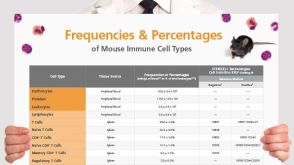 挂图Frequencies and Percentages of Mouse Immune Cell Types List of the frequencies of over 25 immune cell types in C57BL/6 mice

 沪公网安备31010102008431号