Glatigny S et al. (MAY 2016)
Journal of Immunology 196 9 3542--6
Cutting Edge: Integrin α4 Is Required for Regulatory B Cell Control of Experimental Autoimmune Encephalomyelitis.
The neutralization of integrin α4 (Itga4) is currently used as treatment in multiple sclerosis. Although most studies have focused on its function on lymphocyte migration to the CNS,we have uncovered the importance of Itga4 for the generation of regulatory B cells in peripheral immune organs and their control of pathogenic T cell response and CNS pathology. Our study underscores the importance of looking at the dual role of B cells in CNS autoimmunity and provides important perspectives regarding the efficacy and side effects associated with Itga4 neutralization and other B cell-targeting therapies.
View Publication
产品号#:
19854
19854RF
产品名:
EasySep™小鼠B细胞分选试剂盒
RoboSep™ 小鼠B细胞分选试剂盒
Portis T and Longnecker R (JAN 2003)
Journal of virology 77 1 105--14
Epstein-Barr virus LMP2A interferes with global transcription factor regulation when expressed during B-lymphocyte development.
Epstein-Barr virus (EBV) is associated with the development of malignant lymphomas and lymphoproliferative disorders in immunocompromised individuals. The LMP2A protein of EBV is thought to play a central role in this process by allowing the virus to persist in latently infected B lymphocytes. We have demonstrated that LMP2A,when expressed in B cells of transgenic mice,allows normal B-cell developmental checkpoints to be bypassed. To identify cellular genes targeted by LMP2A that are involved in this process,we have utilized DNA microarrays to compare gene transcription in B cells from wild-type versus LMP2A transgenic mice. In B cells from LMP2A transgenic mice,we observed decreased expression of many genes associated with normal B-cell development as well as reduced levels of the transcription factors that regulate their expression. In particular,expression of the transcription factor E2A was down-regulated in bone marrow and splenic B cells. Furthermore,E2A activity was inhibited in these cells as determined by decreased DNA binding and reduced expression of its target genes,including the transcription factors early B-cell factor and Pax-5. Expression of two E2A inhibitors,Id2 and SCL,was up-regulated in splenic B cells expressing LMP2A,suggesting a possible mechanism for E2A inhibition. These results indicate that LMP2A deregulates transcription factor expression and activity in developing B cells,and this likely allows for a bypass of normal signaling events required for proper B-cell development. The ability of LMP2A to interfere with B-cell transcription factor regulation has important implications regarding its role in EBV latency.
View Publication
产品号#:
03630
产品名:
MethoCult™ M3630
Heavey B et al. (AUG 2003)
The EMBO journal 22 15 3887--97
Myeloid lineage switch of Pax5 mutant but not wild-type B cell progenitors by C/EBPalpha and GATA factors.
The developmental potential of hematopoietic progenitors is restricted early on to either the erythromyeloid or lymphoid lineages. The broad developmental potential of Pax5(-/-) pro-B cells is in apparent conflict with such a strict separation,although these progenitors realize the myeloid and erythroid potential with lower efficiency compared to the lymphoid cell fates. Here we demonstrate that ectopic expression of the transcription factors C/EBPalpha,GATA1,GATA2 and GATA3 strongly promoted in vitro macrophage differentiation and myeloid colony formation of Pax5(-/-) pro-B cells. GATA2 and GATA3 expression also resulted in efficient engraftment and myeloid development of Pax5(-/-) pro-B cells in vivo. The myeloid transdifferentiation of Pax5(-/-) pro-B cells was accompanied by the rapid activation of myeloid genes and concomitant repression of B-lymphoid genes by C/EBPalpha and GATA factors. These data identify the Pax5(-/-) pro-B cells as lymphoid progenitors with a latent myeloid potential that can be efficiently activated by myeloid transcription factors. The same regulators were unable to induce a myeloid lineage switch in Pax5(+/+) pro-B cells,indicating that Pax5 dominates over myeloid transcription factors in B-lymphocytes.
View Publication
产品号#:
03334
03434
03444
产品名:
MethoCult™ M3334
MethoCult™ GF M3434
MethoCult™ GF M3434
Irish JM et al. (NOV 2006)
Blood 108 9 3135--42
Altered B-cell receptor signaling kinetics distinguish human follicular lymphoma B cells from tumor-infiltrating nonmalignant B cells.
The B-cell receptor (BCR) transmits life and death signals throughout B-cell development,and altered BCR signaling may be required for survival of B-lymphoma cells. We used single-cell signaling profiles to compare follicular lymphoma (FL) B cells and nonmalignant host B cells within individual patient biopsies and identified BCR-mediated signaling events specific to lymphoma B cells. Expression of CD20,Bcl-2,and BCR light chain isotype (kappa or lambda) distinguished FL tumor B-cell and nontumor host B-cell subsets within FL patient biopsies. BCR-mediated signaling via phosphorylation of Btk,Syk,Erk1/2,and p38 occurred more rapidly in tumor B cells from FL samples than in infiltrating nontumor B cells,achieved greater levels of per-cell signaling,and sustained this level of signaling for hours longer than nontumor B cells. The timing and magnitude of BCR-mediated signaling in nontumor B cells within an FL sample instead resembled that observed in mature B cells from the peripheral blood of healthy subjects. BCR signaling pathways that are potentiated specifically in lymphoma cells should provide new targets for therapeutic attention.
View Publication
产品号#:
09850
产品名:
Inoue S et al. (AUG 2006)
Cancer research 66 15 7741--7
Inhibitory effects of B cells on antitumor immunity.
B-cell functions in antitumor immunity are not well understood. In this study,we evaluated the role of B cells in the development of antitumor immunity using Friend murine leukemia virus gag-expressing mouse EL-4 (EL-4 gag),D5 mouse melanoma,or MCA304 mouse sarcoma cells. To screen tumors for susceptibility to B-cell-deficient immune environments,spleen cells from naive C57BL/6 [wild-type (WT)] and B-cell knockout (BKO) mice were cultured with irradiated tumor cells in vitro. When cells were stimulated with EL-4 gag or D5 (but not MCA304 tumors),IFN-gamma production from CD8 T cells and natural killer cells was markedly decreased in WT compared with BKO cultures. IFN-gamma production was correlated with CD40 ligand expression on the tumor and inversely with interleukin-10 (IL-10) production by B cells. Sorted WT B cells produced more IL-10 than CD40 knockout (CD40KO) B cells when cocultured with EL-4 gag or D5 (but not MCA304). IFN-gamma production by BKO cells was reduced by the addition of sorted naive WT B cells (partially by CD40KO B cells) or recombinant mouse IL-10. In vivo tumor progression mirrored in vitro studies in that WT mice were unable to control tumor growth whereas EL-4 gag and D5 tumors (but not MCA304) were eliminated in BKO mice. Robust in vivo antitumor CTLs developed only in BKO tumor-challenged mice. Our studies provide the first mechanistic basis for the concept that B-cell depletion could therapeutically enhance antitumor immune responses to certain tumors by decreasing IL-10 production from B cells.
View Publication
产品号#:
18754
18754RF
产品名:
Giassi LJ et al. (AUG 2008)
Experimental biology and medicine (Maywood,N.J.) 233 8 997--1012
Expanded CD34+ human umbilical cord blood cells generate multiple lymphohematopoietic lineages in NOD-scid IL2rgamma(null) mice.
Umbilical cord blood (UCB) is increasingly being used for human hematopoietic stem cell (HSC) transplantation in children but often requires pooling multiple cords to obtain sufficient numbers for transplantation in adults. To overcome this limitation,we have used an ex vivo two-week culture system to expand the number of hematopoietic CD34(+) cells in cord blood. To assess the in vivo function of these expanded CD34(+) cells,cultured human UCB containing 1 x 10(6) CD34(+) cells were transplanted into conditioned NOD-scid IL2rgamma(null) mice. The expanded CD34(+) cells displayed short- and long-term repopulating cell activity. The cultured human cells differentiated into myeloid,B-lymphoid,and erythroid lineages,but not T lymphocytes. Administration of human recombinant TNFalpha to recipient mice immediately prior to transplantation promoted human thymocyte and T-cell development. These T cells proliferated vigorously in response to TCR cross-linking by anti-CD3 antibody. Engrafted TNFalpha-treated mice generated antibodies in response to T-dependent and T-independent immunization,which was enhanced when mice were co-treated with the B cell cytokine BLyS. Ex vivo expanded CD34(+) human UCB cells have the capacity to generate multiple hematopoietic lineages and a functional human immune system upon transplantation into TNFalpha-treated NOD-scid IL2rgamma(null) mice.
View Publication
产品号#:
09600
09650
09850
产品名:
StemSpan™ SFEM
StemSpan™ SFEM
Doreau A et al. (JUL 2009)
Nature immunology 10 7 778--85
Interleukin 17 acts in synergy with B cell-activating factor to influence B cell biology and the pathophysiology of systemic lupus erythematosus.
Studies have suggested involvement of interleukin 17 (IL-17) in autoimmune diseases,although its effect on B cell biology has not been clearly established. Here we demonstrate that IL-17 alone or in combination with B cell-activating factor controlled the survival and proliferation of human B cells and their differentiation into immunoglobulin-secreting cells. This effect was mediated mainly through the nuclear factor-kappaB-regulated transcription factor Twist-1. In support of the relevance of our observations and the potential involvement of IL-17 in B cell biology,we found that the serum of patients with systemic lupus erythematosus had higher concentrations of IL-17 than did the serum of healthy people and that IL-17 abundance correlated with the disease severity of systemic lupus erythematosus.
View Publication
产品号#:
18054
18054RF
产品名:
Li H et al. (AUG 2010)
Blood 116 7 1060--9
Repression of Id2 expression by Gfi-1 is required for B-cell and myeloid development.
The development of mature blood cells from hematopoietic stem cells requires coordinated activities of transcriptional networks. Transcriptional repressor growth factor independence 1 (Gfi-1) is required for the development of B cells,T cells,neutrophils,and for the maintenance of hematopoietic stem cell function. However,the mechanisms by which Gfi-1 regulates hematopoiesis and how Gfi-1 integrates into transcriptional networks remain unclear. Here,we provide evidence that Id2 is a transcriptional target of Gfi-1,and repression of Id2 by Gfi-1 is required for B-cell and myeloid development. Gfi-1 binds to 3 conserved regions in the Id2 promoter and represses Id2 promoter activity in transient reporter assays. Increased Id2 expression was observed in multipotent progenitors,myeloid progenitors,T-cell progenitors,and B-cell progenitors in Gfi-1(-/-) mice. Knockdown of Id2 expression or heterozygosity at the Id2 locus partially rescues the B-cell and myeloid development but not the T-cell development in Gfi-1(-/-) mice. These studies demonstrate a role of Id2 in mediating Gfi-1 functions in B-cell and myeloid development and provide a direct link between Gfi-1 and the B-cell transcriptional network by its ability to repress Id2 expression.
View Publication
产品号#:
03234
产品名:
MethoCult™ M3234
Mihalcik SA et al. (JUL 2010)
Journal of immunology (Baltimore,Md. : 1950) 185 2 1045--54
The structure of the TNFRSF13C promoter enables differential expression of BAFF-R during B cell ontogeny and terminal differentiation.
The B cell-activating factor of the TNF family receptor (BAFF-R),encoded by the TNFRSF13C gene,is critically important for transitional B cell survival to maturity. Thus,ligation of BAFF-R by BAFF delivers a potent survival signal. Reports implicating the BAFF/BAFF-R signaling axis in the pathogenesis of autoimmune human diseases and B lineage malignancies have largely prompted studies focusing on BAFF expression; however,there is an equally critical need to better understand BAFF-R expression. Initial BAFF-R expression,although characterized in murine B cells,has not yet been reported in human B lymphopoiesis. In this study,we first demonstrate that BAFF-R expression is absent from early precursors and is acquired by bone marrow B cells newly expressing the BCR. We next focused on identifying the specific genomic region that controls BAFF-R expression in mature B cells (i.e.,the TNFRSF13C promoter). To accomplish this,we used in silico tools examining interspecies genomic conservation in conjunction with reporter constructs transfected into malignant B and plasma cell lines. DNase protection assays using nuclear extracts from BAFF-R-expressing cells suggested potential regulatory sites,which allowed the generation of EMSA probes that bound NFs specific to BAFF-R-expressing cells. With a more stringent analysis of interspecies homology,these assays identified a site at which a single nucleotide substitution could distinctly impact promoter activity. Finally,chromatin immunoprecipitation assays revealed the in vivo binding of the specific transcription factor c-Rel to the most proximal genomic region,and c-Rel small interfering RNA transfections in BAFF-R-expressing lines demonstrated a coincident knockdown of both c-Rel and BAFF-R mRNA.
View Publication
A. A. Titov et al. (jul 2019)
Journal of immunology (Baltimore,Md. : 1950) 203 2 338--348
Metformin Inhibits the Type 1 IFN Response in Human CD4+ T Cells.
In systemic lupus erythematosus,defective clearance of apoptotic debris and activation of innate cells result in a chronically activated type 1 IFN response,which can be measured in PBMCs of most patients. Metformin,a widely used prescription drug for Type 2 diabetes,has a therapeutic effect in several mouse models of lupus through mechanisms involving inhibition of oxidative phosphorylation and a decrease in CD4+ T cell activation. In this study,we report that in CD4+ T cells from human healthy controls and human systemic lupus erythematosus patients,metformin inhibits the transcription of IFN-stimulated genes (ISGs) after IFN-alpha treatment. Accordingly,metformin inhibited the phosphorylation of pSTAT1 (Y701) and its binding to IFN-stimulated response elements that control ISG expression. These effects were independent of AMPK activation or mTORC1 inhibition but were replicated using inhibitors of the electron transport chain respiratory complexes I,III,and IV. This indicates that mitochondrial respiration is required for ISG expression in CD4+ T cells and provides a novel mechanism by which metformin may exert a therapeutic effect in autoimmune diseases.
View Publication


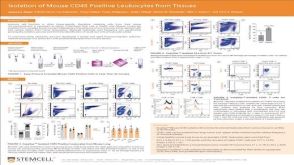
 EasySep™小鼠TIL(CD45)正选试剂盒





 沪公网安备31010102008431号