Nettenstrom L et al. (JAN 2013)
Journal of immunological methods 387 2-Jan 81--8
An optimized multi-parameter flow cytometry protocol for human T regulatory cell analysis on fresh and viably frozen cells, correlation with epigenetic analysis, and comparison of cord and adult blood.
Multi-parameter flow cytometry analysis of T regulatory (Treg) cells is a widely used approach in basic and translational research studies. This approach has been complicated by a lack of specific markers for Treg cells and lack of uniformity in the quantification of Treg cells. Given the central role of Treg cells in the inception and perpetuation of diverse immune responses as well as its target as a therapeutic,it is imperative to have established methodologies for Treg cell analysis that are robust and usable for studies with multiple subjects as well as multicenter studies. In this study,we describe an optimized multi-parameter flow cytometry protocol for the quantification of human Treg cells from freshly obtained and viably frozen samples and correlations with epigenetic Treg cell analysis (TSDR demethylation). We apply these two methodologies to characterize Treg cell differences between cord blood and adult peripheral blood. In summary,the optimized protocol appears to be robust for Treg cell quantification from freshly isolated or viably frozen cells and the multi-parameter flow cytometry findings are strongly positively correlated with TSDR demethylation thus providing several options for the characterization of Treg cell frequency and function in large translational or clinical studies.
View Publication
产品号#:
07930
07931
07940
07955
07956
07959
07954
100-1061
07952
产品名:
CryoStor® CS10
CryoStor® CS10
CryoStor® CS10
CryoStor® CS10
CryoStor® CS10
CryoStor® CS10
CryoStor® CS10
Putnam AL et al. (NOV 2013)
American journal of transplantation : official journal of the American Society of Transplantation and the American Society of Transplant Surgeons 13 11 3010--20
Clinical grade manufacturing of human alloantigen-reactive regulatory T cells for use in transplantation.
Regulatory T cell (Treg) therapy has the potential to induce transplantation tolerance so that immunosuppression and associated morbidity can be minimized. Alloantigen-reactive Tregs (arTregs) are more effective at preventing graft rejection than polyclonally expanded Tregs (PolyTregs) in murine models. We have developed a manufacturing process to expand human arTregs in short-term cultures using good manufacturing practice-compliant reagents. This process uses CD40L-activated allogeneic B cells to selectively expand arTregs followed by polyclonal restimulation to increase yield. Tregs expanded 100- to 1600-fold were highly alloantigen reactive and expressed the phenotype of stable Tregs. The alloantigen-expanded Tregs had a diverse TCR repertoire. They were more potent than PolyTregs in vitro and more effective at controlling allograft injuries in vivo in a humanized mouse model.
View Publication
产品号#:
07930
07931
07940
07955
07956
07959
07954
100-1061
07952
产品名:
CryoStor® CS10
CryoStor® CS10
CryoStor® CS10
CryoStor® CS10
CryoStor® CS10
CryoStor® CS10
CryoStor® CS10
Grievink HW et al. (OCT 2016)
Biopreservation and biobanking 14 5 410--415
Comparison of Three Isolation Techniques for Human Peripheral Blood Mononuclear Cells: Cell Recovery and Viability, Population Composition, and Cell Functionality.
Routine techniques for the isolation of human peripheral blood mononuclear cells (PBMCs) include density centrifugation with Ficoll-Paque and isolation by cell preparation tubes (CPTs) and SepMate tubes with Lymphoprep. In a series of experiments,these three PBMC isolation techniques were compared for cell recovery and viability,PBMC population composition,and cell functionality,aiming to provide a starting basis for the selection of the most appropriate method of PBMC isolation for a specific downstream application. PBMCs were freshly isolated from venous blood of healthy male donors,applying the different techniques in parallel. Cell recovery and viability were assessed using a hemacytometer and trypan blue. Immunophenotyping was performed by flow cytometry. Cell functionality was assessed in stimulated (100 ng/mL staphylococcal enterotoxin B [SEB]) and unstimulated 24 hours PBMC cultures,with cytokine production and lactate dehydrogenase (LDH) release as readout measures. PBMC isolation by SepMate and CPT resulted in a 70% higher recovery than Ficoll isolation. CPT-isolated populations contained more erythrocyte contamination. Cell viability,assessed by trypan blue exclusion,was 100% for all three isolation techniques. SepMate and CPT isolation gave higher SEB-induced cytokine responses in cell cultures,for IFNγ and for secondary cytokines. IL-6 and IL-8 release in unstimulated cultures was higher for CPT-isolated PBMCs compared to Ficoll- and SepMate-isolated PBMCs. LDH release did not differ between cell isolation techniques. In addition to criteria such as cost and application practicalities,these data may support selection of a specific PBMC isolation technique for downstream analysis.
View Publication
Perin EC et al. (JUN 2011)
American heart journal 161 6 1078--87.e3
A randomized study of transendocardial injection of autologous bone marrow mononuclear cells and cell function analysis in ischemic heart failure (FOCUS-HF).
BACKGROUND Autologous bone marrow mononuclear cell (ABMMNC) therapy has shown promise in patients with heart failure (HF). Cell function analysis may be important in interpreting trial results. METHODS In this prospective study,we evaluated the safety and efficacy of the transendocardial delivery of ABMMNCs in no-option patients with chronic HF. Efficacy was assessed by maximal myocardial oxygen consumption,single photon emission computed tomography,2-dimensional echocardiography,and quality-of-life assessment (Minnesota Living with Heart Failure and Short Form 36). We also characterized patients' bone marrow cells by flow cytometry,colony-forming unit,and proliferative assays. RESULTS Cell-treated (n = 20) and control patients (n = 10) were similar at baseline. The procedure was safe; adverse events were similar in both groups. Canadian Cardiovascular Society angina score improved significantly (P = .001) in cell-treated patients,but function was not affected. Quality-of-life scores improved significantly at 6 months (P = .009 Minnesota Living with Heart Failure and P = .002 physical component of Short Form 36) over baseline in cell-treated but not control patients. Single photon emission computed tomography data suggested a trend toward improved perfusion in cell-treated patients. The proportion of fixed defects significantly increased in control (P = .02) but not in treated patients (P = .16). Function of patients' bone marrow mononuclear cells was severely impaired. Stratifying cell results by age showed that younger patients (%60 years) had significantly more mesenchymal progenitor cells (colony-forming unit fibroblasts) than patients<60 years (20.16 ± 14.6 vs 10.92 ± 7.8,P = .04). Furthermore,cell-treated younger patients had significantly improved maximal myocardial oxygen consumption (15 ± 5.8,18.6 ± 2.7,and 17 ± 3.7 mL/kg per minute at baseline,3 months,and 6 months,respectively) compared with similarly aged control patients (14.3 ± 2.5,13.7 ± 3.7,and 14.6 ± 4.7 mL/kg per minute,P = .04). CONCLUSIONS ABMMNC therapy is safe and improves symptoms,quality of life,and possibly perfusion in patients with chronic HF.
View Publication
产品号#:
70001
70001.1
70001.2
70001.3
70001.4
产品名:
Daniels TR et al. ( 2011)
Journal of immunotherapy (Hagerstown,Md. : 1997) 34 6 500--8
An antibody-based multifaceted approach targeting the human transferrin receptor for the treatment of B-cell malignancies.
We previously developed an antibody-avidin fusion protein (ch128.1Av) targeting the human transferrin receptor 1 (TfR1,also known as CD71),which demonstrates direct in vitro cytotoxicity against malignant hematopoietic cells. This cytotoxicity is attributed to its ability to decrease the level of TfR1 leading to lethal iron deprivation. We now report that ch128.1Av shows the ability to bind the Fcγ receptors and the complement component C1q,suggesting that it is capable of eliciting Fc-mediated effector functions such as antibody-dependent cell-mediated cytotoxicity and complement-mediated cytotoxicity. In addition,in 2 disseminated multiple myeloma xenograft mouse models,we show that a single dose of ch128.1Av results in significant antitumor activity,including long-term survival. It is interesting to note that the parental antibody without avidin (ch128.1) also shows remarkable in vivo anticancer activity despite its limited in vitro cytotoxicity. Finally,we demonstrate that ch128.1Av is not toxic to pluripotent hematopoietic progenitor cells using the long-term cell-initiating culture assay suggesting that these important progenitors would be preserved in different therapeutic approaches,including the in vitro purging of cancer cells for autologous transplantation and in vivo passive immunotherapy. Our results suggest that ch128.1Av and ch128.1 may be effective in the therapy of human multiple myeloma and potentially other hematopoietic malignancies.
View Publication


 EasySep™小鼠TIL(CD45)正选试剂盒





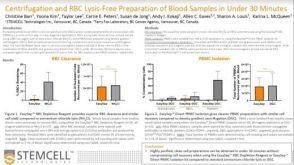 科学海报Centrifugation and RBC Lysis-Free Preparation of Blood Samples in Under 30 Minutes
 实验方案How to Collect Plasma from Whole Blood Before Cell Isolation
 实验方案Optimizing Delivery Efficiency with Fluorescent Dextran Using the CellPore™ Transfection System
 沪公网安备31010102008431号