Sugimura R et al. (MAY 2017)
Nature 545 7655 432--438
Haematopoietic stem and progenitor cells from human pluripotent stem cells.
A variety of tissue lineages can be differentiated from pluripotent stem cells by mimicking embryonic development through stepwise exposure to morphogens,or by conversion of one differentiated cell type into another by enforced expression of master transcription factors. Here,to yield functional human haematopoietic stem cells,we perform morphogen-directed differentiation of human pluripotent stem cells into haemogenic endothelium followed by screening of 26 candidate haematopoietic stem-cell-specifying transcription factors for their capacity to promote multi-lineage haematopoietic engraftment in mouse hosts. We recover seven transcription factors (ERG,HOXA5,HOXA9,HOXA10,LCOR,RUNX1 and SPI1) that are sufficient to convert haemogenic endothelium into haematopoietic stem and progenitor cells that engraft myeloid,B and T cells in primary and secondary mouse recipients. Our combined approach of morphogen-driven differentiation and transcription-factor-mediated cell fate conversion produces haematopoietic stem and progenitor cells from pluripotent stem cells and holds promise for modelling haematopoietic disease in humanized mice and for therapeutic strategies in genetic blood disorders.
View Publication
Characterization of mouse lymphohematopoietic stem cells lacking spleen colony-forming activity.
The classical definition of lymphohematopoietic stem cells (LHSC),the most primitive progenitors of all blood cells,requires that they have the capacity for self-renewal and for the long-term production of all blood cell lineages. However,other characteristics of LHSC have been debated. Our previous data suggested that mouse LHSC are very slowly proliferating cells that generate delayed multilineage engraftment,while radioprotection" (rapid engraftment that will prevent early death from radiation-induced marrow aplasia) results from more committed progenitors. Alternatively�
View Publication
产品号#:
01700
01705
01701
01702
产品名:
ALDEFLUOR™ 试剂盒
ALDEFLUOR™ DEAB试剂, 1.5 mM, 1 mL
ALDEFLUOR™检测缓冲液
Nakano T et al. (AUG 1994)
Science (New York,N.Y.) 265 5175 1098--101
Generation of lymphohematopoietic cells from embryonic stem cells in culture.
An efficient system was developed that induced the differentiation of embryonic stem (ES) cells into blood cells of erythroid,myeloid,and B cell lineages by coculture with the stromal cell line OP9. This cell line does not express functional macrophage colony-stimulating factor (M-CSF). The presence of M-CSF had inhibitory effects on the differentiation of ES cells to blood cells other than macrophages. Embryoid body formation or addition of exogenous growth factors was not required,and differentiation was highly reproducible even after the selection of ES cells with the antibiotic G418. Combined with the ability to genetically manipulate ES cells,this system will facilitate the study of molecular mechanisms involved in development and differentiation of hematopoietic cells.
View Publication
产品号#:
06902
06952
00321
00322
00323
00324
00325
产品名:
Berthier R et al. (MAR 1993)
Stem cells (Dayton,Ohio) 11 2 120--9
Serum-free medium allows the optimal growth of human megakaryocyte progenitors compared with human plasma supplemented cultures: role of TGF beta.
The growth of human megakaryocyte progenitors from human bone marrow (BM) cells was compared using a methylcellulose semisolid assay supplemented either by normal human plasma or by a serum-free medium. Far better growth of megakaryocyte colonies from CD34+ BM cells stimulated by interleukin 3 (IL-3) and interleukin 6 (IL-6) was observed in serum-free medium compared with human plasma supplemented cultures. These results were confirmed in liquid cultures using the same serum-free medium composition. The megakaryocytes were identified by using an immunocytochemical procedure after labeling with an anti-GPIIb-IIIa monoclonal antibody. High percentages (15 to 20%) of megakaryocytes were present in serum-free cultures stimulated by IL-3 alone or combined with IL-6. The absolute number of megakaryocytes in serum-free medium exceeds by 3.3 (IL-3 plus IL-6) to 4.4 (IL-3 alone) times the corresponding number of megakaryocytes observed in human plasma supplemented cultures. The optimal concentration of IL-3 alone was 5 ng/ml,and an optimal synergistic effect of IL-6 (5 ng/ml) was obtained when combined with a suboptimal dose of IL-3 (1 ng/ml). The poor growth of megakaryocyte colonies from CD34+ BM cells in human plasma suggested the presence of an inhibitory factor. When a neutralizing monoclonal antibody against transforming growth factor beta (TGF beta) is present in human plasma supplemented cultures of CD34+ BM cells,the number of megakaryocyte colonies is increased to the level observed in corresponding serum-free cultures. The high efficiency of this serum-free medium to promote the growth of human megakaryocytes will be useful to study the effects of regulators and platelet agonists acting on human megakaryocytes,without interference from factors in the serum.
View Publication
A major role of TGF-beta1 in the homing capacities of murine hematopoietic stem cell/progenitors.
Transforming growth factor-beta1 (TGF-beta1) is a pleiotropic cytokine with major in vitro effects on hematopoietic stem cells (HSCs) and lymphocyte development. Little is known about hematopoiesis from mice with constitutive TGF-beta1 inactivation largely because of important embryonic lethality and development of a lethal inflammatory disorder in TGF-beta1(-/-) pups,making these studies difficult. Here,we show that no sign of the inflammatory disorder was detectable in 8- to 10-day-old TGF-beta1(-/-) neonates as judged by both the number of T-activated and T-regulator cells in secondary lymphoid organs and the level of inflammatory cytokines in sera. After T-cell depletion,the inflammatory disease was not transplantable in recipient mice. Bone marrow cells from 8- to 10-day-old TGF-beta1(-/-) neonates showed strikingly impaired short- and long-term reconstitutive activity associated with a parallel decreased in vivo homing capacity of lineage negative (Lin(-)) cells. In addition an in vitro-reduced survival of immature progenitors (Lin(-) Kit(+) Sca(+)) was observed. Similar defects were found in liver cells from TGF-beta1(-/-) embryos on day 14 after vaginal plug. These data indicate that TGF-beta1 is a critical regulator for in vivo homeostasis of the HSCs,especially for their homing potential.
View Publication


 EasySep™小鼠TIL(CD45)正选试剂盒




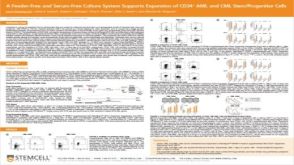 科学海报A Feeder-Free and Serum-Free Culture System Supports Expansion of CD34+ AML and CML Stem/Progenitor Cells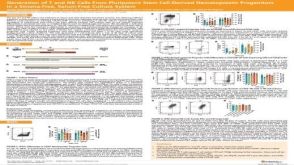


 沪公网安备31010102008431号