Anderson K et al. (MAY 2007)
Blood 109 9 3697--705
Ectopic expression of PAX5 promotes maintenance of biphenotypic myeloid progenitors coexpressing myeloid and B-cell lineage-associated genes.
The transcription factor PAX5 is a critical regulator of B-cell commitment and development. Although normally not expressed in myeloid progenitors,PAX5 has recently been shown to be frequently expressed in myeloid malignancies and to suppress expression of myeloid differentiation genes,compatible with an effect on the differentiation or maintenance of myeloid progenitors. However,previous studies in which PAX5 was ectopically expressed in normal myeloid progenitors in vivo and in vitro provided conflicting results as to the effect of PAX5 on myeloid development. Herein,we demonstrate that on ectopic expression of PAX5 in bone marrow multipotent stem/progenitor cells,cells with a biphenotypic B220(+)GR-1/MAC-1(+) phenotype are produced. These remain cytokine-dependent,but unlike control-transduced cells they sustain long-term generation of myeloid progenitors in vitro and remain capable of myeloid differentiation. Notably,PAX5(+)B220(+)GR-1/MAC-1(+) myeloid progenitors coexpress,at the single-cell level,myeloid genes and otherwise B-cell-specific PAX5 target genes. These findings establish that ectopic expression of PAX5 introduces extensive self-renewal properties in otherwise short-lived myeloid progenitors. Along with the established ectopic expression of PAX5 in acute myeloid leukemia,this motivates a careful investigation of the potential involvement of ectopic PAX5 expression in myeloid and biphenotypic leukemias.
View Publication
I branching formation in erythroid differentiation is regulated by transcription factor C/EBPalpha.
The histo-blood group i and I antigens have been characterized as straight and branched repeats of N-acetyllactosamine,respectively,and the conversion of the straight-chain i to the branched-chain I structure on red cells is regulated to occur after birth. It has been demonstrated that the human I locus expresses 3 IGnT transcripts,IGnTA,IGnTB,and IGnTC,and that the last of these is responsible for the I branching formation on red cells. In the present investigation,the K-562 cell line was used as a model to show that the i-to-I transition in erythroid differentiation is determined by the transcription factor CCAAT/enhancer binding protein alpha (C/EBPalpha),which enhances transcription of the IGnTC gene,consequently leading to formation of the I antigen. Further investigation suggested that C/EBPalpha IGnTC-activation activity is modulated at a posttranslational level,and that the phosphorylation status of C/EBPalpha may have a crucial effect. Results from studies using adult and cord erythropoietic cells agreed with those derived using the K-562 cell model,with lentiviral expression of C/EBPalpha in CD34(+) hemopoietic cells demonstrating the determining role of C/EBPalpha in the induction of the IGnTC gene as well as in I antigen expression.
View Publication
Lentiviral vectors containing an enhancer-less ubiquitously acting chromatin opening element (UCOE) provide highly reproducible and stable transgene expression in hematopoietic cells.
Ubiquitously acting chromatin opening elements (UCOEs) consist of methylation-free CpG islands encompassing dual divergently transcribed promoters of housekeeping genes that have been shown to confer resistance to transcriptional silencing and to produce consistent and stable transgene expression in tissue culture systems. To develop improved strategies for hematopoietic cell gene therapy,we have assessed the potential of the novel human HNRPA2B1-CBX3 UCOE (A2UCOE) within the context of a self-inactivating (SIN) lentiviral vector. Unlike viral promoters,the enhancer-less A2UCOE gave rise to populations of cells that expressed a reporter transgene at a highly reproducible level. The efficiency of expression per vector genome was also markedly increased in vivo compared with vectors incorporating either spleen focus-forming virus (SFFV) or cytomegalovirus (CMV) promoters,suggesting a relative resistance to silencing. Furthermore,an A2UCOE-IL2RG vector fully restored the IL-2 signaling pathway within IL2RG-deficient human cells in vitro and successfully rescued the X-linked severe combined immunodeficiency (SCID-X1) phenotype in a mouse model of this disease. These data indicate that the A2UCOE displays highly reliable transcriptional activity within a lentiviral vector,largely overcoming insertion-site position effects and giving rise to therapeutically relevant levels of gene expression. These properties are achieved in the absence of classic enhancer activity and therefore may confer a high safety profile.
View Publication
产品号#:
09600
09650
09850
产品名:
StemSpan™ SFEM
StemSpan™ SFEM
Qian H et al. (OCT 2007)
Blood 110 7 2399--407
Distinct roles of integrins alpha6 and alpha4 in homing of fetal liver hematopoietic stem and progenitor cells.
Homing of hematopoietic stem cells (HSCs) into the bone marrow (BM) is a prerequisite for establishment of hematopoiesis during development and following transplantation. However,the molecular interactions that control homing of HSCs,in particular,of fetal HSCs,are not well understood. Herein,we studied the role of the alpha6 and alpha4 integrin receptors for homing and engraftment of fetal liver (FL) HSCs and hematopoietic progenitor cells (HPCs) to adult BM by using integrin alpha6 gene-deleted mice and function-blocking antibodies. Both integrins were ubiquitously expressed in FL Lin(-)Sca-1(+)Kit(+) (LSK) cells. Deletion of integrin alpha6 receptor or inhibition by a function-blocking antibody inhibited FL LSK cell adhesion to its extracellular ligands,laminins-411 and -511 in vitro,and significantly reduced homing of HPCs to BM. In contrast,the anti-integrin alpha6 antibody did not inhibit BM homing of HSCs. In agreement with this,integrin alpha6 gene-deleted FL HSCs did not display any homing or engraftment defect compared with wild-type littermates. In contrast,inhibition of integrin alpha4 receptor by a function-blocking antibody virtually abrogated homing of both FL HSCs and HPCs to BM,indicating distinct functions for integrin alpha6 and alpha4 receptors during homing of fetal HSCs and HPCs.
View Publication
产品号#:
03134
产品名:
MethoCult™ M3134
van Rhenen A et al. (OCT 2007)
Blood 110 7 2659--66
The novel AML stem cell associated antigen CLL-1 aids in discrimination between normal and leukemic stem cells.
In CD34(+) acute myeloid leukemia (AML),the malignant stem cells reside in the CD38(-) compartment. We have shown before that the frequency of such CD34(+)CD38(-) cells at diagnosis correlates with minimal residual disease (MRD) frequency after chemotherapy and with survival. Specific targeting of CD34(+)CD38(-) cells might thus offer therapeutic options. Previously,we found that C-type lectin-like molecule-1 (CLL-1) has high expression on the whole blast compartment in the majority of AML cases. We now show that CLL-1 expression is also present on the CD34(+)CD38(-) stem- cell compartment in AML (77/89 patients). The CD34(+)CLL-1(+) population,containing the CD34(+)CD38(-)CLL-1(+) cells,does engraft in nonobese diabetic/severe combined immunodeficiency (NOD/SCID) mice with outgrowth to CLL-1(+) blasts. CLL-1 expression was not different between diagnosis and relapse (n = 9). In remission,both CLL-1(-) normal and CLL-1(+) malignant CD34(+)CD38(-) cells were present. A high CLL-1(+) fraction was associated with quick relapse. CLL-1 expression is completely absent both on CD34(+)CD38(-) cells in normal (n = 11) and in regenerating bone marrow controls (n = 6). This AML stem-cell specificity of the anti-CLL-1 antibody under all conditions of disease and the leukemia-initiating properties of CD34(+)CLL-1(+) cells indicate that anti-CLL-1 antibody enables both AML-specific stem-cell detection and possibly antigen-targeting in future.
View Publication
产品号#:
04434
04444
产品名:
MethoCult™ H4434 Classic
MethoCult™ H4434 Classic
Gruber M et al. (FEB 2007)
Proceedings of the National Academy of Sciences of the United States of America 104 7 2301--6
Acute postnatal ablation of Hif-2alpha results in anemia.
Adaptive transcriptional responses to oxygen deprivation (hypoxia) are mediated by the hypoxia-inducible factors (HIFs),heterodimeric transcription factors composed of two basic helix-loop-helix-PAS family proteins. The transcriptional activity of HIF is determined by the hypoxic stabilization of the HIF-alpha proteins. HIF-1alpha and HIF-2alpha exhibit high sequence homology but have different mRNA expression patterns; HIF-1alpha is expressed ubiquitously whereas HIF-2alpha expression is more restricted to certain tissues,e.g.,the endothelium,lung,brain,and neural crest derivatives. Germ-line deletion of either HIF subunit is embryonic lethal with unique features suggesting important roles for both HIF-alpha isoforms. Global deletion of Hif-2alpha results in distinct phenotypes depending on the mouse strain used for the mutation,clearly demonstrating an important role for HIF-2alpha in mouse development. The function of HIF-2alpha in adult life,however,remains incompletely understood. In this study,we describe the generation of a conditional murine Hif-2alpha allele and the effect of its acute postnatal ablation. Under very stringent conditions,we ablate Hif-2alpha after birth and compare the effect of acute global deletion of Hif-2alpha and Hif-1alpha. Our results demonstrate that HIF-2alpha plays a critical role in adult erythropoiesis,with acute deletion leading to anemia. Furthermore,although HIF-1alpha was first purified and cloned based on its affinity for the human erythropoietin (EPO) 3' enhancer hypoxia response element (HRE) and regulates Epo expression during mouse embryogenesis,HIF-2alpha is the critical alpha isoform regulating Epo under physiologic and stress conditions in adults.
View Publication


 EasySep™小鼠TIL(CD45)正选试剂盒





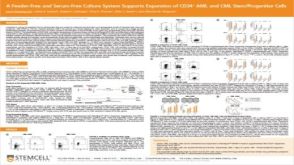 科学海报A Feeder-Free and Serum-Free Culture System Supports Expansion of CD34+ AML and CML Stem/Progenitor Cells

 沪公网安备31010102008431号