David Knapp, PhD
A Hematopoiesis Researcher's Goals,Challenges,and Needs for Superpowers
研究方向:
干细胞生物学
Brandl M et al. (AUG 1999)
Experimental hematology 27 8 1264--70
Bispecific antibody fragments with CD20 X CD28 specificity allow effective autologous and allogeneic T-cell activation against malignant cells in peripheral blood and bone marrow cultures from patients with B-cell lineage leukemia and lymphoma.
Bispecific antibodies directed against tumor-associated target antigens and to surface receptors mediating T-cell activation,such as the TCR/CD3 complex and the costimulatory receptor CD28,are capable of mediating T-cell activation resulting in tumor cell killing. In this study,we used the B-cell-associated antigens CD19 and CD20 as target structures on human leukemic cells. We found that a combination of bispecific antibody fragments (bsFab2) with target x CD3 and target x CD28 specificity induces vigorous autologous T-cell activation and killing of malignant cells in peripheral blood and bone marrow cultures from patients with chronic lymphocytic leukemia and follicular lymphoma. The bsFab2 targeting CD20 were considerably more effective than those binding to CD19. The colony-forming capacity of treated bone marrow was impaired due to large amounts of tumor necrosis factor alpha produced during bsFab2-induced T-cell activation. Neutralizing tumor necrosis factor alpha antibodies were found to reverse this negative effect without affecting T-cell activation and tumor cell killing. CD20 x CD28 bsFab2,when used alone rather than in combination,markedly improved the recognition of leukemic cells by allogeneic T cells. Therefore,these reagents may be capable of enhancing the immunogenicity of leukemic cells in general and,in particular,of increasing the antileukemic activity of allogeneic donor buffy coat cells in relapsed bone marrow transplanted patients.
View Publication
产品号#:
04431
产品名:
MethoCult™ H4431
Osada H et al. (APR 2001)
Transfusion 41 4 499--503
Detection of fetal HPCs in maternal circulation after delivery.
BACKGROUND: Circulation of mature fetal blood cells in the maternal blood for a certain postpartum period has been verified,but detailed study of the fetal HPCs has not been reported. The objective of this study was to evaluate the frequency and clearance of these cells in the peripheral blood of puerperal women. STUDY DESIGN AND METHODS: PBMNCs from 15 puerperal women who gave birth to male infants were cultured in semi-solid medium containing hematopoietic stimulating factors. Colonies formed in the medium were individually characterized,collected,and subjected to PCR amplification of the SRY gene on Y chromosome to confirm fetal origin. RESULTS: The mean numbers of fetal progenitor cell colonies isolated per mL of maternal blood were 1.63,2.48,0.56,0.12,and 0 on the day of delivery,at 4 days,1 month,6 months,and 1 year after delivery,respectively. There was no difference in the ratio of fetal versus maternal colonies between erythroid and granulocyte/macrophage lineages. CONCLUSION: The present study demonstrated that a significant number of fetal HPCs circulate in the maternal blood for a duration of at least 6 months after delivery.
View Publication
产品号#:
产品名:
Jasinski M et al. (OCT 2001)
Blood 98 7 2248--55
GATA1-Cre mediates Piga gene inactivation in the erythroid/megakaryocytic lineage and leads to circulating red cells with a partial deficiency in glycosyl phosphatidylinositol-linked proteins (paroxysmal nocturnal hemoglobinuria type II cells).
Patients with paroxysmal nocturnal hemoglobinuria (PNH) have blood cells deficient in glycosyl phosphatidylinositol (GPI)-linked proteins owing to a somatic mutation in the X-linked PIGA gene. To target Piga recombination to the erythroid/megakaryocytic lineage in mice,the Cre/loxP system was used,and Cre was expressed under the transcriptional regulatory sequences of GATA-1. Breeding of GATA1-cre (G) transgenic mice with mice carrying a floxed Piga (L) allele was associated with high embryonic lethality. However,double-transgenic (GL) mice that escaped early recombination looked healthy and were observed for 16 months. Flow cytometric analysis of peripheral blood cells showed that GL mice had up to 100% of red cells deficient in GPI-linked proteins. The loss of GPI-linked proteins on the cell surface occurred late in erythroid differentiation,causing a proportion of red cells to express low residual levels of GPI-linked proteins. Red cells with residual expression of GPI-linked proteins showed an intermediate sensitivity toward complement and thus resemble PNH type II cells in patients with PNH. Recombination of the floxed Piga allele was also detected in cultured megakaryocytes,mast cells,and eosinophils,but not in neutrophils,lymphocytes,or nonhematopoietic tissues. In summary,GATA1-Cre causes high-efficiency Piga gene inactivation in a GATA-1-specific pattern. For the first time,mice were generated that have almost 100% of red cells deficient in GPI-linked proteins. These animals will be valuable to further investigate the consequences of GPI-anchor deficiency on erythroid/megakaryocytic cells.
View Publication
产品号#:
05350
产品名:
Moreau-Gaudry F et al. (NOV 2001)
Blood 98 9 2664--72
High-level erythroid-specific gene expression in primary human and murine hematopoietic cells with self-inactivating lentiviral vectors.
Use of oncoretroviral vectors in gene therapy for hemoglobinopathies has been impeded by low titer vectors,genetic instability,and poor expression. Fifteen self- inactivating (SIN) lentiviral vectors using 4 erythroid promoters in combination with 4 erythroid enhancers with or without the woodchuck hepatitis virus postregulatory element (WPRE) were generated using the enhanced green fluorescent protein as a reporter gene. Vectors with high erythroid-specific expression in cell lines were tested in primary human CD34(+) cells and in vivo in the murine bone marrow (BM) transplantation model. Vectors containing the ankyrin-1 promoter showed high-level expression and stable proviral transmission. Two vectors containing the ankyrin-1 promoter and 2 erythroid enhancers (HS-40 plus GATA-1 or HS-40 plus 5-aminolevulinate synthase intron 8 [I8] enhancers) and WPRE expressed at levels higher than the HS2/beta-promoter vector in bulk unilineage erythroid cultures and individual erythroid blast-forming units derived from human BM CD34(+) cells. Sca1(+)/lineage(-) Ly5.1 mouse hematopoietic cells,transduced with these 2 ankyrin-1 promoter vectors,were injected into lethally irradiated Ly5.2 recipients. Eleven weeks after transplantation,high-level expression was seen from both vectors in blood (63%-89% of red blood cells) and erythroid cells in BM (70%-86% engraftment),compared with negligible expression in myeloid and lymphoid lineages in blood,BM,spleen,and thymus (0%-4%). The I8/HS-40-containing vector encoding a hybrid human beta/gamma-globin gene led to 43% to 113% human gamma-globin expression/copy of the mouse alpha-globin gene. Thus,modular use of erythroid-specific enhancers/promoters and WPRE in SIN-lentiviral vectors led to identification of high-titer,stably transmitted vectors with high-level erythroid-specific expression for gene therapy of red cell diseases.
View Publication
产品号#:
产品名:
Kandilci A and Grosveld GC (AUG 2009)
Blood 114 8 1596--606
Reintroduction of CEBPA in MN1-overexpressing hematopoietic cells prevents their hyperproliferation and restores myeloid differentiation.
Forced expression of MN1 in primitive mouse hematopoietic cells causes acute myeloid leukemia and impairs all-trans retinoic acid-induced granulocytic differentiation. Here,we studied the effects of MN1 on myeloid differentiation and proliferation using primary human CD34(+) hematopoietic cells,lineage-depleted mouse bone marrow cells,and bipotential (granulocytic/monocytic) human acute myeloid leukemia cell lines. We show that exogenous MN1 stimulated the growth of CD34(+) cells,which was accompanied by enhanced survival and increased cell cycle traverse in cultures supporting progenitor cell growth. Forced MN1 expression impaired both granulocytic and monocytic differentiation in vitro in primary hematopoietic cells and acute myeloid leukemia cell lines. Endogenous MN1 expression was higher in human CD34(+) cells compared with both primary and in vitro-differentiated monocytes and granulocytes. Microarray and real-time reverse-transcribed polymerase chain reaction analysis of MN1-overexpressing CD34(+) cells showed down-regulation of CEBPA and its downstream target genes. Reintroduction of conditional and constitutive CEBPA overcame the effects of MN1 on myeloid differentiation and inhibited MN1-induced proliferation in vitro. These results indicate that down-regulation of CEBPA activity contributes to MN1-modulated proliferation and impaired myeloid differentiation of hematopoietic cells.
View Publication
产品号#:
70002
70002.1
70002.2
70002.3
70002.4
70002.5
产品名:
Safi R et al. (FEB 2009)
Molecular endocrinology (Baltimore,Md.) 23 2 188--201
Pharmacological manipulation of the RAR/RXR signaling pathway maintains the repopulating capacity of hematopoietic stem cells in culture.
The retinoid X receptor (RXR) contributes to the regulation of diverse biological pathways via its role as a heterodimeric partner of several nuclear receptors. However,RXR has no established role in the regulation of hematopoietic stem cell (HSC) fate. In this study,we sought to determine whether direct modulation of RXR signaling could impact human HSC self-renewal or differentiation. Treatment of human CD34(+)CD38(-)lin(-) cells with LG1506,a selective RXR modulator,inhibited the differentiation of HSCs in culture and maintained long-term repopulating HSCs in culture that were otherwise lost in response to cytokine treatment. Further studies revealed that LG1506 had a distinct mechanism of action in that it facilitated the recruitment of corepressors to the retinoic acid receptor (RAR)/RXR complex at target gene promoters,suggesting that this molecule was functioning as an inverse agonist in the context of this heterodimer. Interestingly,using combinatorial peptide phage display,we identified unique surfaces presented on RXR when occupied by LG1506 and demonstrated that other modulators that exhibited these properties functioned similarly at both a mechanistic and biological level. These data indicate that the RAR/RXR heterodimer is a critical regulator of human HSC differentiation,and pharmacological modulation of RXR signaling prevents the loss of human HSCs that otherwise occurs in short-term culture.
View Publication
产品号#:
04434
04444
产品名:
MethoCult™ H4434 Classic
MethoCult™ H4434 Classic
Karp JE et al. (MAY 2009)
Blood 113 20 4841--52
Active oral regimen for elderly adults with newly diagnosed acute myelogenous leukemia: a preclinical and phase 1 trial of the farnesyltransferase inhibitor tipifarnib (R115777, Zarnestra) combined with etoposide.
The farnesyltransferase inhibitor tipifarnib exhibits modest activity against acute myelogenous leukemia. To build on these results,we examined the effect of combining tipifarnib with other agents. Tipifarnib inhibited signaling downstream of the farnesylated small G protein Rheb and synergistically enhanced etoposide-induced antiproliferative effects in lymphohematopoietic cell lines and acute myelogenous leukemia isolates. We subsequently conducted a phase 1 trial of tipifarnib plus etoposide in adults over 70 years of age who were not candidates for conventional therapy. A total of 84 patients (median age,77 years) received 224 cycles of oral tipifarnib (300-600 mg twice daily for 14 or 21 days) plus oral etoposide (100-200 mg daily on days 1-3 and 8-10). Dose-limiting toxicities occurred with 21-day tipifarnib. Complete remissions were achieved in 16 of 54 (30%) receiving 14-day tipifarnib versus 5 of 30 (17%) receiving 21-day tipifarnib. Complete remissions occurred in 50% of two 14-day tipifarnib cohorts: 3A (tipifarnib 600,etoposide 100) and 8A (tipifarnib 400,etoposide 200). In vivo,tipifarnib plus etoposide decreased ribosomal S6 protein phosphorylation and increased histone H2AX phosphorylation and apoptosis. Tipifarnib plus etoposide is a promising orally bioavailable regimen that warrants further evaluation in elderly adults who are not candidates for conventional induction chemotherapy. These clinical studies are registered at www.clinicaltrials.gov as NCT00112853.
View Publication
产品号#:
04434
04444
产品名:
MethoCult™ H4434 Classic
MethoCult™ H4434 Classic
Esensten JH et al. (JUL 2009)
Journal of immunology (Baltimore,Md. : 1950) 183 1 75--82
T-bet-deficient NOD mice are protected from diabetes due to defects in both T cell and innate immune system function.
The transcription factor T-bet (Tbx21) is critical for Th1 polarization of CD4(+) T cells. Genetic deletion of Tbx21 can cause either exacerbation or attenuation of different autoimmune diseases in animal models. In the nonobese diabetic (NOD) mouse,genetic deletion of the Ifng or the Il12b (IL-12p40) genes,which are both critical Th1 cytokines,does not reduce the incidence of autoimmune diabetes. These results suggest that autoimmune diabetes in the NOD may not be a Th1-driven disease. However,we report that Tbx21 deficiency in the NOD mouse completely blocks insulitis and diabetes due to defects both in the initiation of the anti-islet immune response and in the function of CD4(+) effector T cells. We find defective priming of naive islet-reactive T cells by the innate immune system in Tbx21(-/-) animals. By contrast to naive cells,activated islet-reactive BDC2.5 TCR-transgenic T cells do not require Tbx21 in recipient animals for efficient adoptive transfer of diabetes. However,when these BDC2.5 TCR-transgenic effector cells lack Tbx21,they are less effective at entering the pancreas and promoting diabetes than Tbx21(+/+) cells. Tbx21(-/-) regulatory T cells function normally in vitro and diabetes can be restored in Tbx21(-/-) mice by reducing regulatory T cell numbers. Thus,the absence of diabetes in the NOD.Tbx21(-/-) is due to intrinsic defects in both T cells and cells of the innate immune system paired with the relative preservation of regulatory T cell function.
View Publication
产品号#:
21000
20119
20155
19752
19752RF
产品名:
RoboSep™- S
RoboSep™ 吸头组件抛光剂
RoboSep™分选管套装(9个塑料管)
Uchida N et al. (OCT 2009)
Journal of virology 83 19 9854--62
Development of a human immunodeficiency virus type 1-based lentiviral vector that allows efficient transduction of both human and rhesus blood cells.
Human immunodeficiency virus type 1 (HIV-1) vectors transduce rhesus blood cells poorly due to a species-specific block by TRIM5alpha and APOBEC3G,which target HIV-1 capsid and viral infectivity factor (Vif),respectively. We sought to develop a lentiviral vector capable of transducing both human and rhesus blood cells by combining components of both HIV-1 and simian immunodeficiency virus (SIV),including SIV capsid (sCA) and SIV Vif. A chimeric HIV-1 vector including sCA (chiHIV) was superior to the conventional SIV in transducing a human blood cell line and superior to the conventional HIV-1 vector in transducing a rhesus blood cell line. Among human CD34(+) hematopoietic stem cells (HSCs),the chiHIV and HIV-1 vectors showed similar transduction efficiencies; in rhesus CD34(+) HSCs,the chiHIV vector yielded superior transduction rates. In in vivo competitive repopulation experiments with two rhesus macaques,the chiHIV vector demonstrated superior marking levels over the conventional HIV-1 vector in all blood lineages (first rhesus,15 to 30% versus 1 to 5%; second rhesus,7 to 15% versus 0.5 to 2%,respectively) 3 to 7 months postinfusion. In summary,we have developed an HIV-1-based lentiviral vector system that should allow comprehensive preclinical testing of HIV-1-based therapeutic vectors in the rhesus macaque model with eventual clinical application.
View Publication
产品号#:
04230
60132
产品名:
MethoCult™ H4230
抗恒河猴红细胞抗体,clone T3G6
Sauer AV et al. (OCT 2009)
Blood 114 15 3216--26
ADA-deficient SCID is associated with a specific microenvironment and bone phenotype characterized by RANKL/OPG imbalance and osteoblast insufficiency.
Adenosine deaminase (ADA) deficiency is a disorder of the purine metabolism leading to combined immunodeficiency and systemic alterations,including skeletal abnormalities. We report that ADA deficiency in mice causes a specific bone phenotype characterized by alterations of structural properties and impaired mechanical competence. These alterations are the combined result of an imbalanced receptor activator of nuclear factor-kappaB ligand (RANKL)/osteoprotegerin axis,causing decreased osteoclastogenesis and an intrinsic defect of osteoblast function with subsequent low bone formation. In vitro,osteoblasts lacking ADA displayed an altered transcriptional profile and growth reduction. Furthermore,the bone marrow microenvironment of ADA-deficient mice showed a reduced capacity to support in vitro and in vivo hematopoiesis. Treatment of ADA-deficient neonatal mice with enzyme replacement therapy,bone marrow transplantation,or gene therapy resulted in full recovery of the altered bone parameters. Remarkably,untreated ADA-severe combined immunodeficiency patients showed a similar imbalance in RANKL/osteoprotegerin levels alongside severe growth retardation. Gene therapy with ADA-transduced hematopoietic stem cells increased serum RANKL levels and children's growth. Our results indicate that the ADA metabolism represents a crucial modulatory factor of bone cell activities and remodeling.
View Publication


 EasySep™小鼠TIL(CD45)正选试剂盒




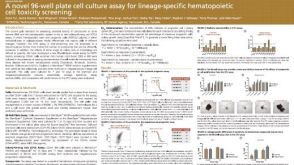 科学海报A Novel 96-well Plate Cell Culture Assay for Lineage-Specific Hematopoietic Cell Toxicity Screening
 专家访谈David Knapp, PhD A Hematopoiesis Researcher's Goals,Challenges,and Needs for Superpowers
 沪公网安备31010102008431号