Lineage-specific distribution of high levels of genomic 5-hydroxymethylcytosine in mammalian development
Methylation of cytosine is a DNA modification associated with gene repression. Recently,a novel cytosine modification,5-hydroxymethylcytosine (5-hmC) has been discovered. Here we examine 5-hmC distribution during mammalian development and in cellular systems,and show that the developmental dynamics of 5-hmC are different from those of 5-methylcytosine (5-mC); in particular 5-hmC is enriched in embryonic contexts compared to adult tissues. A detectable 5-hmC signal appears in pre-implantation development starting at the zygote stage,where the paternal genome is subjected to a genome-wide hydroxylation of 5-mC,which precisely coincides with the loss of the 5-mC signal in the paternal pronucleus. Levels of 5-hmC are high in cells of the inner cell mass in blastocysts,and the modification colocalises with nestin-expressing cell populations in mouse post-implantation embryos. Compared to other adult mammalian organs,5-hmC is strongly enriched in bone marrow and brain,wherein high 5-hmC content is a feature of both neuronal progenitors and post-mitotic neurons. We show that high levels of 5-hmC are not only present in mouse and human embryonic stem cells (ESCs) and lost during differentiation,as has been reported previously,but also reappear during the generation of induced pluripotent stem cells; thus 5-hmC enrichment correlates with a pluripotent cell state. Our findings suggest that apart from the cells of neuronal lineages,high levels of genomic 5-hmC are an epigenetic feature of embryonic cell populations and cellular pluri- and multi-lineage potency. To our knowledge,5-hmC represents the first epigenetic modification of DNA discovered whose enrichment is so cell-type specific.
View Publication
产品号#:
05860
05880
05850
05857
05870
05875
85850
85857
85870
85875
产品名:
mTeSR™1
mTeSR™1
Mangeot P-E et al. (SEP 2011)
Molecular therapy : the journal of the American Society of Gene Therapy 19 9 1656--66
Protein Transfer Into Human Cells by VSV-G-induced Nanovesicles.
Identification of new techniques to express proteins into mammal cells is of particular interest for both research and medical purposes. The present study describes the use of engineered vesicles to deliver exogenous proteins into human cells. We show that overexpression of the spike glycoprotein of the vesicular stomatitis virus (VSV-G) in human cells induces the release of fusogenic vesicles named gesicles. Biochemical and functional studies revealed that gesicles incorporated proteins from producer cells and could deliver them to recipient cells. This protein-transduction method allows the direct transport of cytoplasmic,nuclear or surface proteins in target cells. This was demonstrated by showing that the TetR transactivator and the receptor for the murine leukemia virus (MLV) envelope [murine cationic amino acid transporter-1 (mCAT-1)] were efficiently delivered by gesicles in various cell types. We further shows that gesicle-mediated transfer of mCAT-1 confers to human fibroblasts a robust permissiveness to ecotropic vectors,allowing the generation of human-induced pluripotent stem cells in level 2 biosafety facilities. This highlights the great potential of mCAT-1 gesicles to increase the safety of experiments using retro/lentivectors. Besides this,gesicles is a versatile tool highly valuable for the nongenetic delivery of functions such as transcription factors or genome engineering agents.
View Publication
产品号#:
05850
05857
05870
05875
85850
85857
85870
85875
产品名:
mTeSR™1
mTeSR™1
Kwon C et al. (OCT 2011)
Nature cell biology 13 10 1244--51
Notch post-translationally regulates β-catenin protein in stem and progenitor cells.
Cellular decisions of self-renewal or differentiation arise from integration and reciprocal titration of numerous regulatory networks. Notch and Wnt/β-catenin signalling often intersect in stem and progenitor cells and regulate each other transcriptionally. The biological outcome of signalling through each pathway often depends on the context and timing as cells progress through stages of differentiation. Here,we show that membrane-bound Notch physically associates with unphosphorylated (active) β-catenin in stem and colon cancer cells and negatively regulates post-translational accumulation of active β-catenin protein. Notch-dependent regulation of β-catenin protein did not require ligand-dependent membrane cleavage of Notch or the glycogen synthase kinase-3β-dependent activity of the β-catenin destruction complex. It did,however,require the endocytic adaptor protein Numb and lysosomal activity. This study reveals a previously unrecognized function of Notch in negatively titrating active β-catenin protein levels in stem and progenitor cells.
View Publication
产品号#:
05850
05857
05870
05875
85850
85857
85870
85875
产品名:
mTeSR™1
mTeSR™1
Inamdar AA et al. (JAN 2012)
Mycopathologia 173 1 13--20
A Model to Evaluate the Cytotoxicity of the Fungal Volatile Organic Compound 1-octen-3-ol in Human Embryonic Stem Cells
Microbial growth in damp indoor environments has been correlated with risks to human health. This study was aimed to determine the cytotoxicity of 1-octen-3-ol (mushroom alcohol")�
View Publication
产品号#:
05850
05857
05870
05875
07920
85850
85857
85870
85875
07922
产品名:
ACCUTASE™
mTeSR™1
mTeSR™1
ACCUTASE™
Avery S (SEP 2011)
Current protocols in stem cell biology Chapter 5 Unit5C.1
Generation of inducible shRNAi human embryonic stem cell lines.
This unit describes the generation of tetracycline-inducible short hairpin RNA interference (shRNAi) human embryonic stem cell (hESC) lines. Using this vector-based approach enables stable and long-term expression of target hairpins under the control of doxycycline/tetracycline. Target degradation can be controlled in both a dose- and time-dependent manner that can even be switched off,depending upon the particular requirements of the study.
View Publication


 EasySep™小鼠TIL(CD45)正选试剂盒




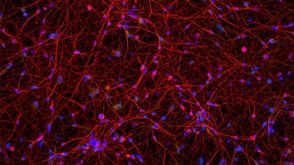 实验方案How to Culture Human Pluripotent Stem Cell (hPSC)-Derived Forebrain Neurons for MEA Analysis Using the Maestro MEA™ System



 沪公网安备31010102008431号