Fritsch G et al. (AUG 2016)
Vox sanguinis 111 2 187--96
Relevance of flow cytometric enumeration of post-thaw leucocytes: influence of temperature during cell staining on viable cell recovery.
BACKGROUND AND OBJECTIVES Our post-thaw cell recovery rates differed substantially in interlaboratory comparisons of identical samples,potentially due to different temperatures during cell staining. MATERIALS AND METHODS Viable CD34(+) cells and leucocyte (WBC) subtypes were quantified by multiparameter single-platform flow cytometry in leucapheresis products collected from 30 adult lymphoma and myeloma patients,and from 10 paediatric patients. After thawing,cells were prepared for analysis within 30 min between thawing and acquisition,at either 4°C or at room temperature. RESULTS For cell products cryopreserved in conventional freezing medium (10% final DMSO),viable cell recovery was clearly lower after staining at 4°C than at RT. Of all WBC subtypes analysed,CD4(+) T cells showed the lowest median recovery of 4% (4°C) vs. 25% (RT),followed by CD3,CD34 and CD8 cells. The recovery was highest for CD3γδ cells with 44% (4°C) vs. 71% (RT). In the 10 samples cryopreserved in synthetic freezing medium (5% final DMSO),median recovery rates were 89% for viable CD34 (both at 4°C and RT) and 79% (4°C) vs 68% (RT) for WBC. CONCLUSIONS The post-thaw environment and,potentially,the cryoprotectant impact the outcome of cell enumeration,and results from the analysis tube may not be representative of the cells infused into a patient.
View Publication
产品号#:
07930
07931
07940
07955
07956
07959
07954
100-1061
07952
产品名:
CryoStor® CS10
CryoStor® CS10
CryoStor® CS10
CryoStor® CS10
CryoStor® CS10
CryoStor® CS10
CryoStor® CS10
Nijhof IS et al. (OCT 2015)
Leukemia 29 10 2039--49
Upregulation of CD38 expression on multiple myeloma cells by all-trans retinoic acid improves the efficacy of daratumumab.
Daratumumab is an anti-CD38 monoclonal antibody with lytic activity against multiple myeloma (MM) cells,including ADCC (antibody-dependent cellular cytotoxicity) and CDC (complement-dependent cytotoxicity). Owing to a marked heterogeneity of response to daratumumab therapy in MM,we investigated determinants of the sensitivity of MM cells toward daratumumab-mediated ADCC and CDC. In bone marrow samples from 144 MM patients,we observed no difference in daratumumab-mediated lysis between newly diagnosed or relapsed/refractory patients. However,we discovered,next to an expected effect of effector (natural killer cells/monocytes) to target (MM cells) ratio on ADCC,a significant association between CD38 expression and daratumumab-mediated ADCC (127 patients),as well as CDC (56 patients). Similarly,experiments with isogenic MM cell lines expressing different levels of CD38 revealed that the level of CD38 expression is an important determinant of daratumumab-mediated ADCC and CDC. Importantly,all-trans retinoic acid (ATRA) increased CD38 expression levels but also reduced expression of the complement-inhibitory proteins CD55 and CD59 in both cell lines and primary MM samples. This resulted in a significant enhancement of the activity of daratumumab in vitro and in a humanized MM mouse model as well. Our results provide the preclinical rationale for further evaluation of daratumumab combined with ATRA in MM patients.
View Publication
产品号#:
15621
15661
产品名:
RosetteSep™人CD3去除抗体混合物
RosetteSep™人CD3去除抗体混合物
Haase D et al. ( )
Journal of immunotherapy (Hagerstown,Md. : 1997) 38 6 250--8
Large-scale Isolation of Highly Pure Untouched" Regulatory T Cells in a GMP Environment for Adoptive Cell Therapy."
Adoptive cell therapy is an emerging treatment strategy for a number of serious diseases. Regulatory T (Treg) cells represent 1 cell type of particular interest for therapy of inflammatory conditions,as they are responsible for controlling unwanted immune responses. Initial clinical trials of adoptive transfer of Treg cells in patients with graft-versus-host disease were shown to be safe. However,obtaining sufficient numbers of highly pure and functional Treg cells with minimal contamination remains a challenge. We developed a novel approach to isolate untouched" human Treg cells from healthy donors on the basis of negative selection using the surface markers CD49d and CD127. This procedure�
View Publication
产品号#:
18062
18062RF
21000
20119
20155
产品名:
RoboSep™- S
RoboSep™ 吸头组件抛光剂
RoboSep™分选管套装(9个塑料管)
Brooks SE et al. ( 2015)
PloS one 10 10 e0140483
Application of the pMHC Array to Characterise Tumour Antigen Specific T Cell Populations in Leukaemia Patients at Disease Diagnosis.
Immunotherapy treatments for cancer are becoming increasingly successful,however to further improve our understanding of the T-cell recognition involved in effective responses and to encourage moves towards the development of personalised treatments for leukaemia immunotherapy,precise antigenic targets in individual patients have been identified. Cellular arrays using peptide-MHC (pMHC) tetramers allow the simultaneous detection of different antigen specific T-cell populations naturally circulating in patients and normal donors. We have developed the pMHC array to detect CD8+ T-cell populations in leukaemia patients that recognise epitopes within viral antigens (cytomegalovirus (CMV) and influenza (Flu)) and leukaemia antigens (including Per Arnt Sim domain 1 (PASD1),MelanA,Wilms' Tumour (WT1) and tyrosinase). We show that the pMHC array is at least as sensitive as flow cytometry and has the potential to rapidly identify more than 40 specific T-cell populations in a small sample of T-cells (0.8-1.4 x 10(6)). Fourteen of the twenty-six acute myeloid leukaemia (AML) patients analysed had T cells that recognised tumour antigen epitopes,and eight of these recognised PASD1 epitopes. Other tumour epitopes recognised were MelanA (n = 3),tyrosinase (n = 3) and WT1(126-134) (n = 1). One of the seven acute lymphocytic leukaemia (ALL) patients analysed had T cells that recognised the MUC1(950-958) epitope. In the future the pMHC array may be used provide point of care T-cell analyses,predict patient response to conventional therapy and direct personalised immunotherapy for patients.
View Publication
产品号#:
19053
19053RF
产品名:
EasySep™人CD8+ T细胞富集试剂盒
RoboSep™ 人CD8+ T细胞富集试剂盒含滤芯吸头
Zhang L et al. (FEB 2016)
Cell Reports 14 5 1206--17
Mammalian Target of Rapamycin Complex 2 Controls CD8 T Cell Memory Differentiation in a Foxo1-Dependent Manner.
Upon infection,antigen-specific naive CD8 T cells are activated and differentiate into short-lived effector cells (SLECs) and memory precursor cells (MPECs). The underlying signaling pathways remain largely unresolved. We show that Rictor,the core component of mammalian target of rapamycin complex 2 (mTORC2),regulates SLEC and MPEC commitment. Rictor deficiency favors memory formation and increases IL-2 secretion capacity without dampening effector functions. Moreover,mTORC2-deficient memory T cells mount more potent recall responses. Enhanced memory formation in the absence of mTORC2 was associated with Eomes and Tcf-1 upregulation,repression of T-bet,enhanced mitochondrial spare respiratory capacity,and fatty acid oxidation. This transcriptional and metabolic reprogramming is mainly driven by nuclear stabilization of Foxo1. Silencing of Foxo1 reversed the increased MPEC differentiation and IL-2 production and led to an impaired recall response of Rictor KO memory T cells. Therefore,mTORC2 is a critical regulator of CD8 T cell differentiation and may be an important target for immunotherapy interventions.
View Publication
产品号#:
19858
19858RF
产品名:
EasySep™小鼠Naïve CD8+ T细胞分选试剂盒
RoboSep™ 小鼠Naïve CD8+ T细胞分选试剂盒
El-Far M et al. (MAR 2016)
Scientific Reports 6 22902
Proinflammatory isoforms of IL-32 as novel and robust biomarkers for control failure in HIV-infected slow progressors.
HIV-infected slow progressors (SP) represent a heterogeneous group of subjects who spontaneously control HIV infection without treatment for several years while showing moderate signs of disease progression. Under conditions that remain poorly understood,a subgroup of these subjects experience failure of spontaneous immunological and virological control. Here we determined the frequency of SP subjects who showed loss of HIV control within our Canadian Cohort of HIV(+) Slow Progressors and identified the proinflammatory cytokine IL-32 as a robust biomarker for control failure. Plasmatic levels of the proinflammatory isoforms of IL-32 (mainly β and γ) at earlier clinic visits positively correlated with the decline of CD4 T-cell counts,increased viral load,lower CD4/CD8 ratio and levels of inflammatory markers (sCD14 and IL-6) at later clinic visits. We present here a proof-of-concept for the use of IL-32 as a predictive biomarker for disease progression in SP subjects and identify IL-32 as a potential therapeutic target.
View Publication
Decot V et al. (JAN 2008)
Bio-medical materials and engineering 18 1 Suppl S19--26
Chimerism analysis following nonmyeloablative stem cell transplantation using a new cell subset separation method: Robosep.
Chimerism analysis has become an important tool to manage patients in the peri-transplant period of allogenic stem cell transplantation. During this period,cells of donor and host origin can coexist and increasing proportion of cells of host origin is considered as a recurrence of the underlying disease. We currently performed chimerism analysis on separate peripheral blood cell subsets,lymphocytes and granulocytes. To improve our isolation method,a new automated device from Stem Cell Technology Roboseptrade mark was tested and compared to our manual separation technique. The results obtained on T cell purification showed an improvement of the purity (98.42% with Robosep vs. 92.42% with the manual technique Rosettesep) and of the recovery (63.43% with Robosep and 38% with Rosettesep). The results were significantly improved on patient samples with less than 10% CD3 positive cells (purity: 90% vs. 44.44%; recovery: 73.79% vs. 43.98%). Granulocytes separation was based on CD15 expression. The results showed an improvement of the purity with Robosep (96.90% vs. 86.20% with the manual technique Polymorphprep) but the recovery was impaired (35.2% vs. 52.30%). Using a myeloid (CD66/CD33) cocktail,recovery was improved with the Robosep device (64.04% with the myeloid cocktail vs. 22.4% with the CD15 cocktail). Our data demonstrated that Robosep allowed a performant cell purification in the early period post-transplantation even for populations representing less than 10% of the peripheral blood cells.
View Publication


 EasySep™小鼠TIL(CD45)正选试剂盒




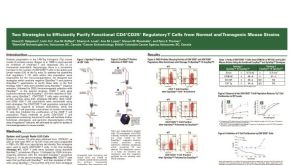 科学海报Cell Isolation of Functional CD4+CD25+ Regulatory T Cells from Mouse Strains
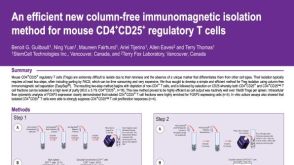 科学海报Immunomagnetic Isolation Method for Mouse CD4+CD25+ Regulatory T Cells
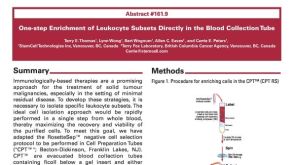 科学海报One-Step Enrichment of Leukocyte Subsets Directly in the Blood Collection Tube
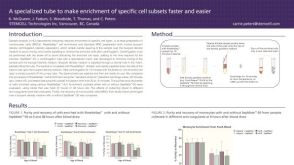 科学海报A Specialized Tube to Make Enrichment of Specific Cell Subsets Faster and Easier

 沪公网安备31010102008431号