R. Gupta et al. (may 2019)
Journal of immunology (Baltimore,Md. : 1950) 202 10 2924--2944
Mechanism for IL-15-Driven B Cell Chronic Lymphocytic Leukemia Cycling: Roles for AKT and STAT5 in Modulating Cyclin D2 and DNA Damage Response Proteins.
Clonal expansion of B cell chronic lymphocytic leukemia (B-CLL) occurs within lymphoid tissue pseudofollicles. IL-15,a stromal cell-associated cytokine found within spleens and lymph nodes of B-CLL patients,significantly boosts in vitro cycling of blood-derived B-CLL cells following CpG DNA priming. Both IL-15 and CpG DNA are elevated in microbe-draining lymphatic tissues,and unraveling the basis for IL-15-driven B-CLL growth could illuminate new therapeutic targets. Using CpG DNA-primed human B-CLL clones and approaches involving both immunofluorescent staining and pharmacologic inhibitors,we show that both PI3K/AKT and JAK/STAT5 pathways are activated and functionally important for IL-15→CD122/ɣc signaling in ODN-primed cells expressing activated pSTAT3. Furthermore,STAT5 activity must be sustained for continued cycling of CFSE-labeled B-CLL cells. Quantitative RT-PCR experiments with inhibitors of PI3K and STAT5 show that both contribute to IL-15-driven upregulation of mRNA for cyclin D2 and suppression of mRNA for DNA damage response mediators ATM,53BP1,and MDC1. Furthermore,protein levels of these DNA damage response molecules are reduced by IL-15,as indicated by Western blotting and immunofluorescent staining. Bioinformatics analysis of ENCODE chromatin immunoprecipitation sequencing data from cell lines provides insight into possible mechanisms for STAT5-mediated repression. Finally,pharmacologic inhibitors of JAKs and STAT5 significantly curtailed B-CLL cycling when added either early or late in a growth response. We discuss how the IL-15-induced changes in gene expression lead to rapid cycling and possibly enhanced mutagenesis. STAT5 inhibitors might be an effective modality for blocking B-CLL growth in patients.
View Publication
产品号#:
15024
15064
产品名:
RosetteSep™人B细胞富集抗体混合物
RosetteSep™人B细胞富集抗体混合物
R. Lorenzetti et al. (jul 2019)
Journal of autoimmunity 101 145--152
Abatacept modulates CD80 and CD86 expression and memory formation in human B-cells.
BACKGROUND Cytotoxic T lymphocyte antigen-4 (CTLA-4) limits T-cell activation and is expressed on T-regulatory cells. Human CTLA-4 deficiency results in severe immune dysregulation. Abatacept (CTLA-4 Ig) is approved for the treatment of rheumatoid arthritis (RA) and its mechanism of action is attributed to effects on T-cells. It is known that CTLA-4 modulates the expression of its ligands CD80 and CD86 on antigen presenting cells (APC) by transendocytosis. As B-cells express CD80/CD86 and function as APC,we hypothesize that B-cells are a direct target of abatacept. OBJECTIVES To investigate direct effects of abatacept on human B-lymphocytes in vitro and in RA patients. METHODS The effect of abatacept on healthy donor B-cells' phenotype,activation and CD80/CD86 expression was studied in vitro. Nine abatacept-treated RA patients were studied. Seven of these were followed up to 24 months,and two up to 12 months only and treatment response,immunoglobulins,ACPA,RF concentrations,B-cell phenotype and ACPA-specific switched memory B-cell frequency were assessed. RESULTS B-cell development was unaffected by abatacept. Abatacept treatment resulted in a dose-dependent decrease of CD80/CD86 expression on B-cells in vitro,which was due to dynamin-dependent internalization. RA patients treated with abatacept showed a progressive decrease in plasmablasts and serum IgG. While ACPA-titers only moderately declined,the frequency of ACPA-specific switched memory B-cells significantly decreased. CONCLUSIONS Abatacept directly targets B-cells by reducing CD80/CD86 expression. Impairment of antigen presentation and T-cell activation may result in altered B-cell selection,providing a new therapeutic mechanism and a base for abatacept use in B-cell mediated autoimmunity.
View Publication
产品号#:
17954
17954RF
100-0971
产品名:
EasySep™人B细胞分选试剂盒
RoboSep™ 人B细胞分选试剂盒
EasySep™人B细胞分离试剂盒
P. Petrov et al. (mar 2019)
Scientific reports 9 1 4155
Computational analysis of the evolutionarily conserved Missing In Metastasis/Metastasis Suppressor 1 gene predicts novel interactions, regulatory regions and transcriptional control.
Missing in Metastasis (MIM),or Metastasis Suppressor 1 (MTSS1),is a highly conserved protein,which links the plasma membrane to the actin cytoskeleton. MIM has been implicated in various cancers,however,its modes of action remain largely enigmatic. Here,we performed an extensive in silico characterisation of MIM to gain better understanding of its function. We detected previously unappreciated functional motifs including adaptor protein (AP) complex interaction site and a C-helix,pointing to a role in endocytosis and regulation of actin dynamics,respectively. We also identified new functional regions,characterised with phosphorylation sites or distinct hydrophilic properties. Strong negative selection during evolution,yielding high conservation of MIM,has been combined with positive selection at key sites. Interestingly,our analysis of intra-molecular co-evolution revealed potential regulatory hotspots that coincided with reduced potentially pathogenic polymorphisms. We explored databases for the mutations and expression levels of MIM in cancer. Experimentally,we focused on chronic lymphocytic leukaemia (CLL),where MIM showed high overall expression,however,downregulation on poor prognosis samples. Finally,we propose strong conservation of MTSS1 also on the transcriptional level and predict novel transcriptional regulators. Our data highlight important targets for future studies on the role of MIM in different tissues and cancers.
View Publication


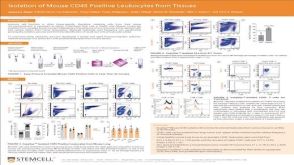
 EasySep™小鼠TIL(CD45)正选试剂盒




 实验方案Optimizing Delivery Efficiency with Fluorescent Dextran Using the CellPore™ Transfection System



 沪公网安备31010102008431号