Dumont N et al. (APR 2009)
Immunology 126 4 588--95
Increased secretion of hyperimmune antibodies following lipopolysaccharide stimulation of CD40-activated human B cells in vitro.
Human B cells can be cultured ex vivo for a few weeks,following stimulation of the CD40 cell surface molecule in the presence of recombinant cytokines such as interleukin-4 (IL-4). However,attempts to produce polyclonal antigen-specific human antibodies by in vitro culture of human B cells obtained from immunized donors have not been successful. It has been shown in mice that lipopolysaccharide (LPS) is a potent mitogen for B cells and plays an important role in the generation of antigen-specific antibody responses. Although it has long been believed that LPS has no direct effect on human B cells,recent data indicating that IL-4-activated human B cells are induced to express Toll-like receptor-4,the main LPS receptor,prompted us to study the effects of LPS on the proliferation and antibody secretion of human B cells. Our results showed that LPS caused a reduction in the expansion of CD40-activated human B cells,accompanied by an increase in antigen-specific antibody secretion. This result suggested that some,but not all,B cells were able to differentiate into antibody-secreting cells in response to LPS. This increased differentiation could be explained by the observation that LPS-stimulated human B cells were induced to secrete higher amounts of IL-6,a pleiotropic cytokine well-known for its B-cell differentiation activity. In vivo,the effect of LPS on cytokine secretion by B cells may not only enhance B-cell differentiation but also help to sustain a local ongoing immune response to invading Gram-negative bacteria,until all pathogens have been cleared from the organism.
View Publication
产品号#:
14054
18357
18357RF
产品名:
Wang W et al. (MAY 2016)
Cell 165 5 1092--105
Effector T Cells Abrogate Stroma-Mediated Chemoresistance in Ovarian Cancer.
Effector T cells and fibroblasts are major components in the tumor microenvironment. The means through which these cellular interactions affect chemoresistance is unclear. Here,we show that fibroblasts diminish nuclear accumulation of platinum in ovarian cancer cells,resulting in resistance to platinum-based chemotherapy. We demonstrate that glutathione and cysteine released by fibroblasts contribute to this resistance. CD8(+) T cells abolish the resistance by altering glutathione and cystine metabolism in fibroblasts. CD8(+) T-cell-derived interferon (IFN)γ controls fibroblast glutathione and cysteine through upregulation of gamma-glutamyltransferases and transcriptional repression of system xc(-) cystine and glutamate antiporter via the JAK/STAT1 pathway. The presence of stromal fibroblasts and CD8(+) T cells is negatively and positively associated with ovarian cancer patient survival,respectively. Thus,our work uncovers a mode of action for effector T cells: they abrogate stromal-mediated chemoresistance. Capitalizing upon the interplay between chemotherapy and immunotherapy holds high potential for cancer treatment.
View Publication


 EasySep™小鼠TIL(CD45)正选试剂盒




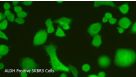
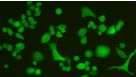
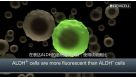
 技术公告Identification of ALDH-Expressing Cancer Stem Cells Using ALDEFLUOR™

 沪公网安备31010102008431号