Puissant A et al. (FEB 2010)
Cancer research 70 3 1042--52
Resveratrol promotes autophagic cell death in chronic myelogenous leukemia cells via JNK-mediated p62/SQSTM1 expression and AMPK activation.
Autophagy that is induced by starvation or cellular stress can enable cancer cell survival by sustaining energy homeostasis and eliminating damaged organelles and proteins. In response to stress,cancer cells have been reported to accumulate the protein p62/SQSTM1 (p62),but its role in the regulation of autophagy is controversial. Here,we report that the plant phytoalexin resveratrol (RSV) triggers autophagy in imatinib-sensitive and imatinib-resistant chronic myelogenous leukemia (CML) cells via JNK-dependent accumulation of p62. JNK inhibition or p62 knockdown prevented RSV-mediated autophagy and antileukemic effects. RSV also stimulated AMPK,thereby inhibiting the mTOR pathway. AMPK knockdown or mTOR overexpression impaired RSV-induced autophagy but not JNK activation. Lastly,p62 expression and autophagy in CD34+ progenitors from patients with CML was induced by RSV,and disrupting autophagy protected CD34+ CML cells from RSV-mediated cell death. We concluded that RSV triggered autophagic cell death in CML cells via both JNK-mediated p62 overexpression and AMPK activation. Our findings show that the JNK and AMPK pathways can cooperate to eliminate CML cells via autophagy.
View Publication
产品号#:
09600
09650
产品名:
StemSpan™ SFEM
StemSpan™ SFEM
Nagano M et al. (AUG 2010)
Stem cells and development 19 8 1195--210
Hypoxia responsive mesenchymal stem cells derived from human umbilical cord blood are effective for bone repair.
Mesenchymal stem cells (MSCs) are highly useful in a variety of cell therapies owing to their multipotential differentiation capability. MSCs derived from umbilical cord blood are generally isolated by their plastic adherence without using specific cell surface markers and examined for their osteogenic,adipogenic,and chondrogenic differentiation properties retrospectively. Here,we report 2 subpopulations of MSCs,separated based on aldehyde dehydrogenase (ALDH) activity. MSCs with a high ALDH activity (Alde-High) proliferated more than those with a low ALDH activity (Alde-Low). Alde-High MSCs had a greater ability to differentiate than Alde-Low MSCs in in vitro culture. Transplantation of Alde-High MSCs into fractured mouse femurs enabled early repair of tissues and rapid bone substitution. Alde-High MSCs were also more responsive to hypoxia than Alde-Low MSCs,with the upregulation of Flt-1,CXCR4,and Angiopoietin-2. Thus,MSCs with a high ALDH activity might serve as an effective therapeutic tool for healing fractures within a short period of time.
View Publication
产品号#:
01700
01705
01701
01702
产品名:
ALDEFLUOR™ 试剂盒
ALDEFLUOR™ DEAB试剂, 1.5 mM, 1 mL
ALDEFLUOR™检测缓冲液
Agerstam H et al. (SEP 2010)
Blood 116 12 2103--11
Modeling the human 8p11-myeloproliferative syndrome in immunodeficient mice.
The 8p11 myeloproliferative syndrome (EMS),also referred to as stem cell leukemia/lymphoma,is a chronic myeloproliferative disorder that rapidly progresses into acute leukemia. Molecularly,EMS is characterized by fusion of various partner genes to the FGFR1 gene,resulting in constitutive activation of the tyrosine kinases in FGFR1. To date,no previous study has addressed the functional consequences of ectopic FGFR1 expression in the potentially most relevant cellular context,that of normal primary human hematopoietic cells. Herein,we report that expression of ZMYM2/FGFR1 (previously known as ZNF198/FGFR1) or BCR/FGFR1 in normal human CD34(+) cells from umbilical-cord blood leads to increased cellular proliferation and differentiation toward the erythroid lineage in vitro. In immunodeficient mice,expression of ZMYM2/FGFR1 or BCR/FGFR1 in human cells induces several features of human EMS,including expansion of several myeloid cell lineages and accumulation of blasts in bone marrow. Moreover,bone marrow fibrosis together with increased extramedullary hematopoiesis is observed. This study suggests that FGFR1 fusion oncogenes,by themselves,are capable of initiating an EMS-like disorder,and provides the first humanized model of a myeloproliferative disorder transforming into acute leukemia in mice. The established in vivo EMS model should provide a valuable tool for future studies of this disorder.
View Publication
产品号#:
09600
09650
产品名:
StemSpan™ SFEM
StemSpan™ SFEM
Jatiani SS et al. (APR 2010)
Genes & cancer 1 4 331--45
A Non-ATP-Competitive Dual Inhibitor of JAK2 and BCR-ABL Kinases: Elucidation of a Novel Therapeutic Spectrum Based on Substrate Competitive Inhibition.
Here we report the discovery of ON044580,an α-benzoyl styryl benzyl sulfide that possesses potent inhibitory activity against two unrelated kinases,JAK2 and BCR-ABL,and exhibits cytotoxicity to human tumor cells derived from chronic myelogenous leukemia (CML) and myelodysplasia (MDS) patients or cells harboring a mutant JAK2 kinase. This novel spectrum of activity is explained by the non-ATP-competitive inhibition of JAK2 and BCR-ABL kinases. ON044580 inhibits mutant JAK2 kinase and the proliferation of JAK2(V617F)-positive leukemic cells and blocks the IL-3-mediated phosphorylation of JAK2 and STAT5. Interestingly,this compound also directly inhibits the kinase activity of both wild-type and imatinib-resistant (T315I) forms of the BCR-ABL kinase. Finally,ON044580 effectively induces apoptosis of imatinib-resistant CML patient cells. The apparently unrelated JAK2 and BCR-ABL kinases share a common substrate,STAT5,and such substrate competitive inhibitors represent an alternative therapeutic strategy for development of new inhibitors. The novel mechanism of kinase inhibition exhibited by ON044580 renders it effective against mutant forms of kinases such as the BCR-ABL(T315I) and JAK2(V617F). Importantly,ON044580 selectively reduces the number of aneuploid cells in primary bone marrow samples from monosomy 7 MDS patients,suggesting another regulatory cascade amenable to this agent in these aberrant cells. Data presented suggest that this compound could have multiple therapeutic applications including monosomy 7 MDS,imatinib-resistant CML,and myeloproliferative neoplasms that develop resistance to ATP-competitive agents.
View Publication
产品号#:
03434
03444
产品名:
MethoCult™ GF M3434
MethoCult™ GF M3434
Jiang J et al. (SEP 2010)
Cancer research 70 18 7242--52
Crucial roles for protein kinase C isoforms in tumor-specific killing by apoptin.
The chicken anemia virus-derived protein apoptin induces apoptosis in a variety of human malignant and transformed cells but not in normal cells. However,the mechanisms through which apoptin achieves its selective killing effects are not well understood. We developed a lentiviral vector encoding a green fluorescent protein-apoptin fusion gene (LV-GFP-AP) that can efficiently deliver apoptin into hematopoietic cells. Apoptin selectively killed the human multiple myeloma cell lines MM1.R and MM1.S,and the leukemia cell lines K562,HL60,U937,KG1,and NB4. In contrast,normal CD34(+) cells were not killed and maintained their differentiation potential in multilineage colony formation assays. In addition,dexamethasone-resistant MM1.R cells were found to be more susceptible to apoptin-induced cell death than the parental matched MM1.S cells. Death susceptibility correlated with increased phosphorylation and activation of the apoptin protein in MM1.R cells. Expression array profiling identified differential kinase profiles between MM1.R and MM1.S cells. Among these kinases,protein kinase Cβ (PKCβ) was found by immunoprecipitation and in vitro kinase studies to be a candidate kinase responsible for apoptin phosphorylation. Indeed,shRNA knockdown or drug-mediated inhibition of PKCβ significantly reduced apoptin phosphorylation. Furthermore,apoptin-mediated cell death proceeded through the upregulation of PKCβ,activation of caspase-9/3,cleavage of the PKCδ catalytic domain,and downregulation of the MERTK and AKT kinases. Collectively,these results elucidate a novel pathway for apoptin activation involving PKCβ and PKCδ. Further,they highlight the potential of apoptin and its cellular regulators to purge bone marrow used in autologous transplantation for multiple myeloma.
View Publication
产品号#:
04434
04444
09600
09650
产品名:
MethoCult™ H4434 Classic
MethoCult™ H4434 Classic
StemSpan™ SFEM
StemSpan™ SFEM
Zhang Q-S et al. (DEC 2010)
Blood 116 24 5140--8
Fancd2-/- mice have hematopoietic defects that can be partially corrected by resveratrol.
Progressive bone marrow failure is a major cause of morbidity and mortality in human Fanconi Anemia patients. In an effort to develop a Fanconi Anemia murine model to study bone marrow failure,we found that Fancd2(-/-) mice have readily measurable hematopoietic defects. Fancd2 deficiency was associated with a significant decline in the size of the c-Kit(+)Sca-1(+)Lineage(-) (KSL) pool and reduced stem cell repopulation and spleen colony-forming capacity. Fancd2(-/-) KSL cells showed an abnormal cell cycle status and loss of quiescence. In addition,the supportive function of the marrow microenvironment was compromised in Fancd2(-/-) mice. Treatment with Sirt1-mimetic and the antioxidant drug,resveratrol,maintained Fancd2(-/-) KSL cells in quiescence,improved the marrow microenvironment,partially corrected the abnormal cell cycle status,and significantly improved the spleen colony-forming capacity of Fancd2(-/-) bone marrow cells. We conclude that Fancd2(-/-) mice have readily quantifiable hematopoietic defects,and that this model is well suited for pharmacologic screening studies.
View Publication
产品号#:
05350
产品名:
Rawat VPS et al. (SEP 2010)
Proceedings of the National Academy of Sciences of the United States of America 107 39 16946--51
The vent-like homeobox gene VENTX promotes human myeloid differentiation and is highly expressed in acute myeloid leukemia.
Recent data indicate that a variety of regulatory molecules active in embryonic development may also play a role in the regulation of early hematopoiesis. Here we report that the human Vent-like homeobox gene VENTX,a putative homolog of the Xenopus xvent2 gene,is a unique regulatory hematopoietic gene that is aberrantly expressed in CD34(+) leukemic stem-cell candidates in human acute myeloid leukemia (AML). Quantitative RT-PCR documented expression of the gene in lineage positive hematopoietic subpopulations,with the highest expression in CD33(+) myeloid cells. Notably,expression levels of VENTX were negligible in normal CD34(+)/CD38(-) or CD34(+) human progenitor cells. In contrast to this,leukemic CD34(+)/CD38(-) cells from AML patients with translocation t(8,21) and normal karyotype displayed aberrantly high expression of VENTX. Gene expression and pathway analysis demonstrated that in normal CD34(+) cells enforced expression of VENTX initiates genes associated with myeloid development and down-regulates genes involved in early lymphoid development. Functional analyses confirmed that aberrant expression of VENTX in normal CD34(+) human progenitor cells perturbs normal hematopoietic development,promoting generation of myeloid cells and impairing generation of lymphoid cells in vitro and in vivo. Stable knockdown of VENTX expression inhibited the proliferation of human AML cell lines. Taken together,these data extend our insights into the function of embryonic mesodermal factors in human postnatal hematopoiesis and indicate a role for VENTX in normal and malignant myelopoiesis.
View Publication
产品号#:
04434
04444
产品名:
MethoCult™ H4434 Classic
MethoCult™ H4434 Classic
Law JH et al. (JAN 2010)
PloS one 5 9
Molecular decoy to the Y-box binding protein-1 suppresses the growth of breast and prostate cancer cells whilst sparing normal cell viability.
The Y-box binding protein-1 (YB-1) is an oncogenic transcription/translation factor that is activated by phosphorylation at S102 whereby it induces the expression of growth promoting genes such as EGFR and HER-2. We recently illustrated by an in vitro kinase assay that a novel peptide to YB-1 was highly phosphorylated by the serine/threonine p90 S6 kinases RSK-1 and RSK-2,and to a lesser degree PKCα and AKT. Herein,we sought to develop this decoy cell permeable peptide (CPP) as a cancer therapeutic. This 9-mer was designed as an interference peptide that would prevent endogenous YB-1(S102) phosphorylation based on molecular docking. In cancer cells,the CPP blocked P-YB-1(S102) and down-regulated both HER-2 and EGFR transcript level and protein expression. Further,the CPP prevented YB-1 from binding to the EGFR promoter in a gel shift assay. Notably,the growth of breast (SUM149,MDA-MB-453,AU565) and prostate (PC3,LNCap) cancer cells was inhibited by ∼90% with the CPP. Further,treatment with this peptide enhanced sensitivity and overcame resistance to trastuzumab in cells expressing amplified HER-2. By contrast,the CPP had no inhibitory effect on the growth of normal immortalized breast epithelial (184htert) cells,primary breast epithelial cells,nor did it inhibit differentiation of hematopoietic progenitors. These data collectively suggest that the CPP is a novel approach to suppressing the growth of cancer cells while sparing normal cells and thereby establishes a proof-of-concept that blocking YB-1 activation is a new course of cancer therapeutics.
View Publication
产品号#:
05601
18056
18056RF
04435
04445
产品名:
EpiCult™-B 人培养基
MethoCult™ H4435 Enriched
MethoCult™ H4435 Enriched
Alison MR et al. (DEC 2010)
The Journal of pathology 222 4 335--44
Finding cancer stem cells: are aldehyde dehydrogenases fit for purpose?
Despite many years of intensive effort,there is surprisingly little consensus on the most suitable markers with which to locate and isolate stem cells from adult tissues. By comparison,the study of cancer stem cells is still in its infancy; so,unsurprisingly,there is great uncertainty as to the identity of these cells. Stem cell markers can be broadly categorized into molecular determinants of self-renewal,clonogenicity,multipotentiality,adherence to the niche,and longevity. This review assesses the utility of recognizing cancer stem cells by virtue of high expression of aldehyde dehydrogenases (ALDHs),probably significant determinants of cell survival through their ability to detoxify many potentially cytotoxic molecules,and contributing to drug resistance. Antibodies are available against the ALDH enzyme family,but the vast majority of studies have used cell sorting techniques to enrich for cells expressing these enzymes. Live cells expressing high ALDH activity are usually identified by the ALDEFLUOR kit and sorted by fluorescence activated cell sorting (FACS). For many human tumours,but notably breast cancer,cell selection based upon ALDH activity appears to be a useful marker for enriching for cells with tumour-initiating activity (presumed cancer stem cells) in immunodeficient mice,and indeed the frequency of so-called ALDH(bri) cells in many tumours can be an independent prognostic indicator.
View Publication
Kumagai T et al. (JUN 2003)
Journal of the National Cancer Institute 95 12 896--905
Vitamin D2 analog 19-nor-1,25-dihydroxyvitamin D2: antitumor activity against leukemia, myeloma, and colon cancer cells.
BACKGROUND: 1,25-Dihydroxyvitamin D(3) inhibits growth of several types of human cancer cells in vitro,but its therapeutic use is hampered because it causes hypercalcemia. 19-nor-1,25-Dihydroxyvitamin D(2) (paricalcitol) is a noncalcemic vitamin D analog that is approved by the Food and Drug Administration for the treatment of secondary hyperparathyroidism. We investigated the antitumor activity and mechanism of action of paricalcitol in vitro and in vivo. METHODS: Effects of paricalcitol on proliferation,the cell cycle,differentiation,and apoptosis were examined in cancer cell lines. Effects on tumor growth were examined with colon cancer cell xenografts in nude mice (five in the experimental group and five in the control group). The interaction of paricalcitol with the vitamin D receptor (VDR) in mononuclear spleen cells and myeloid stem cells from wild-type and VDR knockout mice was examined. All statistical tests were two-sided. RESULTS: Paricalcitol inhibited the proliferation of myeloid leukemia cell lines HL-60,NB-4,and THP-1 cells at an effective dose that inhibited growth 50% (ED(50)) of 2.4-5.8 x 10(-9) M by inducing cell cycle arrest and differentiation. Paricalcitol inhibited the proliferation of NCI-H929 myeloma cells at an ED(50) of 2.0 x 10(-10) M by inducing cell cycle arrest and apoptosis. Paricalcitol also inhibited the proliferation of colon cancer cell lines HT-29 (ED(50) = 1.7 x 10(-8) M) and SW837 (ED(50) = 3.2 x 10(-8) M). HT-29 colon cancer xenografts in paricalcitol-treated nude mice were smaller (1044 mm(3) and 1752 mm(3),difference = 708 mm(3),95% confidence interval = 311 to 1104 mm(3); P =.03) and weighed less (1487 mg and 4162 mg,difference = 2675 mg,95% confidence interval = 2103 to 3248 mg; Ptextless.001) than those in vehicle-treated mice. Paricalcitol induced committed myeloid hematopoietic stem cells from wild-type but not from VDR knockout mice to differentiate as macrophages. CONCLUSION: Paricalcitol has anticancer activity against myeloid leukemia,myeloma,and colon cancer cells that may be mediated through the VDR. Because it has been approved by the Food and Drug Administration,clinical trials of this agent in certain cancers are reasonable.
View Publication


 EasySep™小鼠TIL(CD45)正选试剂盒




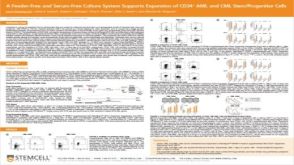 科学海报A Feeder-Free and Serum-Free Culture System Supports Expansion of CD34+ AML and CML Stem/Progenitor Cells

 沪公网安备31010102008431号