Stat3 signaling in acute myeloid leukemia: ligand-dependent and -independent activation and induction of apoptosis by a novel small-molecule Stat3 inhibitor.
Acute myeloid leukemia (AML) is an aggressive malignancy with a relapse rate approaching 50%,despite aggressive chemotherapy. New therapies for AML are targeted at signal transduction pathways known to support blast survival,such as the Stat3 pathway. Aberrant activation of Stat3 has been demonstrated in many different malignancies,including AML,and this finding is frequently associated with more aggressive disease. The objectives of this study were: (1) to characterize Stat3 signaling patterns in AML cells lines and primary pediatric samples; and (2) to test the efficacy and potency of a novel Stat3 inhibitor in inducing apoptosis in AML cells. We found that Stat3 was constitutively activated in 6 of 7 AML cell lines and 6 of 18 primary pediatric AML samples. Moreover,constitutively phosphorylated Stat3 was frequent in samples with normal karyotype but uncommon in samples with t(8;21). Most cell lines and primary samples responded to G-CSF stimulation,although the sensitivity and magnitude of the response varied dramatically. Our novel small-molecule Stat3 inhibitor,C188-9,inhibited G-CSF-induced Stat3 phosphorylation,induced apoptosis in AML cell lines and primary samples,and inhibited AML blast colony formation with potencies in the low micromolar range. Therefore,Stat3 inhibition may be a valuable strategy for targeted therapies for AML.
View Publication
产品号#:
04434
04444
09850
产品名:
MethoCult™ H4434 Classic
MethoCult™ H4434 Classic
Qué et al. (JUN 2011)
Blood 117 22 5918--30
Smad4 binds Hoxa9 in the cytoplasm and protects primitive hematopoietic cells against nuclear activation by Hoxa9 and leukemia transformation.
We studied leukemic stem cells (LSCs) in a Smad4(-/-) mouse model of acute myelogenous leukemia (AML) induced either by the HOXA9 gene or by the fusion oncogene NUP98-HOXA9. Although Hoxa9-Smad4 complexes accumulate in the cytoplasm of normal hematopoietic stem cells and progenitor cells (HSPCs) transduced with these oncogenes,there is no cytoplasmic stabilization of HOXA9 in Smad4(-/-) HSPCs,and as a consequence increased levels of Hoxa9 is observed in the nucleus leading to increased immortalization in vitro. Loss of Smad4 accelerates the development of leukemia in vivo because of an increase in transformation of HSPCs. Therefore,the cytoplasmic binding of Hoxa9 by Smad4 is a mechanism to protect Hoxa9-induced transformation of normal HSPCs. Because Smad4 is a potent tumor suppressor involved in growth control,we developed a strategy to modify the subcellular distribution of Smad4. We successfully disrupted the interaction between Hoxa9 and Smad4 to activate the TGF-β pathway and apoptosis,leading to a loss of LSCs. Together,these findings reveal a major role for Smad4 in the negative regulation of leukemia initiation and maintenance induced by HOXA9/NUP98-HOXA9 and provide strong evidence that antagonizing Smad4 stabilization by these oncoproteins might be a promising novel therapeutic approach in leukemia.
View Publication
产品号#:
03434
03444
03236
产品名:
MethoCult™ GF M3434
MethoCult™ GF M3434
MethoCult™ SF M3236
Guo L et al. (AUG 2011)
Molecular pharmacology 80 2 321--7
DNA-dependent protein kinase and ataxia telangiectasia mutated (ATM) promote cell survival in response to NK314, a topoisomerase IIα inhibitor.
4-Hydroxy-5-methoxy-2,3-dihydro-1H-[1,3]benzodioxolo[5,6-c]pyrrolo[1,2-f]-phenanthridium chloride (NK314) is a benzo[c] phenanthridine alkaloid that inhibits topoisomerase IIα,leading to the generation of DNA double-strand breaks (DSBs) and activating the G(2) checkpoint pathway. The purpose of the present studies was to investigate the DNA intercalating properties of NK314,to evaluate the DNA repair mechanisms activated in cells that may lead to resistance to NK314,and to develop mechanism-based combination strategies to maximize the antitumor effect of the compound. A DNA unwinding assay indicated that NK314 intercalates in DNA,a property that likely cooperates with its ability to trap topoisomerase IIα in its cleavage complex form. The consequence of this is the formation of DNA DSBs,as demonstrated by pulsed-field gel electrophoresis and H2AX phosphorylation. Clonogenic assays demonstrated a significant sensitization in NK314-treated cells deficient in DNA-dependent protein kinase (DNA-PK) catalytic subunit,Ku80,ataxia telangiectasia mutated (ATM),BRCA2,or XRCC3 compared with wild-type cells,indicating that both nonhomologous end-joining and homologous recombination DNA repair pathways contribute to cell survival. Furthermore,both the DNA-PK inhibitor 8-(4-dibenzothienyl)-2-(4-morpholinyl)-4H-1-benzopyran-4-one (NU7441) and the ATM inhibitor 2-(4-morpholinyl)-6-(1-thianthrenyl)-4H-pyran-4-one (KU55933) significantly sensitized cells to NK314. We conclude that DNA-PK and ATM contribute to cell survival in response to NK314 and could be potential targets for abrogating resistance and maximizing the antitumor effect of NK314.
View Publication
产品号#:
04230
产品名:
MethoCult™ H4230
Marcato P et al. (MAY 2011)
Cell cycle (Georgetown,Tex.) 10 9 1378--84
Aldehyde dehydrogenase: its role as a cancer stem cell marker comes down to the specific isoform.
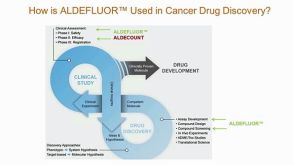
Recent evidence suggests that enhanced aldehyde dehydrogenase (ALDH) activity is a hallmark of cancer stem cells (CSC) measurable by the aldefluor assay. ALDH1A1,one of 19 ALDH isoforms expressed in humans,was generally believed to be responsible for the ALDH activity of CSCs. More recently,experiments with murine hematopoietic stem cells,murine progenitor pancreatic cells,and human breast CSCs indicate that other ALDH isoforms,particularly ALDH1A3,significantly contribute to aldefluor positivity,which may be tissue and cancer specific. Therefore,potential prognostic application involving the use of CSC prevalence in tumor tissue to predict patient outcome requires the identification and quantification of specific ALDH isoforms. Herein we review the suggested roles of ALDH in CSC biology and the immunohistological studies testing the potential application of ALDH isoforms as novel cancer prognostic indicators.
View Publication
产品号#:
01700
01705
01702
产品名:
ALDEFLUOR™ 试剂盒
ALDEFLUOR™ DEAB试剂, 1.5 mM, 1 mL
ALDEFLUOR™检测缓冲液
Mahbub AA et al. (DEC 2013)
Anti-cancer agents in medicinal chemistry 13 10 1601--13
Differential effects of polyphenols on proliferation and apoptosis in human myeloid and lymphoid leukemia cell lines.
BACKGROUND Mortality rates for leukemia are high despite considerable improvements in treatment. Since polyphenols exert pro-apoptotic effects in solid tumors,our study investigated the effects of polyphenols in haematological malignancies. The effect of eight polyphenols (quercetin,chrysin,apigenin,emodin,aloe-emodin,rhein,cis-stilbene and trans-stilbene) were studied on cell proliferation,cell cycle and apoptosis in four lymphoid and four myeloid leukemic cells lines,together with normal haematopoietic control cells. METHODS Cellular proliferation was measured by CellTiter-Glo(®) luminescent assay; and cell cycle arrest was assessed using flow cytometry of propidium iodide stained cells. Apoptosis was investigated by caspase-3 activity assay using flow cytometry and apoptotic morphology was confirmed by Hoescht 33342 staining. RESULTS Emodin,quercetin,and cis-stilbene were the most effective polyphenols at decreasing cell viability (IC50 values of 5-22 μM,8-33 μM,and 25-85 μM respectively) and inducing apoptosis (AP50 values (the concentration which 50% of cells undergo apoptosis) of 2-27 μM,19-50 μM,and 8-50 μM respectively). Generally,lymphoid cell lines were more sensitive to polyphenol treatment compared to myeloid cell lines,however the most resistant myeloid (KG-1a and K562) cell lines were still found to respond to emodin and quercetin treatment at low micromolar levels. Non-tumor cells were less sensitive to all polyphenols compared to the leukemia cells. CONCLUSIONS These findings suggest that polyphenols have anti-tumor activity against leukemia cells with differential effects. Importantly,the differential sensitivity of emodin,quercetin,and cis-stilbene between leukemia and normal cells suggests that polyphenols are potential therapeutic agents for leukemia.
View Publication
产品号#:
70008
70008.1
70008.2
70008.3
70008.4
70008.5
70008.6
200-0002
200-0001
200-0000
产品名:
冻存的人脐带血CD34+细胞
冻存的人脐带血CD34+细胞
冻存的人脐带血CD34+细胞
冻存的人脐带血CD34+细胞
冻存的人脐带血CD34+细胞
冻存的人脐带血CD34+细胞
冻存的人脐带血CD34+细胞
冻存的人脐带血CD34+细胞
冻存的人脐带血CD34+细胞
Elliott S et al. (JUL 2013)
PloS one 8 7 e68083
Epo receptors are not detectable in primary human tumor tissue samples.
Erythropoietin (Epo) is a cytokine that binds and activates an Epo receptor (EpoR) expressed on the surface of erythroid progenitor cells to promote erythropoiesis. While early studies suggested EpoR transcripts were expressed exclusively in the erythroid compartment,low-level EpoR transcripts were detected in nonhematopoietic tissues and tumor cell lines using sensitive RT-PCR methods. However due to the widespread use of nonspecific anti-EpoR antibodies there are conflicting data on EpoR protein expression. In tumor cell lines and normal human tissues examined with a specific and sensitive monoclonal antibody to human EpoR (A82),little/no EpoR protein was detected and it was not functional. In contrast,EpoR protein was reportedly detectable in a breast tumor cell line (MCF-7) and breast cancer tissues with an anti-EpoR polyclonal antibody (M-20),and functional responses to rHuEpo were reported with MCF-7 cells. In another study,a functional response was reported with the lung tumor cell line (NCI-H838) at physiological levels of rHuEpo. However,the specificity of M-20 is in question and the absence of appropriate negative controls raise questions about possible false-positive effects. Here we show that with A82,no EpoR protein was detectable in normal human and matching cancer tissues from breast,lung,colon,ovary and skin with little/no EpoR in MCF-7 and most other breast and lung tumor cell lines. We show further that M-20 provides false positive staining with tissues and it binds to a non-EpoR protein that migrates at the same size as EpoR with MCF-7 lysates. EpoR protein was detectable with NCI-H838 cells,but no rHuEpo-induced phosphorylation of AKT,STAT3,pS6RP or STAT5 was observed suggesting the EpoR was not functional. Taken together these results raise questions about the hypothesis that most tumors express high levels of functional EpoR protein.
View Publication


 EasySep™小鼠TIL(CD45)正选试剂盒







 沪公网安备31010102008431号