Kordon EC and Smith GH (MAY 1998)
Development (Cambridge,England) 125 10 1921--30
An entire functional mammary gland may comprise the progeny from a single cell.
Any epithelial portion of a normal mouse mammary gland can reproduce an entire functional gland when transplanted into an epithelium-free mammary fat pad. Mouse mammary hyperplasias and tumors are clonal dominant populations and probably represent the progeny of a single transformed cell. Our study provides evidence that single multipotent stem cells positioned throughout the mature fully developed mammary gland have the capacity to produce sufficient differentiated progeny to recapitulate an entire functional gland. Our evidence also demonstrates that these stem cells are self-renewing and are found with undiminished capacities in the newly regenerated gland. We have taken advantage of an experimental model where mouse mammary tumor virus infects mammary epithelial cells and inserts a deoxyribonucleic acid copy(ies) of its genome during replication. The insertions occur randomly within the somatic genome. CzechII mice have no endogenous nucleic acid sequence homology with mouse mammary tumor virus; therefore all viral insertions may be detected by Southern analysis provided a sufficient number of cells contain a specific insertional event. Transplantation of random fragments of infected CzechII mammary gland produced clonal-dominant epithelial populations in epithelium-free mammary fat pads. Serial transplantation of pieces of the clonally derived outgrowths produced second generation glands possessing the same viral insertion sites providing evidence for self-renewal of the original stem cell. Limiting dilution studies with cell cultures derived from third generation clonal outgrowths demonstrated that three multipotent but distinct mammary epithelial progenitors were present in clonally derived mammary epithelial populations. Estimation of the potential number of multipotent epithelial cells that may be evolved from an individual mammary-specific stem cell by self-renewal is in the order of 10(12)-10(13). Therefore,one stem cell might easily account for the renewal of mammary epithelium over several transplant generations.
View Publication
产品号#:
01700
01705
05601
05610
05620
01702
产品名:
ALDEFLUOR™ 试剂盒
ALDEFLUOR™ DEAB试剂, 1.5 mM, 1 mL
EpiCult™-B 人培养基
EpiCult™-B 小鼠培养基
MammoCult™ 人源培养基套装
ALDEFLUOR™检测缓冲液
Risueñ et al. (JUN 2011)
Blood 117 26 7112--20
Identification of T-lymphocytic leukemia-initiating stem cells residing in a small subset of patients with acute myeloid leukemic disease.
Xenotransplantation of acute myeloid leukemia (AML) into immunodeficient mice has been critical for understanding leukemogenesis in vivo and defining self-renewing leukemia-initiating cell subfractions (LICs). Although AML-engraftment capacity is considered an inherent property of LICs,substrains of NOD/SCID mice that possess additional deletions such as the IL2Rγc(null) (NSG) have been described as a more sensitive recipient to assay human LIC function. Using 23 AML-patient samples,39% demonstrated no detectable engraftment in NOD/SCID and were categorized as AMLs devoid of LICs. However,33% of AML patients lacking AML-LICs were capable of engrafting NSG recipients,but produced a monoclonal T-cell proliferative disorder similar to T-ALL. These grafts demonstrated self-renewal capacity as measured by in vivo serial passage and were restricted to CD34-positive fraction,and were defined as LICs. Molecular analysis for translocations in MLL genes indicated that these AML patient-derived LICs all expressed the MLL-AFX1 fusion product. Our results reveal that the in vivo human versus xenograft host microenvironment dictates the developmental capacity of human LICs residing in a small subset of patients diagnosed with AML harboring MLL mutations. These findings have implications both for the basic biology of CSC function,and for the use of in vivo models of the leukemogenic process in preclinical or diagnostic studies.
View Publication
产品号#:
84434
84444
产品名:
Schmidt K et al. (MAR 2009)
Journal of leukocyte biology 85 3 563--73
Histone deacetylase inhibition improves differentiation of dendritic cells from leukemic blasts of patients with TEL/AML1-positive acute lymphoblastic leukemia.
Histone deacetylase inhibitors (HdI) could potentially improve the differentiation of leukemic dendritic cells (DC). Therefore,bone marrow samples from 100 children with acute lymphoblastic leukemia (ALL) were cultured in the cytokines TNF-alpha,GM-CSF,c-kit ligand,and fetal liver tyrosine kinase 3 ligand,with or without IL-3 and -4 and after administration of HdI valproic acid (VAL),suberoylanilide hydroxamic acid (SAHA),isobutyramid,or trichostatin A. Among the tested samples,25 were positive for the chromosomal translocation t(12;21),encoding the fusion gene translocation ETS-like leukemia/acute myeloid leukemia 1 (TEL/AML1). SAHA increased CD83 expression of TEL/AML1-positive blasts in conditions without ILs,and SAHA and VAL increased the number of CD86(+)80(-) cells in the presence of ILs. VAL and isobutyramid supported the allostimulatory capacities of TEL/AML1-positive,leukemic DC; VAL and SAHA reduced those of TEL/AML1-negative DC. Cytotoxic T cells sensitized with leukemic DC produced more IFN-gamma and TNF-alpha upon presentation of the TEL/AML1 peptide. They also induced the cytotoxic lysis of nondifferentiated blasts,which was enhanced when TEL/AML1-positive DC had developed after addition of VAL or SAHA. Therefore,the use of HdI in the differentiation of leukemic DC from patients with TEL/AML1-positive ALL is recommended.
View Publication
Stingl J et al. (MAY 2001)
Breast cancer research and treatment 67 2 93--109
Characterization of bipotent mammary epithelial progenitor cells in normal adult human breast tissue.
The purpose of the present study was to characterize primitive epithelial progenitor populations present in adult normal human mammary tissue using a combination of flow cytometry and in vitro colony assay procedures. Three types of human breast epithelial cell (HBEC) progenitors were identified: luminal-restricted,myoepithelial-restricted and bipotent progenitors. The first type expressed epithelial cell adhesion molecule (EpCAM),alpha6 integrin and MUC1 and generated colonies composed exclusively of cells positive for the luminal-associated markers keratin 8/18,keratin 19,EpCAM and MUC1. Bipotent progenitors produced colonies containing a central core of cells expressing luminal markers surrounded by keratin 14+ myoepithelial-like cells. Single cell cultures confirmed the bipotentiality of these progenitors. Their high expression of alpha6 integrin and low expression of MUC1 suggests a basal position of these cells in the mammary epithelium in vivo. Serial passage in vitro of an enriched population of bipotent progenitors demonstrated that only myoepithelial-restricted progenitors could be readily generated under the culture conditions used. These results support a hierarchical branching model of HBEC progenitor differentiation from a primitive uncommitted cell to luminal- and myoepithelial-restricted progenitors.
View Publication
产品号#:
01700
01705
05601
05610
01420
01421
01702
产品名:
ALDEFLUOR™ 试剂盒
ALDEFLUOR™ DEAB试剂, 1.5 mM, 1 mL
EpiCult™-B 人培养基
EpiCult™-B 小鼠培养基
ALDEFLUOR™检测缓冲液
Smith GH (JAN 1996)
Breast cancer research and treatment 39 1 21--31
Experimental mammary epithelial morphogenesis in an in vivo model: evidence for distinct cellular progenitors of the ductal and lobular phenotype.
An in vivo transplantation system has been used to evaluate the developmental capacities of specific mouse mammary epithelial cell populations. Specifically,mouse mammary epithelial cells with distinctly limited developmental potentials have been identified using this procedure. Two distinct epithelial cell progenitors have been identified by experiments designed to determine whether basal lobular and ductal phenotypes could develop independently under conditions imposed by a limiting dilution. The prediction that these separate epithelial progenitors must exist was based upon the results from transplantation experiments carried out in epithelium-divested mammary fat pads of syngeneic mice with mammary epithelium from two different transgenic mouse models. The results presented here demonstrate the following points: 1) lobular,i.e. secretory,progenitor cells are present as distinct entities among the mammary epithelial cells found in immature virgin female mice; 2) similarly,ductal epithelial progenitors are present within the same population; 3) lobular progenitors are present in greater numbers,although both cell populations are extremely small; 4) as expected,some inocula produce outgrowths with simultaneous development of both lobular and ductal phenotypes--it is not known whether this indicates cooperative interaction between the two epithelial progenitors or signals the presence of a third progenitor type capable of producing both ductular and lobular committed daughters; 5) these findings have important consequences in the design of experiments aimed at testing the effects of known and putative mammary oncogenes and tumor suppressor genes,using techniques which include cellular transformation in vitro followed by in vivo cultivation and evaluation.
View Publication
产品号#:
01700
01705
05601
05610
05620
01702
产品名:
ALDEFLUOR™ 试剂盒
ALDEFLUOR™ DEAB试剂, 1.5 mM, 1 mL
EpiCult™-B 人培养基
EpiCult™-B 小鼠培养基
MammoCult™ 人源培养基套装
ALDEFLUOR™检测缓冲液
Huang Y et al. (FEB 2015)
Blood 125 9 1435--43
Evidence of an oncogenic role of aberrant TOX activation in cutaneous T-cell lymphoma.
TOX is a nuclear factor essential for the development of CD4(+) T cells in the thymus. It is normally expressed in low amounts in mature CD4(+) T cells of the skin and the peripheral blood. We have recently discovered that the transcript levels of TOX were significantly increased in mycosis fungoides,the most common type of cutaneous T-cell lymphoma (CTCL),as compared to normal skin or benign inflammatory dermatoses. However,its involvement in advanced CTCL and its biological effects on CTCL pathogenesis have not been explored. In this study,we demonstrate that TOX expression is also enhanced significantly in primary CD4(+)CD7(-) cells from patients with Sézary syndrome,a leukemic variant of CTCL,and that high TOX transcript levels correlate with increased disease-specific mortality. Stable knockdown of TOX in CTCL cells promoted apoptosis and reduced cell cycle progression,leading to less cell viability and colony-forming ability in vitro and to reduced tumor growth in vivo. Furthermore,TOX knockdown significantly increased 2 cyclin-dependent kinase (CDK) inhibitors,CDKN1B and CDKN1C. Lastly,blocking CDKN1B and CDKN1C reversed growth inhibition of TOX knockdown. Collectively,these findings provide strong evidence that aberrant TOX activation is a critical oncogenic event for CTCL.
View Publication


 EasySep™小鼠TIL(CD45)正选试剂盒





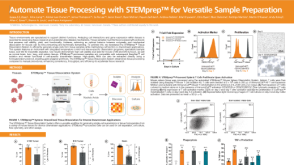 科学海报Automate Tissue Processing with STEMprep™ for Versatile Sample Preparation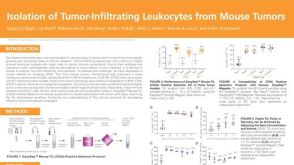

 沪公网安备31010102008431号