Lelaidier M et al. (OCT 2015)
Oncotarget 6 30 29440--55
TRAIL-mediated killing of acute lymphoblastic leukemia by plasmacytoid dendritic cell-activated natural killer cells.
Acute lymphoblastic leukemia (ALL) still frequently recurs after hematopoietic stem cell transplantation (HSCT),underscoring the need to improve the graft-versus-leukemia (GvL) effect. Natural killer (NK) cells reconstitute in the first months following HSCT when leukemia burden is at its lowest,but ALL cells have been shown to be resistant to NK cell-mediated killing. We show here that this resistance is overcome by NK cell stimulation with TLR-9-activated plasmacytoid dendritic cells (pDCs). NK cell priming with activated pDCs resulted in TRAIL and CD69 up-regulation on NK cells and IFN-γ production. NK cell activation was dependent on IFN-α produced by pDCs,but was not reproduced by IFN-α alone. ALL killing was further enhanced by inhibition of KIR engagement. We showed that ALL lysis was mainly mediated by TRAIL engagement,while the release of cytolytic granules was involved when ALL expressed NK cell activating receptor ligands. Finally,adoptive transfers of activated-pDCs in ALL-bearing humanized mice delayed the leukemia onset and cure 30% of mice. Our data therefore demonstrate that TLR-9 activated pDCs are a powerful tool to overcome ALL resistance to NK cell-mediated killing and to reinforce the GvL effect of HSCT. These results open new therapeutic avenues to prevent relapse in children with ALL.
View Publication
Lymphodepletion in the ApcMin/+ mouse model of intestinal tumorigenesis.
Germ line mutations in the Adenomatous polyposis coli tumor suppressor gene cause a hereditary form of intestinal tumorigenesis in both mice and man. Here we show that in Apc(Min/+) mice,which carry a heterozygous germ line mutation at codon 850 of Apc,there is progressive loss of immature and mature thymocytes from approximately 80 days of age with complete regression of the thymus by 120 days. In addition,Apc(Min/+) mice show parallel depletion of splenic natural killer (NK) cells,immature B cells,and B progenitor cells in bone marrow due to complete loss of interleukin 7 (IL-7)-dependent B-cell progenitors. Using bone marrow transplantation experiments into wild-type recipients,we have shown that the capacity of transplanted Apc(Min/+) bone marrow cells for T- and B-cell development appears normal. In contrast,although the Apc(Min/+) bone marrow microenvironment supported short-term reconstitution with wild-type bone marrow,Apc(Min/+) animals that received transplants subsequently underwent lymphodepletion. Fibroblast colony-forming unit (CFU-F) colony assays revealed a significant reduction in colony-forming mesenchymal progenitor cells in the bone marrow of Apc(Min/+) mice compared with wild-type animals prior to the onset of lymphodepletion. This suggests that an altered bone marrow microenvironment may account for the selective lymphocyte depletion observed in this model of familial adenomatous polyposis.
View Publication
产品号#:
03630
03434
03444
05501
05502
产品名:
MethoCult™ M3630
MethoCult™ GF M3434
MethoCult™ GF M3434
Esplugues E et al. (MAY 2003)
The Journal of experimental medicine 197 9 1093--106
Enhanced antitumor immunity in mice deficient in CD69.
We investigated the in vivo role of CD69 by analyzing the susceptibility of CD69-/- mice to tumors. CD69-/- mice challenged with MHC class I- tumors (RMA-S and RM-1) showed greatly reduced tumor growth and prolonged survival compared with wild-type (WT) mice. The enhanced anti-tumor response was NK cell and T lymphocyte-mediated,and was due,at least in part,to an increase in local lymphocytes. Resistance of CD69-/- mice to MHC class I- tumor growth was also associated with increased production of the chemokine MCP-1,diminished TGF-beta production,and decreased lymphocyte apoptosis. Moreover,the in vivo blockade of TGF-beta in WT mice resulted in enhanced anti-tumor response. In addition,CD69 engagement induced NK and T cell production of TGF-beta,directly linking CD69 signaling to TGF-beta regulation. Furthermore,anti-CD69 antibody treatment in WT mice induced a specific down-regulation in CD69 expression that resulted in augmented anti-tumor response. These data unmask a novel role for CD69 as a negative regulator of anti-tumor responses and show the possibility of a novel approach for the therapy of tumors.
View Publication
产品号#:
09500
09600
09650
产品名:
BIT 9500血清替代物
StemSpan™ SFEM
StemSpan™ SFEM
Akatsuka A et al. (SEP 2010)
International immunology 22 9 783--90
Tumor cells of non-hematopoietic and hematopoietic origins express activation-induced C-type lectin, the ligand for killer cell lectin-like receptor F1.
Killer cell lectin-like receptor F1 (KLRF1) is an activating C-type lectin-like receptor expressed on human NK cells and subsets of T cells. In this study,we show that activation-induced C-type lectin (AICL) is a unique KLRF1 ligand expressed on tumor cell lines of hematopoietic and non-hematopoietic origins. We screened a panel of human tumor cell lines using the KLRF1 reporter cells and found that several tumor lines expressed KLRF1 ligands. We characterized a putative KLRF1 ligand expressed on the U937 cell line. The molecular mass for the deglycosylated ligand was 28 kDa under non-reducing condition and 17 kDa under reducing condition,suggesting that the KLRF1 ligand is a homodimer. By expression cloning from a U937 cDNA library,we identified AICL as a KLRF1 ligand. We generated mAbs against AICL to identify the KLRF1 ligands on non-hematopoietic tumor lines. The anti-AICL mAbs stained the tumor lines that express the KLRF1 ligands and importantly the interaction of KLRF1 with the KLRF1 ligand on non-hematopoietic tumors was completely blocked by the two anti-AICL mAbs. Moreover,NK cell degranulation triggered by AICL-expressing targets was partially inhibited by the anti-AICL mAb. Finally,we demonstrate that AICL is expressed in human primary liver cancers. These results suggest that AICL is expressed on tumor cells of non-hematopoietic origins and raise the possibility that AICL may contribute to NK cell surveillance of tumor cells.
View Publication
Nijhof IS et al. (OCT 2015)
Leukemia 29 10 2039--49
Upregulation of CD38 expression on multiple myeloma cells by all-trans retinoic acid improves the efficacy of daratumumab.
Daratumumab is an anti-CD38 monoclonal antibody with lytic activity against multiple myeloma (MM) cells,including ADCC (antibody-dependent cellular cytotoxicity) and CDC (complement-dependent cytotoxicity). Owing to a marked heterogeneity of response to daratumumab therapy in MM,we investigated determinants of the sensitivity of MM cells toward daratumumab-mediated ADCC and CDC. In bone marrow samples from 144 MM patients,we observed no difference in daratumumab-mediated lysis between newly diagnosed or relapsed/refractory patients. However,we discovered,next to an expected effect of effector (natural killer cells/monocytes) to target (MM cells) ratio on ADCC,a significant association between CD38 expression and daratumumab-mediated ADCC (127 patients),as well as CDC (56 patients). Similarly,experiments with isogenic MM cell lines expressing different levels of CD38 revealed that the level of CD38 expression is an important determinant of daratumumab-mediated ADCC and CDC. Importantly,all-trans retinoic acid (ATRA) increased CD38 expression levels but also reduced expression of the complement-inhibitory proteins CD55 and CD59 in both cell lines and primary MM samples. This resulted in a significant enhancement of the activity of daratumumab in vitro and in a humanized MM mouse model as well. Our results provide the preclinical rationale for further evaluation of daratumumab combined with ATRA in MM patients.
View Publication


 EasySep™小鼠TIL(CD45)正选试剂盒




 实验方案How to Measure NK Cell Killing Activity with a Standardized Potency Assay
 技术公告Achieve Scalable, High-Quality Nucleic Acid Extractions with the EasySep™ Total Nucleic Acid Extraction Kit

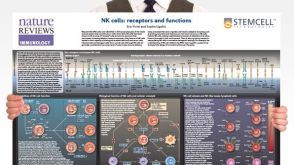 挂图Natural Killer Cells Overview of NK cell receptors, subsets, activation and function

 沪公网安备31010102008431号