Mostert B et al. (AUG 2009)
Cancer treatment reviews 35 5 463--74
Circulating tumor cells (CTCs): detection methods and their clinical relevance in breast cancer.
The enumeration of circulating tumor cells has long been regarded as an attractive diagnostic tool,as circulating tumor cells are thought to reflect aggressiveness of the tumor and may assist in therapeutic decisions in patients with solid malignancies. However,implementation of this assay into clinical routine has been cumbersome,as a validated test was not available until recently. Circulating tumor cells are rare events which can be detected specifically only by using a combination of surface and intracellular markers,and only recently a number of technical advances have made their reliable detection possible. Most of these new techniques rely on a combination of an enrichment and a detection step. This review addresses the assays that have been described so far in the literature,including the enrichment and detection steps and the markers used in these assays. We have focused on breast cancer as most clinical studies on CTC detection so far have been done in these patients.
View Publication
产品号#:
15122
15162
15127
15167
产品名:
RosetteSep™人CD45去除抗体混合物
RosetteSep™人CD45去除抗体混合物
含抗CD36的 RosetteSep™ CTC富集抗体混合物
含抗CD36的 RosetteSep™ CTC富集抗体混合物
Morabito A et al. ( 2009)
The oncologist 14 4 378--390
Vandetanib (ZD6474), a dual inhibitor of vascular endothelial growth factor receptor (VEGFR) and epidermal growth factor receptor (EGFR) tyrosine kinases: current status and future directions.
Vandetanib is a novel,orally available inhibitor of different intracellular signaling pathways involved in tumor growth,progression,and angiogenesis: vascular endothelial growth factor receptor-2,epidermal growth factor receptor,and REarranged during Transfection tyrosine kinase activity. Phase I clinical trials have shown that vandetanib is well tolerated as a single agent at daily doses textless or =300 mg. In the phase II setting,negative results were observed with vandetanib in small cell lung cancer,metastatic breast cancer,and multiple myeloma. In contrast,three randomized phase II studies showed that vandetanib prolonged the progression-free survival (PFS) time of patients with non-small cell lung cancer (NSCLC) as a single agent when compared with gefitinib or when added to chemotherapy. Rash,diarrhea,hypertension,fatigue,and asymptomatic QTc prolongation were the most common adverse events. Antitumor activity was also observed in medullary thyroid cancer. Four randomized phase III clinical trials in NSCLC are exploring the efficacy of vandetanib in combination with docetaxel,the Zactima in cOmbination with Docetaxel In non-small cell lung Cancer (ZODIAC) trial,or with pemetrexed,the Zactima Efficacy with Alimta in Lung cancer (ZEAL) trial,or as a single agent,the Zactima Efficacy when Studied versus Tarceva (ZEST) and the Zactima Efficacy trial for NSCLC Patients with History of EGFR-TKI chemo-Resistance (ZEPHYR) trials. Based on a press release by the sponsor of these trials,the PFS time was longer with vandetanib in the ZODIAC and ZEAL trials; the ZEST trial was negative for its primary superiority analysis,but was successful according to a preplanned noninferiority analysis of PFS. Ongoing phase II and III clinical trials will better define the appropriate schedule,the optimal setting of evaluation,and the safety of long-term use of vandetanib.
View Publication
产品号#:
73532
73534
产品名:
Vandetanib
Ló et al. (NOV 2009)
Cancer immunology,immunotherapy : CII 58 11 1853--64
Role of polymorphic Fc gamma receptor IIIa and EGFR expression level in cetuximab mediated, NK cell dependent in vitro cytotoxicity of head and neck squamous cell carcinoma cells.
Immunotherapy with the EGFR-specific mAb cetuximab is clinically effective in 10-20% of patients with squamous cell carcinoma of the head and neck (SCCHN). Little information is available about the mechanism(s) underlying patients' differential clinical response to cetuximab-based immunotherapy,although this information may contribute to optimizing the design of cetuximab-based immunotherapy. Our understanding of these mechanisms would benefit from the characterization of the variables which influence the extent of cell dependent-lysis of SCCHN cells incubated with cetuximab in vitro. Therefore,in this study we have investigated the role of FcgammaR IIIa-158 genotype expressed by effector NK cells,cetuximab concentration,and EGFR expression level by SCCHN cells in the extent of their in vitro lysis and in the degree of NK cell activation. PBMC or purified CD56+ NK cells genotyped at IIIa codon 158 and SCCHN cell lines expressing different levels of EGFR have been used as effectors and targets,respectively,in antibody dependent cellular cytotoxicity (ADCC) assays. Furthermore,supernatants from ADCC assays were analyzed for cytokine and chemokine levels using multiplexed ELISA. We found that the extent of lysis of SCCHN cells was influenced by the EGFR expression level,cetuximab concentration,and FcgammaR polymorphism. Effector cells expressing the FcgammaR IIIa-158 VV allele were significantly (P textless 0.0001) more effective than those expressing FcgammaR IIIa VF and FF [corrected] alleles in mediating lysis of SCCHN cells expressed higher levels of the activation markers CD69 and CD107a,and secreted significantly (P textless 0.05) larger amounts of inflammatory cytokines and chemokines. IL-2 or IL-15 treatment increased cetuximab-mediated ADCC by poor binding FcgammaR IIIa 158 FF expressing NK cells. The importance of the FcgammaR IIIa-158 polymorphism in cytotoxicity of SCCHN cells by NK cells supports a potential role for immune activation and may explain patient variability of cetuximab mediated clinical responses. Cellular and secreted immune profiles and FcgammaR genotypes from patients' lymphocytes may provide clinically useful biomarkers of immune activation in cetuximab treated patients.
View Publication
产品号#:
19055
19055RF
产品名:
EasySep™人NK细胞富集试剂盒
RoboSep™ 人NK细胞富集试剂盒含滤芯吸头
Miyazaki K et al. (MAY 2009)
Blood 113 19 4702--10
Enhanced expression of p210BCR/ABL and aberrant expression of Zfp423/ZNF423 induce blast crisis of chronic myelogenous leukemia.
Chronic myelogenous leukemia (CML) is a hematopoietic disorder originating from p210BCR/ABL-transformed stem cells,which begins as indolent chronic phase (CP) but progresses into fatal blast crisis (BC). To investigate molecular mechanism(s) underlying disease evolution,CML-exhibiting p210BCR/ABL transgenic mice were crossed with BXH2 mice that transmit a replication-competent retrovirus. Whereas nontransgenic mice in the BXH2 background exclusively developed acute myeloid leukemia,p210BCR/ABL transgenic littermates developed nonmyeloid leukemias,in which inverse polymerase chain reaction detected 2 common viral integration sites (CISs). Interestingly,one CIS was transgene's own promoter,which up-regulated p210BCR/ABL expression. The other was the 5' noncoding region of a transcription factor,Zfp423,which induced aberrant Zfp423 expression. The cooperative activities of Zfp423 and p210BCR/ABL were demonstrated as follows: (1) introduction of Zfp423 in p210BCR/ABL transgenic bone marrow (BM) cells increased colony-forming ability,(2) suppression of ZNF423 (human homologue of Zfp423) in ZNF423-expressing,p210BCR/ABL-positive hematopoietic cells retarded cell growth,(3) mice that received a transplant of BM cells transduced with Zfp423 and p210BCR/ABL developed acute leukemia,and (4) expression of ZNF423 was found in human BCR/ABL-positive cell lines and CML BC samples. These results demonstrate that enhanced expression of p210BCR/ABL and deregulated expression of Zfp423/ZNF423 contribute to CML BC.
View Publication
产品号#:
03630
产品名:
MethoCult™ M3630
Pendino F et al. (APR 2009)
Blood 113 14 3172--81
Functional involvement of RINF, retinoid-inducible nuclear factor (CXXC5), in normal and tumoral human myelopoiesis.
Retinoids triggers differentiation of acute promyelocytic leukemia (APL) blasts by transcriptional regulation of myeloid regulatory genes. Using a microarray approach,we have identified a novel retinoid-responsive gene (CXXC5) encoding a nuclear factor,retinoid-inducible nuclear factor (RINF),that contains a CXXC-type zinc-finger motif. RINF expression correlates with retinoid-induced differentiation of leukemic cells and with cytokine-induced myelopoiesis of normal CD34(+) progenitors. Furthermore,short hairpin RNA (shRNA) interference suggests for this gene a regulatory function in both normal and tumoral myelopoiesis. Interestingly,RINF localizes to 5q31.3,a small region often deleted in myeloid leukemia (acute myeloid leukemia [AML]/myelodysplasia [MDS]) and suspected to harbor one or several tumor suppressor gene.
View Publication
产品号#:
70002
70002.1
70002.2
70002.3
70002.4
70002.5
产品名:
Schmidt K et al. (MAR 2009)
Journal of leukocyte biology 85 3 563--73
Histone deacetylase inhibition improves differentiation of dendritic cells from leukemic blasts of patients with TEL/AML1-positive acute lymphoblastic leukemia.
Histone deacetylase inhibitors (HdI) could potentially improve the differentiation of leukemic dendritic cells (DC). Therefore,bone marrow samples from 100 children with acute lymphoblastic leukemia (ALL) were cultured in the cytokines TNF-alpha,GM-CSF,c-kit ligand,and fetal liver tyrosine kinase 3 ligand,with or without IL-3 and -4 and after administration of HdI valproic acid (VAL),suberoylanilide hydroxamic acid (SAHA),isobutyramid,or trichostatin A. Among the tested samples,25 were positive for the chromosomal translocation t(12;21),encoding the fusion gene translocation ETS-like leukemia/acute myeloid leukemia 1 (TEL/AML1). SAHA increased CD83 expression of TEL/AML1-positive blasts in conditions without ILs,and SAHA and VAL increased the number of CD86(+)80(-) cells in the presence of ILs. VAL and isobutyramid supported the allostimulatory capacities of TEL/AML1-positive,leukemic DC; VAL and SAHA reduced those of TEL/AML1-negative DC. Cytotoxic T cells sensitized with leukemic DC produced more IFN-gamma and TNF-alpha upon presentation of the TEL/AML1 peptide. They also induced the cytotoxic lysis of nondifferentiated blasts,which was enhanced when TEL/AML1-positive DC had developed after addition of VAL or SAHA. Therefore,the use of HdI in the differentiation of leukemic DC from patients with TEL/AML1-positive ALL is recommended.
View Publication
产品号#:
09850
产品名:
Druker BJ (DEC 2008)
Blood 112 13 4808--17
Translation of the Philadelphia chromosome into therapy for CML.
Throughout its history,chronic myeloid leukemia (CML) has set precedents for cancer research and therapy. These range from the identification of the first specific chromosomal abnormality associated with cancer to the development of imatinib as a specific,targeted therapy for the disease. The successful development of imatinib as a therapeutic agent for CML can be attributed directly to decades of scientific discoveries. These discoveries determined that the BCR-ABL tyrosine kinase is the critical pathogenetic event in CML and an ideal target for therapy. This was confirmed in clinical trials of imatinib,with imatinib significantly improving the long-term survival of patients with CML. Continuing in this tradition of scientific discoveries leading to improved therapies,the understanding of resistance to imatinib has rapidly led to strategies to circumvent resistance. Continued studies of hematologic malignancies will allow this paradigm of targeting molecular pathogenetic events to be applied to many additional hematologic cancers.
View Publication
产品号#:
72532
72534
产品名:
Imatinib (Mesylate)
Imatinib (Mesylate), 100 mg
Matsui W et al. (JAN 2008)
Cancer research 68 1 190--7
Clonogenic multiple myeloma progenitors, stem cell properties, and drug resistance.
Many agents are active in multiple myeloma,but the majority of patients relapse. This clinical pattern suggests most cancer cells are eliminated,but cells with the clonogenic potential to mediate tumor regrowth are relatively chemoresistant. Our previous data suggested that CD138(+) multiple myeloma plasma cells cannot undergo long-term proliferation but rather arise from clonogenic CD138(neg) B cells. We compared the relative sensitivity of these distinct cell types to clinical antimyeloma agents and found that dexamethasone,lenadilomide,bortezomib,and 4-hydroxycyclophosphamide inhibited CD138(+) multiple myeloma plasma cells but had little effect on CD138(neg) precursors in vitro. We further characterized clonogenic multiple myeloma cells and stained cell lines using the Hoechst side population and Aldefluor assays. Each assay identified CD138(neg) cells suggesting that they possess high drug efflux capacity and intracellular drug detoxification activity. We also found that multiple myeloma cells expressing the memory B-cell markers CD20 and CD27 could give rise to clonogenic multiple myeloma growth in vitro and engraft immunodeficient nonobese diabetes/severe combined immunodeficient mice during both primary and secondary transplantation. Furthermore,both the side population and Aldefluor assays were capable of identifying circulating clonotypic memory B-cell populations within the peripheral blood of multiple myeloma patients. Our results suggest that circulating clonotypic B-cell populations represent multiple myeloma stem cells,and the relative drug resistance of these cells is mediated by processes that protect normal stem cells from toxic injury.
View Publication
产品号#:
01700
01705
01701
01702
产品名:
ALDEFLUOR™ 试剂盒
ALDEFLUOR™ DEAB试剂, 1.5 mM, 1 mL
ALDEFLUOR™检测缓冲液
Bruserud O et al. (DEC 2000)
Journal of hematotherapy & stem cell research 9 6 923--32
In vitro culture of human acute myelogenous leukemia (AML) cells in serum-free media: studies of native AML blasts and AML cell lines.
The functional characteristics were compared for acute myelogenous leukemia (AML) cells (native blasts and AML cell lines) cultured in three serum-free media (X-vivo 10,X-vivo 15,[Bio-Whitacker,Walkersville,MD] and StemSpan [Stem Cell Technologies,Vancouver,BC,Canada]) and in medium containing 10% inactivated fetal calf serum (FCS). For native AML blasts the following functions were compared: (1) autonomous and cytokine-dependent proliferation; (2) frequency of clonogenic cell; and (3) constitutive cytokine secretion. AML blast proliferation differed between patients independent of the culture medium used,and clonogenic cells were maintained after in vitro culture in all media. In contrast,constitutive cytokine secretion was higher for cells cultured in StemSpan and FCS-containing medium than for cells cultured in the X-vivo media. Native AML blasts incubated in StemSpan also showed a low frequency of apoptotic cells. The three serum-free media could also be used for long-term expansion of well-characterized AML cell lines,but the optimal medium for cell expansion and cytokine secretion differed between cell lines. We conclude that standardized serum-free culture conditions can be used for in vitro studies of native AML blasts and AML cell lines.
View Publication
产品号#:
09600
09650
产品名:
StemSpan™ SFEM
StemSpan™ SFEM
Gao L et al. (APR 2000)
Blood 95 7 2198--203
Selective elimination of leukemic CD34(+) progenitor cells by cytotoxic T lymphocytes specific for WT1.
Hematologic malignancies such as acute and chronic myeloid leukemia are characterized by the malignant transformation of immature CD34(+) progenitor cells. Transformation is associated with elevated expression of the Wilm's tumor gene encoded transcription factor (WT1). Here we demonstrate that WT1 can serve as a target for cytotoxic T lymphocytes (CTL) with exquisite specificity for leukemic progenitor cells. HLA-A0201- restricted CTL specific for WT1 kill leukemia cell lines and inhibit colony formation by transformed CD34(+) progenitor cells isolated from patients with chronic myeloid leukemia (CML),whereas colony formation by normal CD34(+) progenitor cells is unaffected. Thus,the tissue-specific transcription factor WT1 is an ideal target for CTL-mediated purging of leukemic progenitor cells in vitro and for antigen-specific therapy of leukemia and other WT1-expressing malignancies in vivo.
View Publication


 EasySep™小鼠TIL(CD45)正选试剂盒




 技术窍门循环肿瘤细胞分选
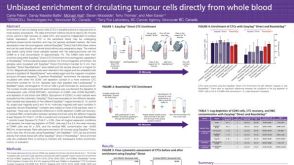 科学海报Unbiased Enrichment of Circulating Tumour Cells Directly from Whole Blood
 沪公网安备31010102008431号