DeFeo-Jones D et al. (FEB 2005)
Molecular cancer therapeutics 4 2 271--9
Tumor cell sensitization to apoptotic stimuli by selective inhibition of specific Akt/PKB family members.
Recent studies indicate that dysregulation of the Akt/PKB family of serine/threonine kinases is a prominent feature of many human cancers. The Akt/PKB family is composed of three members termed Akt1/PKBalpha,Akt2/PKBbeta,and Akt3/PKBgamma. It is currently not known to what extent there is functional overlap between these family members. We have recently identified small molecule inhibitors of Akt. These compounds have pleckstrin homology domain-dependent,isozyme-specific activity. In this report,we present data showing the relative contribution that inhibition of the different isozymes has on the apoptotic response of tumor cells to a variety of chemotherapies. In multiple cell backgrounds,maximal induction of caspase-3 activity is achieved when both Akt1 and Akt2 are inhibited. This induction is not reversed by overexpression of functionally active Akt3. The level of caspase-3 activation achieved under these conditions is equivalent to that observed with the phosphatidylinositol-3-kinase inhibitor LY294002. We also show that in different tumor cell backgrounds inhibition of mammalian target of rapamycin,a downstream substrate of Akt,is less effective in inducing caspase-3 activity than inhibition of Akt1 and Akt2. This shows that the survival phenotype conferred by Akt can be mediated by signaling pathways independent of mammalian target of rapamycin in some tumor cell backgrounds. Finally,we show that inhibition of both Akt1 and Akt2 selectively sensitizes tumor cells,but not normal cells,to apoptotic stimuli.
View Publication
产品号#:
72942
72944
产品名:
AKT抑制剂VIII
AKT抑制剂VIII
Hess DA et al. (SEP 2004)
Blood 104 6 1648--55
Functional characterization of highly purified human hematopoietic repopulating cells isolated according to aldehyde dehydrogenase activity.
Human hematopoietic stem cells (HSCs) are commonly purified by the expression of cell surface markers such as CD34. Because cell phenotype can be altered by cell cycle progression or ex vivo culture,purification on the basis of conserved stem cell function may represent a more reliable way to isolate various stem cell populations. We have purified primitive HSCs from human umbilical cord blood (UCB) by lineage depletion (Lin(-)) followed by selection of cells with high aldehyde dehydrogenase (ALDH) activity. ALDH(hi)Lin(-) cells contained 22.6% +/- 3.0% of the Lin(-) population and highly coexpressed primitive HSC phenotypes (CD34(+) CD38(-) and CD34(+)CD133(+)). In vitro hematopoietic progenitor function was enriched in the ALDH(hi)Lin(-) population,compared with ALDH(lo)Lin(-) cells. Multilineage human hematopoietic repopulation was observed exclusively after transplantation of ALDH(hi)Lin(-) cells. Direct comparison of repopulation with use of the nonobese diabetic/severe combined immunodeficient (NOD/SCID) and NOD/SCID beta2 microglobulin (beta2M) null models demonstrated that 10-fold greater numbers of ALDH(hi)-Lin(-) cells were needed to engraft the NOD/SCID mouse as compared with the more permissive NOD/SCID beta2M null mouse,suggesting that the ALDH(hi)Lin(-) population contained committed progenitors as well as primitive repopulating cells. Cell fractionation according to lineage depletion and ALDH activity provides a viable and prospective purification of HSCs on the basis of cell function rather than cell surface phenotype.
View Publication
产品号#:
01700
01705
04434
04444
01702
产品名:
ALDEFLUOR™ 试剂盒
ALDEFLUOR™ DEAB试剂, 1.5 mM, 1 mL
MethoCult™ H4434 Classic
MethoCult™ H4434 Classic
ALDEFLUOR™检测缓冲液
Fang B et al. (APR 2005)
Blood 105 7 2733--40
Identification of human chronic myelogenous leukemia progenitor cells with hemangioblastic characteristics.
Overwhelming evidence from leukemia research has shown that the clonal population of neoplastic cells exhibits marked heterogeneity with respect to proliferation and differentiation. There are rare stem cells within the leukemic population that possess extensive proliferation and self-renewal capacity not found in the majority of the leukemic cells. These leukemic stem cells are necessary and sufficient to maintain the leukemia. Interestingly,the BCR/ABL fusion gene,which is present in chronic myelogenous leukemia (CML),was also detected in the endothelial cells of patients with CML,suggesting that CML might originate from hemangioblastic progenitor cells that can give rise to both blood cells and endothelial cells. Here we isolated fetal liver kinase-1-positive (Flk1+) cells carrying the BCR/ABL fusion gene from the bone marrow of 17 Philadelphia chromosome-positive (Ph+) patients with CML and found that these cells could differentiate into malignant blood cells and phenotypically defined endothelial cells at the single-cell level. These findings provide direct evidence for the first time that rearrangement of the BCR/ABL gene might happen at or even before the level of hemangioblastic progenitor cells,thus resulting in detection of the BCR/ABL fusion gene in both blood and endothelial cells.
View Publication
产品号#:
04435
04445
产品名:
MethoCult™ H4435 Enriched
MethoCult™ H4435 Enriched
Thanopoulou E et al. (JUN 2004)
Blood 103 11 4285--93
Engraftment of NOD/SCID-beta2 microglobulin null mice with multilineage neoplastic cells from patients with myelodysplastic syndrome.
The development of immunodeficient mouse xenograft models has greatly facilitated the investigation of some human hematopoietic malignancies,but application of this approach to the myelodysplastic syndromes (MDSs) has proven difficult. We now show that cells from most MDS patients (including all subtypes) repopulate nonobese diabetic-severe combined immunodeficient (scid)/scid-beta2 microglobulin null (NOD/SCID-beta2m(-/-)) mice at least transiently and produce abnormal differentiation patterns in this model. Normal marrow transplants initially produce predominantly erythroid cells and later predominantly B-lymphoid cells in these mice,whereas most MDS samples produced predominantly granulopoietic cells. In 4 of 4 MDS cases,the regenerated cells showed the same clonal markers (trisomy 8,n = 3; and 5q-,n = 1) as the original sample and,in one instance,regenerated trisomy 8(+) B-lymphoid as well as myeloid cells were identified. Interestingly,the enhanced growth of normal marrow obtained in NOD/SCID-beta2m(-/-) mice engineered to produce human interleukin-3,granulocyte-macrophage colony-stimulating factor,and Steel factor was seen only with 1 of 7 MDS samples. These findings support the concept that human MDS originates in a transplantable multilineage hematopoietic stem cell whose genetic alteration may affect patterns of differentiation and responsiveness to hematopoietic growth factors. They also demonstrate the potential of this new murine xenotransplant model for future investigations of MDS.
View Publication


 EasySep™小鼠TIL(CD45)正选试剂盒




 技术公告Identification of Viable Stem and Progenitor Cells with ALDEFLUOR™

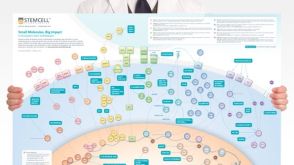 挂图Small Molecules, Big Impact in Pluripotent Stem Cell Research Overview of signaling pathways and small molecules in pluripotent stem cell research
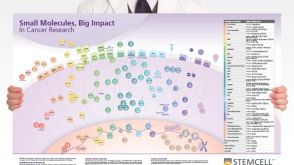 挂图Small Molecules, Big Impact in Cancer Research Overview of signaling pathways and small molecules in cancer research

 沪公网安备31010102008431号