Disruption of IKAROS activity in primitive chronic-phase CML cells mimics myeloid disease progression.
Without effective therapy,chronic-phase chronic myeloid leukemia (CP-CML) evolves into an acute leukemia (blast crisis [BC]) that displays either myeloid or B-lymphoid characteristics. This transition is often preceded by a clinically recognized,but biologically poorly characterized,accelerated phase (AP). Here,we report that IKAROS protein is absent or reduced in bone marrow blasts from most CML patients with advanced myeloid disease (AP or BC). This contrasts with primitive CP-CML cells and BCR-ABL1-negative acute myeloid leukemia blasts,which express readily detectable IKAROS. To investigate whether loss of IKAROS contributes to myeloid disease progression in CP-CML,we examined the effects of forced expression of a dominant-negative isoform of IKAROS (IK6) in CP-CML patients' CD34(+) cells. We confirmed that IK6 disrupts IKAROS activity in transduced CP-CML cells and showed that it confers on them features of AP-CML,including a prolonged increased output in vitro and in xenografted mice of primitive cells with an enhanced ability to differentiate into basophils. Expression of IK6 in CD34(+) CP-CML cells also led to activation of signal transducer and activator of transcription 5 and transcriptional repression of its negative regulators. These findings implicate loss of IKAROS as a frequent step and potential diagnostic harbinger of progressive myeloid disease in CML patients.
View Publication
产品号#:
18056
18056RF
产品名:
Chatzouli M et al. ( 2014)
The Journal of Immunology 192 10 4518--4524
Heterogeneous Functional Effects of Concomitant B Cell Receptor and TLR Stimulation in Chronic Lymphocytic Leukemia with Mutated versus Unmutated Ig Genes
We recently reported that chronic lymphocytic leukemia (CLL) subgroups with distinct clonotypic BCRs present discrete patterns of TLR expression,function,and/or tolerance. In this study,to explore whether specific types of BCR/TLR collaboration exist in CLL,we studied the effect of single versus concomitant BCR and/or TLR stimulation on CLL cells from mutated (M-CLL) and unmutated CLL (U-CLL) cases. We stimulated negatively isolated CLL cells by using anti-IgM,imiquimod,and CpG oligodeoxynucleotide for BCR,TLR7,and TLR9,respectively,alone or in combination for different time points. After in vitro culture in the absence of stimulation,differences in p-ERK were identified at any time point,with higher p-ERK levels in U-CLL versus M-CLL. Pronounced p-ERK induction was seen by single stimulation in U-CLL,whereas BCR/TLR synergism was required in
View Publication
产品号#:
15024
15064
产品名:
RosetteSep™人B细胞富集抗体混合物
RosetteSep™人B细胞富集抗体混合物
Baatz JE et al. (JUL 2014)
In vivo (Athens,Greece) 28 4 411--423
Cryopreservation of viable human lung tissue for versatile post-thaw analyses and culture.
Clinical trials are currently used to test therapeutic efficacies for lung cancer,infections and diseases. Animal models are also used as surrogates for human disease. Both approaches are expensive and time-consuming. The utility of human biospecimens as models is limited by specialized tissue processing methods that preserve subclasses of analytes (e.g. RNA,protein,morphology) at the expense of others. We present a rapid and reproducible method for the cryopreservation of viable lung tissue from patients undergoing lobectomy or transplant. This method involves the pseudo-diaphragmatic expansion of pieces of fresh lung tissue with cryoprotectant formulation (pseudo-diaphragmatic expansion-cryoprotectant perfusion or PDX-CP) followed by controlled-rate freezing in cryovials. Expansion-perfusion rates,volumes and cryoprotectant formulation were optimized to maintain tissue architecture,decrease crystal formation and increase long-term cell viability. Rates of expansion of 4 cc/min or less and volumes ranging from 0.8-1.2 × tissue volume were well-tolerated by lung tissue obtained from patients with chronic obstructive pulmonary disease or idiopathic pulmonary fibrosis,showing minimal differences compared to standard histopathology. Morphology was greatly improved by the PDX-CP procedure compared to simple fixation. Fresh versus post-thawed lung tissue showed minimal differences in histology,RNA integrity numbers and post-translational modified protein integrity (2-dimensional differential gel electrophoresis). It was possible to derive numerous cell types,including alveolar epithelial cells,fibroblasts and stem cells,from the tissue for at least three months after cryopreservation. This new method should provide a uniform,cost-effective approach to the banking of biospecimens,with versatility to be amenable to any post-acquisition process applicable to fresh tissue samples.
View Publication
产品号#:
05850
05857
05870
05875
85850
85857
85870
85875
产品名:
mTeSR™1
mTeSR™1
Zhao L et al. ( 2014)
International journal of clinical and experimental medicine 7 2 337--347
mTOR inhibitor AZD8055 inhibits proliferation and induces apoptosis in laryngeal carcinoma.
The mammalian target of rapamycin (mTOR) kinase forms two multiprotein complexes,mTORC1 and mTORC2,which regulate cell growth,survival,and autophagy. Allosteric inhibitors of mTORC1,such as rapamycin,have been extensively used to study tumor cell growth,proliferation,and autophagy but have shown only limited clinical utility. Here,we describe AZD8055,a novel ATP-competitive inhibitor of mTOR kinase activity,against all class I phosphatidylinositol3-kinase (PI3K) and other members of the PI3K-like kinase family. The study was to determine the effect of AZD8055 on proliferation and apoptosis on Hep-2,a human laryngeal cancer cell line and to investigate the underlying mechanism(s) of action. Hep-2 cells were treated with AZD8055 for 24,48 or 72 h. MTT was used to determine cell proliferation. Rhodamine 123 and TUNEL staining were used to determine mitochondrial membrane potential and cell apoptosis analyzed by fluorescence-activated cell sorting (FACS). Protein expressions were examined by western blotting. Treatment with AZD8055 inhibited proliferation and induced apoptosis in Hep-2 cells in a dose- and time-dependent manner. During the prolonged treatment with AZD8055,AZD8055 inhibits the mammalian target of rapamycin mTOR. Further experiments showed which signaling cascade p-4EBP1 and substrate EIF4E as well as downstream proteins were down regulated. Furthermore,our study showed that the expression profiles of various BH3-only proteins including Bid,Bad,and Bim,apoptosis regulatory protein cleaved caspase3 was up regulated in a time-dependent manner in Hep-2 cells treated with AZD8055. Thus,in vitro,AZD8055 potently inhibits proliferation and induces apoptosis in head and neck squamous cell carcinoma.
View Publication


 EasySep™小鼠TIL(CD45)正选试剂盒




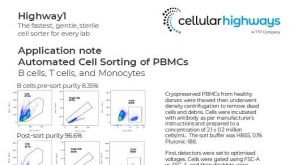
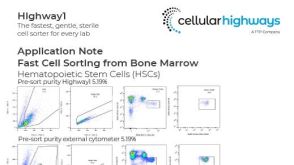
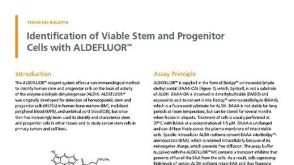 技术公告Identification of Viable Stem and Progenitor Cells with ALDEFLUOR™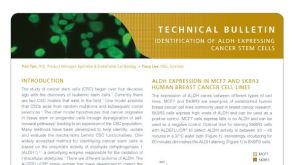



 挂图Small Molecules, Big Impact in Pluripotent Stem Cell Research Overview of signaling pathways and small molecules in pluripotent stem cell research
 沪公网安备31010102008431号