A potent neutralizing IgM mAb targeting the N218 epitope on E2 protein protects against Chikungunya virus pathogenesis
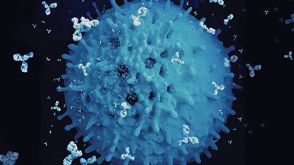
Chikungunya virus (CHIKV) is a medically important human viral pathogen that causes Chikungunya fever accompanied with debilitating and persistent joint pain. Host-elicited or passively-transferred monoclonal antibodies (mAb) are essential mediators of CHIKV clearance. Therefore,this study aimed to generate and characterize a panel of mAbs for their neutralization efficacy against CHIKV infection in a cell-based and murine model. To evaluate their antigenicity and neutralization profile,indirect enzyme-linked immunosorbent assay (ELISA),an immunofluorescence assay (IFA) and a plaque reduction neutralization test were performed on mAbs of IgM isotype. CHIKV escape mutants against mAb 3E7b neutralization were generated,and reverse genetics techniques were then used to create an infectious CHIKV clone with a single mutation. 3E7b was also administered to neonate mice prior or after CHIKV infection. The survival rate,CHIKV burden in tissues and histopathology of the limb muscles were evaluated. Both IgM 3E7b and 8A2c bind strongly to native CHIKV surface and potently neutralize CHIKV replication. Further analyses of 3E7b binding and neutralization of CHIKV single-mutant clones revealed that N218 of CHIKV E2 protein is a potent neutralizing epitope. In a pre-binding neutralization assay,3E7b blocks CHIKV attachment to permissive cells,possibly by binding to the surface-accessible E2-N218 residue. Prophylactic administration of 3E7b to neonate mice markedly reduced viremia and protected against CHIKV pathogenesis in various mice tissues. Given therapeutically at 4 h post-infection,3E7b conferred 100% survival rate and similarly reduced CHIKV load in most mice tissues except the limb muscles. Collectively,these findings highlight the usefulness of 3E7b for future prophylactic or epitope-based vaccine design.
View Publication
产品号#:
03800
03801
03802
03803
03804
03805
03806
产品名:
ClonaCell™-HY杂交瘤试剂盒
ClonaCell™-HY培养基A
ClonaCell™-HY 培养基 B
ClonaCell™-HY 培养基 C
ClonaCell™-HY 培养基 D
ClonaCell™-HY 培养基 E
ClonaCell™-HY PEG
York D et al. (DEC 2016)
BMC Biotechnology 16 1 23
Generating aldehyde-tagged antibodies with high titers and high formylglycine yields by supplementing culture media with copper(II)
BACKGROUND The ability to site-specifically conjugate a protein to a payload of interest (e.g.,a fluorophore,small molecule pharmacophore,oligonucleotide,or other protein) has found widespread application in basic research and drug development. For example,antibody-drug conjugates represent a class of biotherapeutics that couple the targeting specificity of an antibody with the chemotherapeutic potency of a small molecule drug. While first generation antibody-drug conjugates (ADCs) used random conjugation approaches,next-generation ADCs are employing site-specific conjugation. A facile way to generate site-specific protein conjugates is via the aldehyde tag technology,where a five amino acid consensus sequence (CXPXR) is genetically encoded into the protein of interest at the desired location. During protein expression,the Cys residue within this consensus sequence can be recognized by ectopically-expressed formylglycine generating enzyme (FGE),which converts the Cys to a formylglycine (fGly) residue. The latter bears an aldehyde functional group that serves as a chemical handle for subsequent conjugation. RESULTS The yield of Cys conversion to fGly during protein production can be variable and is highly dependent on culture conditions. We set out to achieve consistently high yields by modulating culture conditions to maximize FGE activity within the cell. We recently showed that FGE is a copper-dependent oxidase that binds copper in a stoichiometric fashion and uses it to activate oxygen,driving enzymatic turnover. Building upon that work,here we show that by supplementing cell culture media with copper we can routinely reach high yields of highly converted protein. We demonstrate that cells incorporate copper from the media into FGE,which results in increased specific activity of the enzyme. The amount of copper required is compatible with large scale cell culture,as demonstrated in fed-batch cell cultures with antibody titers of 5 g textperiodcentered L(-1),specific cellular production rates of 75 pg textperiodcentered cell(-1) textperiodcentered d(-1),and fGly conversion yields of 95-98 %. CONCLUSIONS We describe a process with a high yield of site-specific formylglycine (fGly) generation during monoclonal antibody production in CHO cells. The conversion of Cys to fGly depends upon the activity of FGE,which can be ensured by supplementing the culture media with 50 uM copper(II) sulfate.
View Publication
产品号#:
03814
产品名:
ClonaCell™-TCS 培养基
Vanden Bempt M et al. (MAR 2016)
Leukemia March 8 Epub ahead of print
Generation of the Fip1l1–Pdgfra fusion gene using CRISPR/Cas genome editing
Mou H et al. (APR 2012)
Cell stem cell 10 4 385--397
Generation of multipotent lung and airway progenitors from mouse ESCs and patient-specific cystic fibrosis iPSCs
Deriving lung progenitors from patient-specific pluripotent cells is a key step in producing differentiated lung epithelium for disease modeling and transplantation. By mimicking the signaling events that occur during mouse lung development,we generated murine lung progenitors in a series of discrete steps. Definitive endoderm derived from mouse embryonic stem cells (ESCs) was converted into foregut endoderm,then into replicating Nkx2.1+ lung endoderm,and finally into multipotent embryonic lung progenitor and airway progenitor cells. We demonstrated that precisely-timed BMP,FGF,and WNT signaling are required for NKX2.1 induction. Mouse ESC-derived Nkx2.1+ progenitor cells formed respiratory epithelium (tracheospheres) when transplanted subcutaneously into mice. We then adapted this strategy to produce disease-specific lung progenitor cells from human Cystic Fibrosis induced pluripotent stem cells (iPSCs),creating a platform for dissecting human lung disease. These disease-specific human lung progenitors formed respiratory epithelium when subcutaneously engrafted into immunodeficient mice.
View Publication
产品号#:
05850
05857
05870
05875
85850
85857
85870
85875
产品名:
mTeSR™1
mTeSR™1
Wang X et al. (JUL 2013)
mAbs 5 4 540--4
Generation and characterization of a unique reagent that recognizes a panel of recombinant human monoclonal antibody therapeutics in the presence of endogenous human IgG
Pharmacokinetic (PK) and immunohistochemistry (IHC) assays are essential to the evaluation of the safety and efficacy of therapeutic monoclonal antibodies (mAb) during drug development. These methods require reagents with a high degree of specificity because low concentrations of therapeutic antibody need to be detected in samples containing high concentrations of endogenous human immunoglobulins. Current assay reagent generation practices are labor-intensive and time-consuming. Moreover,these practices are molecule-specific and so only support one assay for one program at a time. Here,we describe a strategy to generate a unique assay reagent,10C4,that preferentially recognizes a panel of recombinant human mAbs over endogenous human immunoglobulins. This panel-specific" feature enables the reagent to be used in PK and IHC assays for multiple structurally-related therapeutic mAbs. Characterization revealed that the 10C4 epitope is conformational�
View Publication


 EasySep™小鼠TIL(CD45)正选试剂盒





 沪公网安备31010102008431号