Fan Y et al. (NOV 2013)
Tissue Engineering Part A 20 3-4 131128071850006
Facile engineering of xeno-free microcarriers for the scalable cultivation of human pluripotent stem cells in stirred suspension.
A prerequisite for the realization of human pluripotent stem cell (hPSC) therapies is the development of bioprocesses for generating clinically relevant quantities of undifferentiated hPSCs and their derivatives under xeno-free conditions. Microcarrier stirred-suspension bioreactors are an appealing modality for the scalable expansion and directed differentiation of hPSCs. Comparative analyses of commercially available microcarriers clearly show the need for developing synthetic substrates supporting the adhesion and growth of hPSCs in three-dimensional cultures under agitation-induced shear. Moreover,the low seeding efficiencies during microcarrier loading with hPSC clusters poses a significant process bottleneck. To that end,a novel protocol was developed increasing hPSC seeding efficiency from 30% to over 80% and substantially shortening the duration of microcarrier loading. Importantly,this method was combined with the engineering of polystyrene microcarriers by surface conjugation of a vitronectin-derived peptide,which was previously shown to support the growth of human embryonic stem cells. Cells proliferated on peptide-conjugated beads in static culture but widespread detachment was observed after exposure to stirring. This prompted additional treatment of the microcarriers with a synthetic polymer commonly used to enhance cell adhesion. hPSCs were successfully cultivated on these microcarriers in stirred suspension vessels for multiple consecutive passages with attachment efficiencies close to 40%. Cultured cells exhibited on average a 24-fold increase in concentration per 6-day passage,over 85% viability,and maintained a normal karyotype and the expression of pluripotency markers such as Nanog,Oct4,and SSEA4. When subjected to spontaneous differentiation in embryoid body cultures or directed differentiation to the three embryonic germ layers,the cells adopted respective fates displaying relevant markers. Lastly,engineered microcarriers were successfully utilized for the expansion and differentiation of hPSCs to mesoderm progeny in stirred suspension vessels. Hence,we demonstrate a strategy for the facile engineering of xeno-free microcarriers for stirred-suspension cultivation of hPSCs. Our findings support the use of microcarrier bioreactors for the scalable,xeno-free propagation and differentiation of human stem cells intended for therapies.
View Publication
Non-integrating episomal plasmid-based reprogramming of human amniotic fluid stem cells into induced pluripotent stem cells in chemically defined conditions.
Amniotic fluid stem cells (AFSC) represent an attractive potential cell source for fetal and pediatric cell-based therapies. However,upgrading them to pluripotency confers refractoriness toward senescence,higher proliferation rate and unlimited differentiation potential. AFSC were observed to rapidly and efficiently reacquire pluripotency which together with their easy recovery makes them an attractive cell source for reprogramming. The reprogramming process as well as the resulting iPSC epigenome could potentially benefit from the unspecialized nature of AFSC. iPSC derived from AFSC also have potential in disease modeling,such as Down syndrome or $\$-thalassemia. Previous experiments involving AFSC reprogramming have largely relied on integrative vector transgene delivery and undefined serum-containing,feeder-dependent culture. Here,we describe non-integrative oriP/EBNA-1 episomal plasmid-based reprogramming of AFSC into iPSC and culture in fully chemically defined xeno-free conditions represented by vitronectin coating and E8 medium,a system that we found uniquely suited for this purpose. The derived AF-iPSC lines uniformly expressed a set of pluripotency markers Oct3/4,Nanog,Sox2,SSEA-1,SSEA-4,TRA-1-60,TRA-1-81 in a pattern typical for human primed PSC. Additionally,the cells formed teratomas,and were deemed pluripotent by PluriTest,a global expression microarray-based in-silico pluripotency assay. However,we found that the PluriTest scores were borderline,indicating a unique pluripotent signature in the defined condition. In the light of potential future clinical translation of iPSC technology,non-integrating reprogramming and chemically defined culture are more acceptable.
View Publication
产品号#:
05850
05857
05870
05875
05940
07180
07183
07190
27147
07191
07930
07931
07940
07955
07956
07959
07954
85850
85857
85870
85875
100-1061
07952
100-0763
产品名:
Vitronectin XF™
CellAdhere™ 稀释缓冲液
CryoStor® CS10
CryoStor® CS10
CryoStor® CS10
CryoStor® CS10
CryoStor® CS10
mTeSR™1
mTeSR™1
CryoStor® CS10
CryoStor® CS10
Vitronectin XF™
Ninomiya H et al. (JAN 2015)
In vitro cellular & developmental biology. Animal 51 1 1--8
Improved efficiency of definitive endoderm induction from human induced pluripotent stem cells in feeder and serum-free culture system
Improvement of methods to produce endoderm-derived cells from pluripotent stem cells is important to realize high-efficient induction of endodermal tissues such as pancreas and hepatocyte. Difficulties hampering such efforts include the low efficiency of definitive endoderm cell induction and establishing appropriate defined culture conditions to ensure a safe cell source for human transplantation. Based on previous studies,we revised the experimental condition of definitive endoderm induction in feeder- and serum-free culture. Our results suggested that CHIR99021 is more effective than Wnt3A ligand in feeder- and serum-free conditions. In addition,keeping cell density low during endoderm induction is important for the efficiency. On the other hand,we showed that overtreatment with CHIR99021 converted the cells into BRACHYURY-expressing posterior mesoderm cells rather than endoderm,indicating strict CHIR99021 treatment requirements for endoderm differentiation. Nevertheless,these results should enable better control in the production of definitive endoderm-derived cells.
View Publication
产品号#:
05850
05857
05870
05875
85850
85857
85870
85875
产品名:
mTeSR™1
mTeSR™1
Dye BR et al. (MAR 2015)
eLife 4 e05098
In vitro generation of human pluripotent stem cell derived lung organoids.
Recent breakthroughs in 3-dimensional (3D) organoid cultures for many organ systems have led to new physiologically complex in vitro models to study human development and disease. Here,we report the step-wise differentiation of human pluripotent stem cells (hPSCs) (embryonic and induced) into lung organoids. By manipulating developmental signaling pathways hPSCs generate ventral-anterior foregut spheroids,which are then expanded into human lung organoids (HLOs). HLOs consist of epithelial and mesenchymal compartments of the lung,organized with structural features similar to the native lung. HLOs possess upper airway-like epithelium with basal cells and immature ciliated cells surrounded by smooth muscle and myofibroblasts as well as an alveolar-like domain with appropriate cell types. Using RNA-sequencing,we show that HLOs are remarkably similar to human fetal lung based on global transcriptional profiles,suggesting that HLOs are an excellent model to study human lung development,maturation and disease.
View Publication
产品号#:
05850
05857
05870
05875
85850
85857
85870
85875
产品名:
mTeSR™1
mTeSR™1
Naujok O et al. ( 2015)
1341 67--85
Gene transfer into pluripotent stem cells via lentiviral transduction
Recombinant lentiviral vectors are powerful tools to stably manipulate human pluripotent stem cells. They can be used to deliver ectopic genes,shRNAs,miRNAs,or any possible genetic DNA sequence into diving and nondividing cells. Here we describe a general protocol for the production of self-inactivating lentiviral vector particles and their purification to high titers by either ultracentrifugation or ultrafiltration. Next we provide a basic procedure to transduce human pluripotent stem cells and propagate clonal cell lines.
View Publication


 EasySep™小鼠TIL(CD45)正选试剂盒




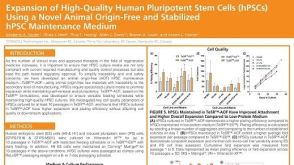 科学海报Expansion of High-Quality Human Pluripotent Stem Cells (hPSCs) Using a Novel Animal Origin-Free and Stabilized hPSC Maintenance Medium


 沪公网安备31010102008431号