Chua KY et al. (JAN 2008)
Methods in molecular biology (Clifton,N.J.) 423 509--20
Production of monoclonal antibody by DNA immunization with electroporation.
DNA immunization with in vivo electroporation is an efficient alternative protocol for the production of monoclonal antibodies (mAb). Generation of mAb by DNA immunization is a novel approach to circumvent the following technical hurdles associated with problematic antigens: low abundance and protein instability and use of recombinant proteins that lack posttranslational modifications. This chapter describes the use of a DNA-based immunization protocol for the production of mAb against a house dust mite allergen,designated as Blo t 11,which is a paramyosin homologue found in Blomia tropicalis mites. The Blo t 11 cDNA fused at the N terminus to the sequence of a signal peptide was cloned into the pCI mammalian expression vector. The DNA construct was injected intramuscularly with in vivo electroporation into mice,and the specific antibody production in mice was analyzed by enzyme-linked immunosorbent assay (ELISA). Hybridomas were generated by fusing mouse splenocytes with myeloma cells using the ClonaCell-HY Hybridoma Cloning Kit. Six hybridoma clones secreting Blo t 11 mAb were successfully generated,and these mAb are useful reagents for immunoaffinity purification and immunoassays.
View Publication
产品号#:
03800
03801
03802
03803
03804
03805
03806
产品名:
ClonaCell™-HY杂交瘤试剂盒
ClonaCell™-HY培养基A
ClonaCell™-HY 培养基 B
ClonaCell™-HY 培养基 C
ClonaCell™-HY 培养基 D
ClonaCell™-HY 培养基 E
ClonaCell™-HY PEG
Katori S et al. (JUL 2009)
The Journal of neuroscience : the official journal of the Society for Neuroscience 29 29 9137--47
Protocadherin-alpha family is required for serotonergic projections to appropriately innervate target brain areas.
Serotonergic axons from the raphe nuclei in the brainstem project to every region of the brain,where they make connections through their extensive terminal arborizations. This serotonergic innervation contributes to various normal behaviors and psychiatric disorders. The protocadherin-alpha (Pcdha) family of clustered protocadherins consists of 14 cadherin-related molecules generated from a single gene cluster. We found that the Pcdhas were strongly expressed in the serotonergic neurons. To elucidate their roles,we examined serotonergic fibers in a mouse mutant (Pcdha(Delta CR/Delta CR)) lacking the Pcdha cytoplasmic region-encoding exons,which are common to the gene cluster. In the first week after birth,the distribution pattern of serotonergic fibers in Pcdha(Delta CR/Delta CR) mice was similar to wild-type,but by 3 weeks of age,when the serotonergic axonal termini complete their arborizations,the distribution of the projections was abnormal. In some target regions,notably the globus pallidus and substantia nigra,the normally even distribution of serotonin axonal terminals was,in the mutants,dense at the periphery of each region,but sparse in the center. In the stratum lacunosum-molecular of the hippocampus,the mutants showed denser serotonergic innervation than in wild-type,and in the dentate gyrus of the hippocampus and the caudate-putamen,the innervation was sparser. Together,the abnormalities suggested that Pcdha proteins are important in the late-stage maturation of serotonergic projections. Further examination of alternatively spliced exons encoding the cytoplasmic tail showed that the A-type (but not the B-type) cytoplasmic tail was essential for the normal development of serotonergic projections.
View Publication
产品号#:
03800
03801
03802
03803
03804
03805
03806
产品名:
ClonaCell™-HY杂交瘤试剂盒
ClonaCell™-HY培养基A
ClonaCell™-HY 培养基 B
ClonaCell™-HY 培养基 C
ClonaCell™-HY 培养基 D
ClonaCell™-HY 培养基 E
ClonaCell™-HY PEG
Stern HM et al. (MAR 2010)
Clinical Cancer Research 16 5 1587--96
Development of immunohistochemistry assays to assess GALNT14 and FUT3/6 in clinical trials of dulanermin and drozitumab
PURPOSE: In vitro sensitivity to the proapoptotic receptor agonists dulanermin (rhApo2L/TRAIL) and drozitumab (DR5-agonist antibody) is strongly predicted by the expression of the O-glycosylation enzymes GALNT14 in non-small cell lung cancer (NSCLC) cell lines (among others) and of FUT3/6 in colorectal cancer (CRC) cell lines. We developed immunohistochemistry (IHC) assays that measure GALNT14 and FUT3/6 levels in archival formalin-fixed,paraffin-embedded human tumor tissue to determine marker prevalence in NSCLC and CRC tissue and to enable the future examination of these markers in clinical trials. EXPERIMENTAL DESIGN: GALNT14 or FUT3/6 ELISA-positive hybridoma clones were screened through IHC on cell pellets with known mRNA levels. The specificity of staining was examined in cell lines,normal tissue,and tumor tissue. RESULTS: GALNT14 and FUT3/6 IHC exhibited a golgi staining pattern and correlated with GALNT14 and FUT3/6 (but not GALNT2 and FUT4) mRNA expression levels in cell lines and normal tissues,suggesting specificity. GALNT14 and FUT3/6 H-scores were significantly higher in cell lines sensitive to dulanermin (P = 0.01 and P = 0.0004,respectively) and drozitumab (P = 0.03 and P textless 0.0001,respectively) versus resistant cell lines. GALNT14 and FUT3/6 H-scores varied widely,with approximately 45% of NSCLC samples exhibiting weak to moderate GALNT14 staining (H-score of at least 25) and 70% of CRC samples exhibiting moderate to strong FUT3/6 staining (H-score of at least 125). CONCLUSIONS: GALNT14 and FUT3/6 expression can be assessed in human tumors using sensitive and specific IHC assays. Both assays are being deployed in ongoing clinical trials of dulanermin and drozitumab to assess potential utility for patient selection.
View Publication
产品号#:
03800
03801
03802
03803
03804
03805
03806
产品名:
ClonaCell™-HY杂交瘤试剂盒
ClonaCell™-HY培养基A
ClonaCell™-HY 培养基 B
ClonaCell™-HY 培养基 C
ClonaCell™-HY 培养基 D
ClonaCell™-HY 培养基 E
ClonaCell™-HY PEG
Yano M and Pirofski L-a (JAN 2011)
Clinical and vaccine immunology : CVI 18 1 59--66
Characterization of gene use and efficacy of mouse monoclonal antibodies to Streptococcus pneumoniae serotype 8.
Streptococcus pneumoniae is the most common cause of community-acquired pneumonia in the United States and globally. Despite the availability of pneumococcal capsular polysaccharide (PPS) and protein conjugate-based vaccines,the prevalence of antibiotic-resistant pneumococcal strains,serotype (ST) replacement in nonconjugate vaccine strains,and uncertainty as to whether the PPS vaccine that is used in adults protects against pneumonia emphasize the need for continued efforts to understand the nature of protective PPS antibody responses. In this study,we generated mouse monoclonal antibodies (MAbs) to a conjugate consisting of the PPS of serotype 8 (PPS8) S. pneumoniae and tetanus toxoid. Thirteen MAbs,including four IgMs that bound to PPS8 and phosphorylcholine (PC) and five IgMs and four IgG1s that bound to PPS8 but not PC,were produced,and their nucleotide sequences,epitope and fine specificity,and efficacy against lethal challenge with ST8 S. pneumoniae were determined. MAbs that bound to PPS8 exhibited gene use that was distinct from that exhibited by MAbs that bound to PC. Only PPS8-binding MAbs that did not bind PC were protective in mice. All 13 MAbs used germ line variable-region heavy (V(H)) and light (V(L)) chain genes,with no evidence of somatic hypermutation. Our data reveal a relationship between PPS specificity and V(H) gene use and MAb efficacy in mice. These findings provide insight into the relationship between antibody molecular structure and function and hold promise for the development of novel surrogates for pneumococcal vaccine efficacy.
View Publication
产品号#:
03800
03801
03802
03803
03804
03805
03806
产品名:
ClonaCell™-HY杂交瘤试剂盒
ClonaCell™-HY培养基A
ClonaCell™-HY 培养基 B
ClonaCell™-HY 培养基 C
ClonaCell™-HY 培养基 D
ClonaCell™-HY 培养基 E
ClonaCell™-HY PEG
Date Y et al. ( 2014)
Analytical Chemistry 86 6 2989--96
Label-free impedimetric immunoassay for trace levels of polychlorinated biphenyls in insulating oil
A rapid,ultrasensitive,and practical label-free impedimetric immunoassay for measuring trace levels of total polychlorinated biphenyls (PCBs) in insulating oil was developed. First,we developed a novel monoclonal antibody (RU6F9) for PCBs by using a designed immunogen and characterized its binding affinity for a commercial mixtures of PCBs and its main congeners. A micro comblike gold electrode was fabricated,and the antibody was covalently immobilized on the electrode through a self-assembled monolayer formed by dithiobis-N-succinimidyl propionate. The antigen-binding event on the surface of the functionalized electrode was determined as the change in charge transfer resistance by using electrochemical impedance spectroscopy. The resulting impedimetric immunoassay in aqueous solution achieved a wide determination range (0.01-10 μg/L) and a low detection limit (LOD) of 0.001 μg/L,which was 100-fold more sensitive than a conventional flow-based immunoassay for PCBs. By combining the impedimetric immunoassay with a cleanup procedure for insulating oil utilizing a multilayer cleanup column followed by DMSO partitioning,an LOD of 0.052 mg/kg-oil was achieved,which satisfied the Japanese regulation criterion of 0.5 mg/kg-oil. Finally,the immunoassay was employed to determine total PCB levels in actual used insulating oils (n = 33) sampled from a used transformer containing trace levels of PCBs,and the results agreed well with the Japanese official method (HRGC/HRMS).
View Publication
产品号#:
03800
产品名:
ClonaCell™-HY杂交瘤试剂盒
Kanzaki H et al. ( 2016)
Scientific Reports 6 August 32259
A-Disintegrin and Metalloproteinase (ADAM) 17 enzymatically degrades interferon-gamma
Interferon-gamma (IFN-γ) is a pleiotropic cytokine that exerts anti-tumor and anti-osteoclastogenic effects. Although transcriptional and post-transcriptional regulation of IFN-γ is well understood,subsequent modifications of secreted IFN-γ are not fully elucidated. Previous research indicates that some cancer cells escape immune surveillance and metastasize into bone tissue by inducing osteoclastic bone resorption. Peptidases of the a-disintegrin and metalloproteinase (ADAM) family are implicated in cancer cell proliferation and tumor progression. We hypothesized that the ADAM enzymes expressed by cancer cells degrades IFN-γ and attenuates IFN-γ-mediated anti-tumorigenic and anti-osteoclastogenic effects. Recombinant ADAM17 degraded IFN-γ into small fragments. The addition of ADAM17 to the culture supernatant of stimulated mouse splenocytes decreased IFN-γ concentration. However,ADAM17 inhibition in the stimulated mouse T-cells prevented IFN-γ degradation. ADAM17-expressing human breast cancer cell lines MCF-7 and MDA-MB-453 also degraded recombinant IFN-γ,but this was attenuated by ADAM17 inhibition. Degraded IFN-γ lost the functionality including the inhibititory effect on osteoclastogenesis. This is the first study to demonstrate the extracellular proteolytic degradation of IFN-γ by ADAM17. These results suggest that ADAM17-mediated degradation of IFN-γ may block the anti-tumorigenic and anti-osteoclastogenic effects of IFN-γ. ADAM17 inhibition may be useful for the treatment of attenuated cancer immune surveillance and/or bone metastases.
View Publication
产品号#:
03800
产品名:
ClonaCell™-HY杂交瘤试剂盒
van de Sandt CE et al. (FEB 2014)
Journal of Virology 88 3 1684--93
Human cytotoxic T lymphocytes directed to seasonal influenza A viruses cross-react with the newly emerging H7N9 virus
In February 2013,zoonotic transmission of a novel influenza A virus of the H7N9 subtype was reported in China. Although at present no sustained human-to-human transmission has been reported,a pandemic outbreak of this H7N9 virus is feared. Since neutralizing antibodies to the hemagglutinin (HA) globular head domain of the virus are virtually absent in the human population,there is interest in identifying other correlates of protection,such as cross-reactive CD8(+) T cells (cytotoxic T lymphocytes [CTLs]) elicited during seasonal influenza A virus infections. These virus-specific CD8(+) T cells are known to recognize conserved internal proteins of influenza A viruses predominantly,but it is unknown to what extent they cross-react with the newly emerging H7N9 virus. Here,we assessed the cross-reactivity of seasonal H3N2 and H1N1 and pandemic H1N1 influenza A virus-specific polyclonal CD8(+) T cells,obtained from HLA-typed study subjects,with the novel H7N9 virus. The cross-reactivity of CD8(+) T cells to H7N9 variants of known influenza A virus epitopes and H7N9 virus-infected cells was determined by their gamma interferon (IFN-γ) response and lytic activity. It was concluded that,apart from recognition of individual H7N9 variant epitopes,CD8(+) T cells to seasonal influenza viruses display considerable cross-reactivity with the novel H7N9 virus. The presence of these cross-reactive CD8(+) T cells may afford some protection against infection with the new virus.
View Publication
产品号#:
03800
03801
03802
03803
03804
03805
03806
产品名:
ClonaCell™-HY杂交瘤试剂盒
ClonaCell™-HY培养基A
ClonaCell™-HY 培养基 B
ClonaCell™-HY 培养基 C
ClonaCell™-HY 培养基 D
ClonaCell™-HY 培养基 E
ClonaCell™-HY PEG
Řeboun M et al. ( 2016)
Folia biologica 62 2 82--89
X-Chromosome Inactivation Analysis in Different Cell Types and Induced Pluripotent Stem Cells Elucidates the Disease Mechanism in a Rare Case of Mucopolysaccharidosis Type II in a Female.
Mucopolysaccharidosis type II (MPS II) is an X-linked lysosomal storage disorder resulting from deficiency of iduronate-2-sulphatase activity. The disease manifests almost exclusively in males; only 16 symptomatic heterozygote girls have been reported so far. We describe the results of X-chromosome inactivation analysis in a 5-year-old girl with clinically severe disease and heterozygous mutation p.Arg468Gln in the IDS gene. X inactivation analysed at three X-chromosome loci showed extreme skewing (96/4 to 99/1) in two patient's cell types. This finding correlated with exclusive expression of the mutated allele. Induced pluripotent stem cells (iPSC) generated from the patient's peripheral blood demonstrated characteristic pluripotency markers,deficiency of enzyme activity,and mutation in the IDS gene. These cells were capable of differentiation into other cell types (cardiomyocytes,neurons). In MPS II iPSC clones,the X inactivation ratio remained highly skewed in culture conditions that led to partial X inactivation reset in Fabry disease iPSC clones. Our data,in accordance with the literature,suggest that extremely skewed X inactivation favouring the mutated allele is a crucial condition for manifestation of MPS II in females. This suggests that the X inactivation status and enzyme activity have a prognostic value and should be used to evaluate MPS II in females. For the first time,we show generation of iPSC from a symptomatic MPS II female patient that can serve as a cellular model for further research of the pathogenesis and treatment of this disease.
View Publication


 EasySep™小鼠TIL(CD45)正选试剂盒




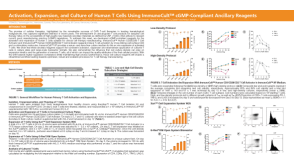 科学海报Activation, Expansion, and Culture of Human T Cells Using ImmunoCult™ cGMP-Compliant Ancillary Reagents
 科学海报Efficient Cloning of Single CHO Cells Using a Novel Animal Component-Free Culture Medium Supplement


 沪公网安备31010102008431号