McMahill BG et al. (OCT 2015)
STEM CELLS Translational Medicine 4 10 1173--1186
Feasibility Study of Canine Epidermal Neural Crest Stem Cell Transplantation in the Spinal Cords of Dogs
UNLABELLED This pilot feasibility study aimed to determine the outcome of canine epidermal neural crest stem cell (cEPI-NCSC) grafts in the normal spinal cords of healthy bred-for-research dogs. This included developing novel protocols for (a) the ex vivo expansion of cEPI-NCSCs,(b) the delivery of cEPI-NCSCs into the spinal cord,and (c) the labeling of the cells and subsequent tracing of the graft in the live animal by magnetic resonance imaging. A total of four million cEPI-NCSCs were injected into the spinal cord divided in two locations. Differences in locomotion at baseline and post-treatment were evaluated by gait analysis and compared with neurological outcome and behavioral exams. Histopathological analyses of the spinal cords and cEPI-NCSC grafts were performed at 3 weeks post-transplantation. Neurological and gait parameters were minimally affected by the stem cell injection. cEPI-NCSCs survived in the canine spinal cord for the entire period of investigation and did not migrate or proliferate. Subsets of cEPI-NCSCs expressed the neural crest stem cell marker Sox10. There was no detectable expression of markers for glial cells or neurons. The tissue reaction to the cell graft was predominantly vascular in addition to a degree of reactive astrogliosis and microglial activation. In the present study,we demonstrated that cEPI-NCSC grafts survive in the spinal cords of healthy dogs without major adverse effects. They persist locally in the normal spinal cord,may promote angiogenesis and tissue remodeling,and elicit a tissue response that may be beneficial in patients with spinal cord injury. SIGNIFICANCE It has been established that mouse and human epidermal neural crest stem cells are somatic multipotent stem cells with proved innovative potential in a mouse model of spinal cord injury (SCI) offering promise of a valid treatment for SCI. Traumatic SCI is a common neurological problem in dogs with marked similarities,clinically and pathologically,to the syndrome in people. For this reason,dogs provide a readily accessible,clinically realistic,spontaneous model for evaluation of epidermal neural crest stem cells therapeutic intervention. The results of this study are expected to give the baseline data for a future clinical trial in dogs with traumatic SCI.
View Publication
产品号#:
05750
05751
产品名:
NeuroCult™ NS-A 基础培养基(人)
NeuroCult™ NS-A 扩增试剂盒(人)
Liu L et al. (OCT 2014)
Cell death & disease 5 10 e1471
Enrichment of c-Met+ tumorigenic stromal cells of giant cell tumor of bone and targeting by cabozantinib.
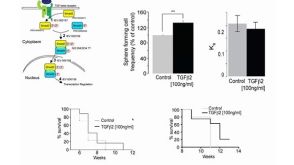
Giant cell tumor of bone (GCTB) is a very rare tumor entity,which is little examined owing to the lack of established cell lines and mouse models and the restriction of available primary cell lines. The stromal cells of GCTB have been made responsible for the aggressive growth and metastasis,emphasizing the presence of a cancer stem cell population. To identify and target such tumor-initiating cells,stromal cells were isolated from eight freshly resected GCTB tissues. Tumorigenic properties were examined by colony and spheroid formation,differentiation,migration,MTT (3-(4,5-dimethylthiazol-2-yl)-2,5-diphenyltetrazolium bromide) assay,immunohistochemistry,antibody protein array,Alu in situ hybridization,FACS analysis and xenotransplantation into fertilized chicken eggs and mice. A sub-population of the neoplastic stromal cells formed spheroids and colonies,differentiated to osteoblasts,migrated to wounded regions and expressed the metastasis marker CXC-chemokine receptor type 4,indicating self-renewal,invasion and differentiation potential. Compared with adherent-growing cells,markers for pluripotency,stemness and cancer progression,including the CSC surface marker c-Met,were enhanced in spheroidal cells. This c-Met-enriched sub-population formed xenograft tumors in fertilized chicken eggs and mice. Cabozantinib,an inhibitor of c-Met in phase II trials,eliminated CSC features with a higher therapeutic effect than standard chemotherapy. This study identifies a c-Met(+) tumorigenic sub-population within stromal GCTB cells and suggests the c-Met inhibitor cabozantinib as a new therapeutic option for targeted elimination of unresectable or recurrent GCTB.
View Publication
产品号#:
05750
05751
产品名:
NeuroCult™ NS-A 基础培养基(人)
NeuroCult™ NS-A 扩增试剂盒(人)
Mazzulli JR et al. (FEB 2016)
Analytical chemistry 88 4 2399--405
Detection of Free and Protein-Bound ortho-Quinones by Near-Infrared Fluorescence.
Aging and oxidative stress are two prominent pathological mechanisms for Parkinson's disease (PD) that are strongly associated with the degeneration of dopamine (DA) neurons in the midbrain. DA and other catechols readily oxidize into highly reactive o-quinone species that are precursors of neuromelanin (NM) pigment and under pathological conditions can modify and damage macromolecules. The role of DA oxidation in PD pathogenesis remains unclear in part due to the lack of appropriate disease models and the absence of a simple method for the quantification of DA-derived oxidants. Here,we describe a rapid,simple,and reproducible method for the quantification of o-quinones in cells and tissues that relies on the near-infrared fluorescent properties of these species. Importantly,we demonstrate that catechol-derived oxidants can be quantified in human neuroblastoma cells and midbrain dopamine neurons derived from induced pluripotent stem cells,providing a novel model to study the downstream actions of o-quinones. This method should facilitate further study of oxidative stress and DA oxidation in PD and related diseases that affect the dopaminergic system.
View Publication
产品号#:
05711
100-1281
产品名:
NeuroCult™ SM1 神经添加物
Lerch JK et al. (MAR 2014)
Molecular and Cellular Neuroscience 59 97--105
cJun promotes CNS axon growth
A number of genes regulate regeneration of peripheral axons,but their ability to drive axon growth and regeneration in the central nervous system (CNS) remains largely untested. To address this question we overexpressed eight transcription factors and one small GTPase alone and in pairwise combinations to test whether combinatorial overexpression would have a synergistic impact on CNS neuron neurite growth. The Jun oncogene/signal transducer and activator of transcription 6 (JUN/STAT6) combination increased neurite growth in dissociated cortical neurons and in injured cortical slices. In injured cortical slices,JUN overexpression increased axon growth to a similar extent as JUN and STAT6 together. Interestingly,JUN overexpression was not associated with increased growth associated protein 43 (GAP43) or integrin alpha 7 (ITGA7) expression,though these are predicted transcriptional targets. This study demonstrates that JUN overexpression in cortical neurons stimulates axon growth,but does so independently of changes in expression of genes thought to be critical for JUNs effects on axon growth. We conclude that JUN activity underlies this CNS axonal growth response,and that it is mechanistically distinct from peripheral regeneration responses,in which increases in JUN expression coincide with increases in GAP43 expression.
View Publication