Y. Kim et al. (May 2020)
FASEB Journal 34 6965-6983
Microtubule-associated protein 2 mediates induction of long-term potentiation in hippocampal neurons
Microtubule-associated protein (MAP) 2 has been perceived as a static cytoskeletal protein enriched in neuronal dendritic shafts. Emerging evidence indicates dynamic functions for various MAPs in activity-dependent synaptic plasticity. However,it is unclear how MAP2 is associated with synaptic plasticity mechanisms. Here,we demonstrate that specific silencing of high-molecular-weight MAP2 in vivo abolished induction of long-term potentiation (LTP) in the Schaffer collateral pathway of CA1 pyramidal neurons and in vitro blocked LTP-induced surface delivery of AMPA receptors and spine enlargement. In mature hippocampal neurons,we observed rapid translocation of a subpopulation of MAP2,present in dendritic shafts,to spines following LTP stimulation. Time-lapse confocal imaging showed that spine translocation of MAP2 was coupled with LTP-induced spine enlargement. Consistently,immunogold electron microscopy revealed that LTP stimulation of the Schaffer collateral pathway promoted MAP2 labeling in spine heads of CA1 neurons. This translocation depended on NMDA receptor activation and Ras-MAPK signaling. Furthermore,LTP stimulation led to an increase in surface-expressed AMPA receptors specifically in the neurons with MAP2 spine translocation. Altogether,this study indicates a novel role for MAP2 in LTP mechanisms and suggests that MAP2 participates in activity-dependent synaptic plasticity in mature hippocampal networks.
View Publication
Binder LI et al. (SEP 1984)
Proceedings of the National Academy of Sciences of the United States of America 81 17 5613--7
Heterogeneity of microtubule-associated protein 2 during rat brain development.
The electrophoretic pattern of the large microtubule-associated protein,MAP2,changes during rat brain development. Immunoblots of NaDodSO4 extracts obtained from the cerebral cortex,cerebellum,and thalamus at 10-15 days after birth reveal only a single electrophoretic species when probed with any of three MAP2 monoclonal antibodies. By contrast,adult MAP2 contains two immunoreactive species,MAP2a and MAP2b. The single band of MAP2 from immature brain electrophoretically comigrates with adult MAP2b. Between postnatal days 17 and 18,immature MAP2 simultaneously resolves into two species in both the cerebellum and cerebral cortex. Immunoblots of NaDodSO4 extracts from spinal cord demonstrate the adult complement of MAP2 by day 10,indicating that MAP2 does not change coordinately throughout the entire central nervous system. In vitro cAMP-dependent phosphorylation of immature MAP2 causes a band split reminiscent of that seen during brain development in vivo. The possibility that the developmentally regulated changes observed in MAP2 during brain maturation are due to timed phosphorylation events is discussed.
View Publication
Ishii Y et al. (MAR 2008)
Molecular and cellular neurosciences 37 3 507--18
Characterization of neuroprogenitor cells expressing the PDGF beta-receptor within the subventricular zone of postnatal mice.
We report a considerable number of cells in the ventricular and the subventricular zones (SVZ) of newborn mice to stain positive for the PDGF beta-receptor (PDGFRB). Many of them also stained for nestin and/or GFAP but less frequently for the neuroblast marker doublecortin and for the mitotic marker Ki-67. The SVZ of mice with nestin-Cre conditional deletion of PDGFRB expressed the receptor only on blood vessels and was devoid of any morphological abnormality. PDGFRB(-/-) neurospheres showed a higher rate of apoptosis without any significant decrease in proliferation. They demonstrated reduced capacities of migration and neuronal differentiation in response to not only PDGF-BB but also bFGF. Furthermore,the PDGFR kinase inhibitor STI571 blocked the effects of bFGF in control neurosphere cultures. bFGF increased the activity of the PDGFRB promoter as well as the expression and phosphorylation of PDGFRB. These results suggest the presence of the signaling convergence between PDGF and FGF. PDGFRB is needed for survival,and the effects of bFGF in migration and neural differentiation of the cells may be potentiated by induction of PDGFRB.
View Publication


 EasySep™小鼠TIL(CD45)正选试剂盒




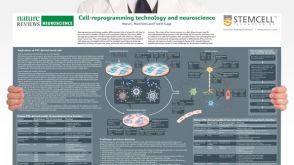 挂图Cell-Reprogramming Technology and Neuroscience Details on human iPSC-derived models of neuropsychiatric and neurodegenerative disorders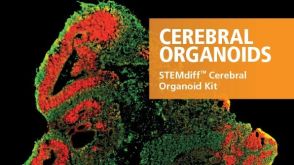


 沪公网安备31010102008431号